Progresul, Demolished by Progress. How Bucharest Lost a Nearly 70-Year-Old Railway Station
- Articles
- 24 JUL 26
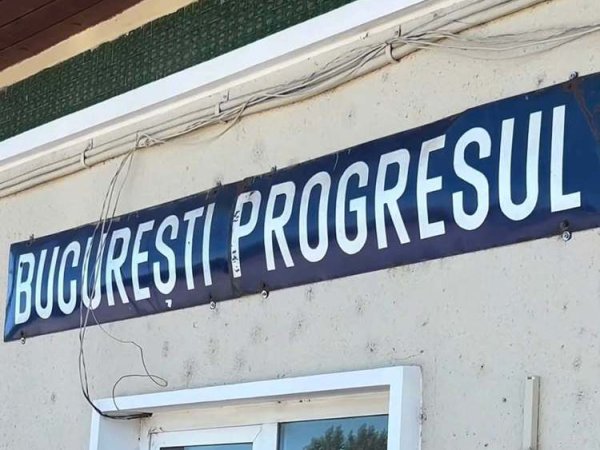
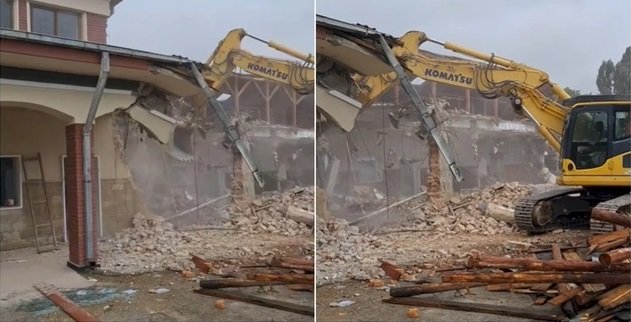
The demolition of Progresul Station in Bucharest's Sector 4 took place without any public event to mark it. Machinery moved into the building one morning in July 2026, and what remained in public view was only a handful of photos, circulated quickly on railway enthusiast groups, accompanied by comments with the tone of a hastily written obituary.
The official reason for the swift demolition was purely administrative: the building wasn't listed as a historic monument, so the decision over its fate stayed entirely with local authorities, with no obligation for public debate. That's legally correct, and it says very little about what actually disappeared with it. The station dated back to 1958, built on the site of an earlier halt from 1953, and served traffic to Giurgiu along the route of the very first railway line ever built on the territory of the United Principalities. That's nearly seven uninterrupted decades of service, well beyond the 60 years quoted in the first rushed press reports.
From Filaret to Progresul, the Same Story with Two Actors
To understand what just vanished, you have to go back to October 31, 1869, the day Bucharest saw its first train leave its first station, Filaret, bound for that same Giurgiu. Filaret stayed an active railway hub until November 1960, when it was decommissioned and turned into a bus depot — a fate that, in the end, earned it protection as a historic monument, a privilege reserved for it alone. Today it operates as Filaret Bus Station, minibuses standing in for trains, with a modest plaque as the only reminder of the role it once played.
Traffic to the Danube carried on, simply shifted further south, onto the route that would become, a decade later, Progresul Station. Bucharest ended up with two gateways to Giurgiu, one after the other, separated by time but tied together by the same function. Now it has lost both as working stations: one preserved through heritage status, the other surviving only in the memory of those who used it, 157 years after the train that left Filaret on that autumn day in 1869.
What's Coming in Its Place
The demolition is part of a much larger modernization project on the Bucharest Progresul–Jilava–Giurgiu Nord Frontieră line, considered a priority section within the European TEN-T network. Rail service has been suspended since March 2026, and CFR estimates reopening no earlier than September 2028, meaning residents in the area will live alongside a construction site for two and a half years where trains used to run.
On the same site, a transport complex built for an entirely different era is set to appear: a new station, a metro stop, and a park-and-ride lot. The project is part of the extension of Metro Line 4, on the Gara de Nord–Gara Progresul section — nearly 12 kilometers of new track, with 13 additional stations plus the connection at Gara de Nord 2, where the new line will link into the existing network. The work is split into two lots. The first, toward Eroii Revoluției, was won by the Turkish-Bulgarian consortium Dogus Insaat–Trace Group Hold–GP Group JSC. The second, the one that actually reaches Progresul and continues on to the commune of Jilava, went to a consortium led by Construcții Erbașu. Total investment exceeds €3.4 billion, funded through European grants and the state budget, and Sector 4 Mayor Daniel Băluță points to 2033 as the target for the line's full completion. Platforms will also get Half-Height PSD screen doors, designed in part to help prevent incidents on the tracks, according to Metrorex General Director Mariana Miclăuș.
On paper, the future complex looks like a necessary investment for a city badly in need of public transit links to the south. What's really at stake is the way something that already existed got wiped off the map before anyone was publicly asked whether it was worth keeping.
A Demolition That Outran the Public Debate
The Rezistența Urbană organization has criticized, above all, how the demolition was carried out, rather than the decision to modernize the line itself. Its main complaint centers on how quickly the machinery moved in, ahead of any debate over alternatives such as preserving the structure, repurposing it, or at least carrying out a thorough architectural survey. The Eco-Civica Foundation had, for its part, raised warnings months before work actually began, and the project's timeline went unchanged.
Authorities are, technically speaking, entirely in the right: only buildings listed as historic monuments can hold up a project with European funding and fixed deadlines, and Sector 4 is currently managing, through the M4 extension, the largest local infrastructure investment underway in Romania. Still, one question the administration has sidestepped in public remains: what exactly gets lost when a nearly 70-year-old station turns, overnight, into just another technical obstacle on the route of a multi-billion-euro construction site.
In a few years, at Progresul, a metro train will stop at the exact spot where another one, running on steam or diesel, stopped for nearly seven decades. The neighborhood will keep its name. The station that carried that name for a while will live on only in the memory of the people who caught it in time.
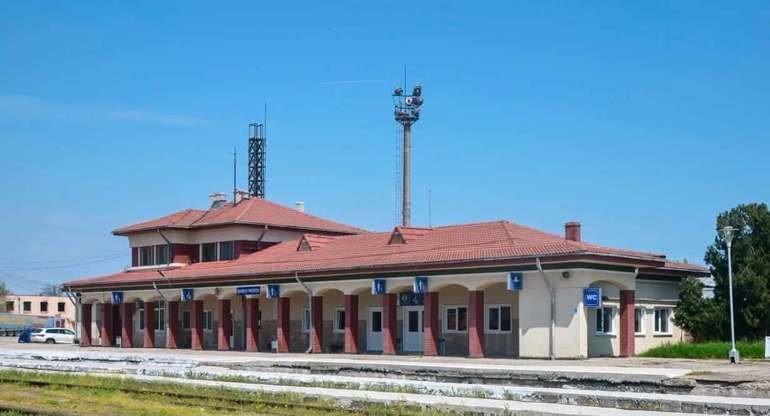
Foto: Fundația Eco-Civica