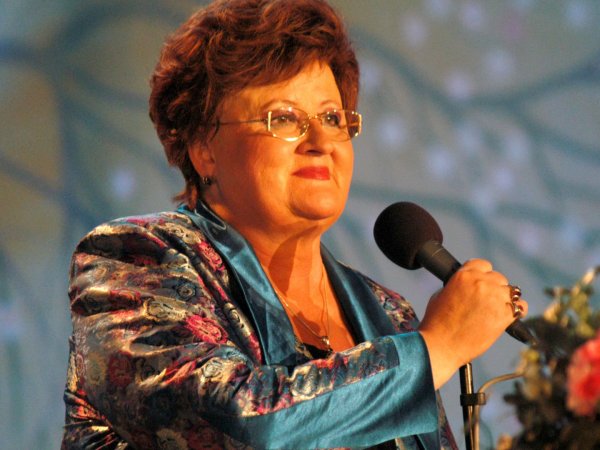
Marioara Murărescu, the woman who transformed Romanian folklore into a true national treasure
- Articles
- 15 JUN 26
For several decades, Marioara Murărescu represented one of the most important personalities of Romanian traditional culture. Through the passion, rigor, and dedication with which she researched and promoted folk music, the television producer managed to build a strong bridge between the Romanian village and the audience in front of their television sets. For millions of people, her name became synonymous with authenticity, respect for tradition, and the continuous struggle to preserve folkloric values. Through the television program “Tezaur folcloric” (“Folklore Treasure”), Marioara Murărescu brought into Romanians’ homes old songs, talented performers, and customs that, without her work of documentation and preservation, might have been forgotten. She did not limit herself to the role of a television presenter but became a true researcher of folklore, a person who understood that popular tradition must be sought where it was born: in rural communities, among the people who passed down songs and traditions from generation to generation.
Childhood, education, and the path toward the world of folklore
Marioara Murărescu was born on October 1, 1947, in Bucharest, into a family where spirituality and respect for traditional values occupied an important place. Her father, the priest Petre Murărescu, came from the Muscel area and had a decisive influence on her cultural formation. He was the one who instilled in her a love for authentic folk songs and for the universe of the Romanian village, values that would define her entire existence.
Initially, Marioara Murărescu’s artistic destiny seemed to be connected to classical music. During her studies at the Conservatory, the young woman was preparing for a career as a coloratura soprano and had all the qualities necessary to follow this path. However, an apparently ordinary surgical intervention, the removal of her tonsils, affected her vocal cords and radically changed the direction her professional life was going to take.
Instead of giving up music, Marioara Murărescu chose to reinvent herself and move closer to a field she had discovered in her childhood: Romanian folklore. During her years of study, she had the privilege of being guided by two of the most important Romanian ethnomusicologists, Emilia Comișel and Gheorghe Oprea. Alongside them, she participated in numerous field research expeditions, traveling through various regions of the country to collect songs, study traditions, and understand the depth of Romanian folk creation.
In 1972, she graduated from the Conservatory as the valedictorian of her class, once again proving her seriousness and talent. After completing her studies, together with 12 colleagues from her generation, she was assigned to the Romanian Radio Broadcasting Corporation, an institution that would play an essential role in her professional development.
The discovery of the sound archives and the beginning of a cultural mission
The period spent at the Radio represented a true revelation for Marioara Murărescu. There, she came into contact with the institution’s sound archive, a place that housed recordings of exceptional historical value. The voices of great performers of the past, songs collected from all regions of the country, and sound documents preserved over the decades became an invaluable heritage for her.
Some of these recordings originated from the interwar period and had been made using a technology that today may seem primitive. Sounds were captured with the help of a phonograph equipped with a metal funnel, and the sound vibrations were transmitted to a needle that mechanically engraved fine grooves onto the surface of rotating wax cylinders.
Although the technical methods of those times were limited, the results obtained became, years later, documents of enormous importance. Many of those recordings represent the only audio testimonies of performers and musical styles that have disappeared, and their preservation played an essential role in safeguarding Romanian cultural identity.
Marioara Murărescu later remembered that the working atmosphere at the Radio was a special one, based on discipline, professional respect, and collaboration among specialists. The small team in which she worked allowed her to carefully prepare every program and to thoroughly study every subject related to traditional music.
From Radio to Television and the birth of the program “Tezaur folcloric”
In 1977, her career entered a new stage with her transfer to Romanian Television, a change that she initially viewed with many reservations. The transition from the quiet atmosphere of radio studios to the complexity of television production was difficult because she had to work with large teams and adapt to completely different rules.
Marioara Murărescu appeared in front of television cameras under unexpected circumstances. After the presenter of the program “Floarea din grădină” (“The Flower from the Garden”), Mihai Florea, suffered an accident, the television management asked her to replace him. The experience was challenging because she had not received guidance on how she should appear in front of the public or about the specific rules of television. Over time, however, she developed her own style, characterized by sobriety, elegance, and respect for artists and viewers.
Her first attempt to create a television program dedicated exclusively to folklore took place in March 1978. However, the project that would bring her true recognition was born only in 1982, when “Tezaur folcloric” was launched. The program quickly became one of the longest-running and most beloved productions of the public television station, being broadcast week after week and bringing the richness of Romanian traditions into the spotlight.
The first edition had as its guest the great taragot player Dumitru Fărcaș, and the success of the program confirmed that the Romanian public needed a space dedicated to authentic values. Marioara Murărescu did not settle for filming only in television studios but traveled to villages, folk festivals, traditional gatherings, and various cultural events in order to capture folklore in its natural form.
The struggle for authenticity and the legacy left to Romanian culture
One of Marioara Murărescu’s greatest merits was discovering and supporting numerous artists who would later become landmark names in Romanian folk music. She was involved in choosing the repertoire of many debuting performers, guided them, and encouraged them to preserve the authentic characteristics of the regions they came from.
Throughout her activity, she maintained a firm position against the distortion of traditions and the kitsch that had begun to affect folklore. She shared the idea expressed by the researcher Harry Brauner, who warned about the danger of the “pollution of folklore”, meaning the transformation of authentic folk creations into commercial products lacking cultural value.
Surprisingly, the communist period was not the most difficult stage of her career. The greatest challenges appeared after the political changes of 1989, when, at the beginning of the 1990s, there were attempts to remove the program “Tezaur folcloric” from the broadcasting schedule because it had been appreciated during the former regime. Marioara Murărescu managed to overcome those difficult moments thanks to the professional prestige she had built and the constant support received from the public.
After a life entirely dedicated to promoting Romanian cultural heritage, Marioara Murărescu passed away on January 30, 2014, at the age of 66, after a long battle with a severe illness. According to her wishes, she was buried in Cernica, alongside her parents.
The legacy she left behind goes far beyond the number of programs she created or the artists she promoted. Marioara Murărescu built a true living archive of the Romanian soul and demonstrated that folk traditions are not simple memories of the past, but values that can continue to inspire future generations.
Through her tireless work, Romanian folklore reached the homes of millions of people, and her name remained forever associated with the idea of authenticity and respect for the national heritage.
We also recommend:When life outdoes fiction: Sanda Țăranu gave up chemistry to become an actress, but ended up the most famous voice of Teleenciclopedia