Ion Brezoianu, the Great Pedagogue of Wallachia, Has a Street Named After Him in the Center of Bucharest
- Articles
- 11 MAR 26
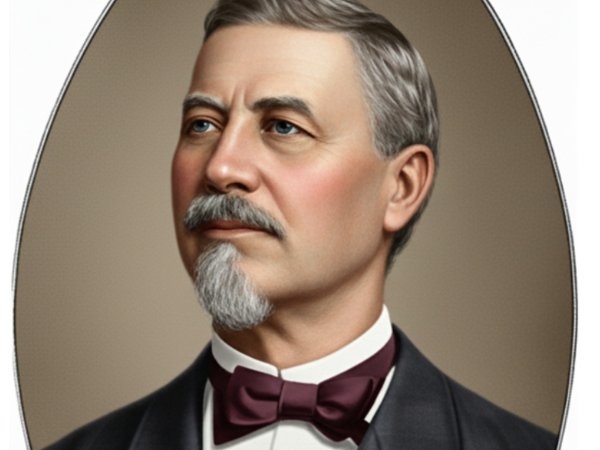
Ion Brezoianu remains one of the most important teachers of Wallachia, a dedicated pedagogue who devoted his entire life to education and schoolchildren. Through his efforts and vision, Brezoianu contributed to the development of the educational system in Mehedinți County, leaving behind a legacy that influenced generations. In the center of Bucharest, a street now bears his name, as a symbol of recognition for his tireless work and dedication to Romanian education.
Youth and Education of Ion Brezoianu
Ion Brezoianu was born in Bucharest around 1817, at a time when the city was full of dynamism and social changes. From a young age, Brezoianu showed a remarkable interest in books and knowledge. He attended the Saint Sava School, where he had the opportunity to study alongside the future President of the Council of Ministers, I. Em. Florescu. Yet, perhaps the most significant influence was his encounter with the mathematics teacher, Petrache Poenaru, who instilled in him a love for rigor and method.
After completing his studies, around 1837, Brezoianu was assigned as a teacher at the higher school in Cerneți, the then-residence of Mehedinți County. Here, his presence was quickly felt, and the quality of educational work increased significantly. Under his leadership, the School Board transformed the institution into a normal school for teachers, laying the foundations for a solid and modern training system for that time.
Innovation and Field Work in Mehedinți
Brezoianu’s task was not limited to teaching students. He was responsible for training future teachers and identifying locations where new schools would be built. This mission involved traveling through all the villages of the county to assess educational needs and establish new schools. By 1839, his efforts had led to the opening of no fewer than 260 schools in Mehedinți County, attended by approximately 5,000 students—an impressive achievement for that period.
Brezoianu recorded in 1881 the experiences from his fieldwork: “It was a magnificent and moving thing to see my students and me leaving Cerneți with our bundles on our backs. During the Easter and summer vacations, we began surveying from village to village. The peasants welcomed us joyfully, for they immediately saw that we did not resemble Greeks, officers, or tax collectors; they sensed that great good would come from our work.”
Early Obstacles and Injustices
His success, however, was not welcomed by everyone. Prince Alexandru Ghica, suspicious of the teacher’s influence and fearing his involvement in the conspiracy of Mitică Gr. Filipescu, arrested Brezoianu and imprisoned him for six months within the Saint Sava School. After this period, the teacher was released, but not to continue his work; rather, he was allowed to bid farewell to the staff in Mehedinți. During this time, his friend Chiriță Vrăbiescu organized a banquet in honor of the “dismissed teacher,” attended by former students, now teachers in various localities of the county.
This experience did not diminish his enthusiasm and dedication to education. Ion Brezoianu returned to Bucharest, where, thanks to the support of Ion Heliade Rădulescu, he obtained a post as a translator at Curierul Românesc, reconnecting with the cultural and educational environment of the capital.
Professional Recognition and Rise in Education
The fall of Alexandru Ghica opened new opportunities for Brezoianu. He was called to organize the candidate school in Câmpulung, where he impressed with his innovative methods and the efficiency with which he managed the training of students. In 1843, Prince Gheorghe Bibescu, visiting Muscel, attended one of Brezoianu’s classes and was astonished by the students’ preparation, appointing him pitar and awarding him 200 gold coins as a reward.
His work extended beyond teaching. In 1848, at the beginning of the revolution, Brezoianu actively supported revolutionary movements, later being arrested again and judged by the Russo-Romanian commission, receiving a sentence of several months in prison. Nevertheless, his dedication to education did not waver; on the contrary, it strengthened his reputation as a tireless teacher.
Contributions in Bucharest and Published Works
Returning to Bucharest, Brezoianu was appointed head of the chancellery at the Public Trusteeship of Orphans and later joined the documentary commission for the secularization of monastic estates alongside Bogdan Petriceicu Hașdeu and Ștefan Grecianu. From this work arose his study “Monasteries Dedicated to Greek Monks and the Greek Monks.” In 1862, Alexandru Ioan Cuza appointed him counselor at the Court of Appeal, and between 1868 and 1872, he was a member of the General Committee of Theaters.
Despite holding multiple positions, his heart always remained in classrooms full of students. Brezoianu translated, adapted, and published essential works for normal and rural schools: The Primary Teacher, The Universal Agricultural Rudiment, On the Education of Names, Domestic Medicine and Pharmacy, Elements of Sacred History, and others, contributing to the formation of generations of teachers and students.
Ion Brezoianu’s Legacy
Ion Brezoianu remains in history as a dedicated pedagogue who overcame the injustices of his time to fulfill his mission. Through his activity, he contributed to the modernization of Romanian education, trained qualified teaching staff, and inspired the respect and admiration of his contemporaries. He passed away at the age of 66, weary from a life devoted to education, leaving behind a remarkable legacy.
Today, a street in the center of Bucharest bears his name, symbolizing recognition for his efforts and the impact he had on Romanian education. Ion Brezoianu remains an example of dedication, professionalism, and passion for education, a true founder of schools and generations of teachers in Romania.
Through his life and work, Brezoianu demonstrates that perseverance, integrity, and dedication can overcome obstacles and injustices, leaving behind a more educated and enlightened society. Thus, his name lives on in collective memory, and his contributions to national education continue to inspire generations of teachers and students, confirming his place in the pantheon of great Romanian pedagogues.
We also recommend: The Universul Palace, the ambitious project of journalist Luigi Cazzavillan and the history of Romania’s first high-circulation newspaper