How the legend of the Easter Bunny appeared and what Easter traditions Romanians have adopted
- Articles
- 07 APR 26
The Easter celebration is, without a doubt, one of the most important and symbol-laden moments in the Christian calendar. It marks the Resurrection of Jesus Christ and is celebrated with deep emotion throughout the world. However, beyond the religious significance, Easter is accompanied by a series of popular traditions and symbols that have evolved over the centuries, some of them having surprising origins.
The symbolic origin of the Easter Bunny
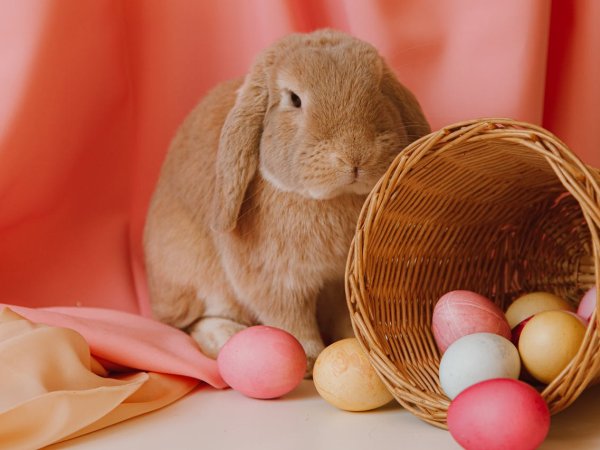
Among the most beloved symbols of this holiday is the Easter Bunny – an apparently innocent character, but with a fascinating history. Although it has no direct connection with Christian tradition, the bunny has become a central element of the celebration, especially for children. At the same time, Romanians have integrated their own Easter traditions, creating a unique blend between ancient customs and modern influences.
The legend of the Easter Bunny has its roots in pre-Christian Europe, especially in the Germanic space. In old pagan beliefs, the rabbit was considered a symbol of fertility, due to its extraordinary reproductive capacity. It was associated with spring, the rebirth of nature and the cycles of life.
An important role in this symbolism was held by the goddess Eostre (or Ostara), celebrated at the spring equinox. In popular mythology, the rabbit was considered the sacred animal of this deity, symbolizing abundance and the beginning of a new cycle of life.
With the spread of Christianity in Europe, many of these pagan symbols were reinterpreted and integrated into the new religious traditions. Thus, the rabbit became associated with Easter, gradually becoming a symbol of joy and spiritual rebirth.
From pagan symbol to modern tradition
The transformation of the bunny into a character that brings gifts is a relatively recent phenomenon, appearing in Germany in the 17th century. At that time, children were taught that a magical rabbit, called “Osterhase”, brings them colored eggs if they have been well-behaved.
The tradition was carried further by German emigrants to America, where it became extremely popular. Over time, the Easter Bunny began to bring not only eggs, but also sweets and gifts, transforming into a character similar to Santa Claus.
Today, the image of the bunny is omnipresent during the Easter period: it appears on decorations, in advertisements, in children’s stories and in family customs. Although its origin is not religious, the symbol has been accepted and integrated into the popular culture of many countries.
The meaning of Easter eggs
Another essential symbol of Easter is the egg, present in almost all Christian cultures. The egg represents life, rebirth and hope – values that are also found in the message of the Resurrection.
In Christian tradition, the red egg symbolizes the blood of Christ, but also the victory of life over death. There are numerous legends that explain the appearance of this custom, one of them saying that the eggs turned red at the moment of the crucifixion of Jesus.
In Romania, egg dyeing is a true art. In some regions, such as Bucovina, eggs are decorated by hand with traditional motifs, using techniques hundreds of years old. These decorated eggs are considered true works of art.
Romanian Easter traditions: between faith and folklore
Romania has an impressive richness of Easter traditions, which differ from one region to another, but preserve a common core: faith, community and the joy of renewal.
Holy Week is a period of spiritual preparation, during which believers attend services and observe strict customs. The Night of the Resurrection is the central moment of the celebration, when people go to church to receive light.
After the service, families gather around the Easter table, where traditional dishes are not missing: cozonac, pasca and lamb. The knocking of eggs is a symbolic ritual, accompanied by the formula “Christ has risen!” – “Truly He has risen!”.
Spectacular regional customs
In addition to general traditions, there are also local customs that add color to the celebration. In Transylvania, for example, the custom of sprinkling girls on the second day of Easter is preserved, a tradition of Hungarian origin, symbolizing purification and fertility.
In Maramureș, people wear traditional costumes and participate in services in a solemn and authentic atmosphere. In Bucovina, egg decorating is elevated to the rank of art, and each pattern has a particular meaning.
In some areas of southern Romania, there is the custom of vigil fires, lit on the Night of the Resurrection, symbolizing light and protection.
How Romanians adopted the Easter Bunny
Although the tradition of the Easter Bunny is not native to Romania, it has been adopted relatively recently, especially in urban environments. Western influences, globalization and commercial culture have contributed to the popularization of this symbol.
Today, Romanian children eagerly await the visit of the bunny, which brings them sweets, toys and chocolate eggs. In many families, this tradition coexists with religious customs, without replacing them.
This combination between traditional and modern reflects the capacity of Romanian culture to adapt and to integrate external influences, while preserving its identity.
Easter – a celebration of continuity
What makes Easter so special is its ability to bring together the past and the present. From reinterpreted pagan symbols, such as the bunny, to profound Christian rituals, this celebration is an expression of cultural continuity.
In Romania, Easter remains a celebration of family, faith and traditions. Even if some customs have changed or have been adapted, the essence has remained the same: the celebration of life and hope.
The Easter Bunny, with its distant origins, has today become a symbol of childhood joy. Alongside red eggs, the light of the Resurrection and family meals, it contributes to the charm of a celebration that continues to move entire generations.
We also recommend: Easter Markets 2026 in Bucharest — where to go and what to find