How Alexandru Ioan Cuza died, in exile, cared for by his wife, Elena. The terrible illness that defeated him
- Articles
- 04 DEC 25
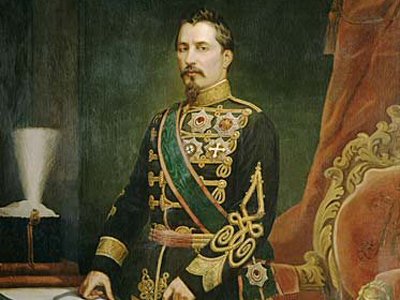
In 2025, it will be 152 years since the death of one of the most important political figures of the Romanian nineteenth century: Alexandru Ioan Cuza. The architect of the Little Union of 1859, the first ruler of the United Principalities and of the modern Romanian state, Cuza was the man who laid the foundations of the reforms without which Romania would not have looked the same. Yet his destiny ended in a sad way, far from the country he had modernized with energy and vision that are hard to match.
The last years of a ruler driven from the throne
Cuza’s dethronement in February 1866, through the conspiracy known as the “Hostile Coalition”, was a decisive moment. The group, formed of conservative politicians and liberal unionists, feared his authoritarian but reformist style and decided to force him to abdicate.
Although Cuza had assumed responsibility for transforming the country at an unprecedented pace, for many members of the elite this haste was considered dangerous. Forced to leave the throne, the ruler began the road of an exile that would hasten his end.
Born in 1820 at Bârlad, Alexandru Ioan Cuza was, for the short interval 1859–1866, the leader of a people in full political maturation. During these years, he initiated reforms in administration, education, the judicial system and, above all, in the agrarian field, carrying out the famous reform that liberated the peasantry from the dependence on large landowners. But history decided that his era had to end abruptly, and the ruler left into the world as a simple citizen, accompanied only by his family and a few close friends.
Exile, illness and shattered hopes
In the first months after the abdication, Cuza spent his time in Paris, trying to lead a quiet life, far from the political tensions of the country. However, his physical condition was already fragile. In the autumn of 1867, hoping to improve his health, the former ruler moved to Oberdöbling, near Vienna. There, doctors found that he was suffering from a serious pulmonary disease, and the recommended treatment involved a milder climate.
Cuza followed the doctors’ advice and left for Florence, Italy. It was believed that the warm air of Tuscany could help him regain strength and recover his balance. Unfortunately, neither the treatments nor the rest had any effect. Instead of recovering, his body was gradually giving way. The states of weakness worsened, and the episodes of difficult breathing became more frequent.
In 1871, in a final attempt to find relief, he began visiting spa resorts in Austria. At the same time, he tried to obtain permission to return to Romania, even as a simple citizen. But the Council of Ministers in Bucharest rejected his request without hesitation. For Cuza, this refusal was a deep wound. The man who had dedicated to the country the most fruitful reforms of the century had been reduced to the status of an unwanted exile.
From his last travels to the tragedy in Heidelberg
In May 1873, physically and mentally exhausted, Alexandru Ioan Cuza decided to settle in Heidelberg, Germany. On the one hand, the city was famous for its academic environment and could offer high-quality education to his sons. On the other hand, he hoped that local doctors might help him improve his condition.
But fate was merciless. During a journey through the Mont-Cenis tunnel, on the way to Heidelberg, Cuza caught a severe cold. As he was already suffering from a chronic pulmonary illness and a mild form of asthma, the cold quickly turned into a fatal complication. His weakened body could no longer fight.
His wife, Elena Cuza, was constantly at his side. A direct witness to his suffering and his last days, she left posterity an emotional testimony. When they arrived in Heidelberg, they were taken to the Hotel Europa, where Elena wanted immediately to apply the usual treatment. But the intervention of a friend, Prince Obolenski, changed everything: he insisted that the former ruler be seen by a local doctor.
The last hours of the ruler cared for by Elena Cuza
Elena Cuza confessed, in a heartbreaking letter, that the recommended doctor did not understand the gravity of the illness. His prescriptions were, in her opinion, useless or simply unsuitable for the situation. Cuza continued to feel worse and worse, and the applied treatments brought him no relief.
In a mixture of desperation and instinct, Elena began to care for him using the methods she had learned during the years of her husband’s suffering:
“I applied wet cloths with cold water on his chest and on the back of his neck,” she wrote with pain.
But Cuza’s body could no longer resist. On May 15, 1873, at only 53 years old, the first ruler of modern Romania took his last breath in a hotel room in a foreign land, far from the country for which he had worked tirelessly.
The return to the country and the funeral of a beloved leader
Cuza’s death had a powerful echo throughout the Romanian lands. Although he had been forced to abdicate, the people had not forgotten him. Many Romanians saw in him the symbol of dignity, reform and an era in which the Romanian state had consolidated.
Romanian diplomats in Berlin acted quickly so that the ruler’s body would be embalmed in Heidelberg and then transported home. The coffin arrived at Ruginoasa, the place to which Cuza had always been deeply attached, on May 27, 1873.
There, an impressive crowd awaited him: peasants from the surrounding villages, army officers, students, local dignitaries, as well as cultural and political figures of the time. Among those accompanying Elena Cuza were prominent personalities such as Vasile Alecsandri and Costache Negri, close friends of the former ruler.
As a sign of homage, 21 cannon salutes were fired, a ritual reserved for great leaders. The funeral, organized on May 29, had the solemnity worthy of a former head of state. According to his wish, Alexandru Ioan Cuza was buried at the Domnească Church near the Ruginoasa Palace.
The legacy of a destiny cut short too early
The death of Alexandru Ioan Cuza, at a still young age, left behind a mixture of regret, respect and the awareness of an irreparable loss. Cuza did not die only because of a terrible illness, but also because of a life consumed by the burden of historical responsibilities and by political misunderstandings.
Today, more than a century and a half after his passing, his memory remains alive. His reforms permanently changed the structure of Romanian society, and the sacrifices made in the name of modernization are still appreciated. Although his end was a lonely one, far from home, the gratitude of the Romanian people symbolically brought the ruler back to the country he had served.
We also recommend: He Loved 700 Women, Whom Mihail Kogălniceanu Noted in a Journal. The Passions of Ruler Alexandru Ioan Cuza