He Grew Up Without a Mother, Completed Only 12 Grades, and Appeared in the First New Year's Eve Show on Romanian Television. The Life of the Great Actor Mișu Fotino
- Articles
- 14 JUL 26
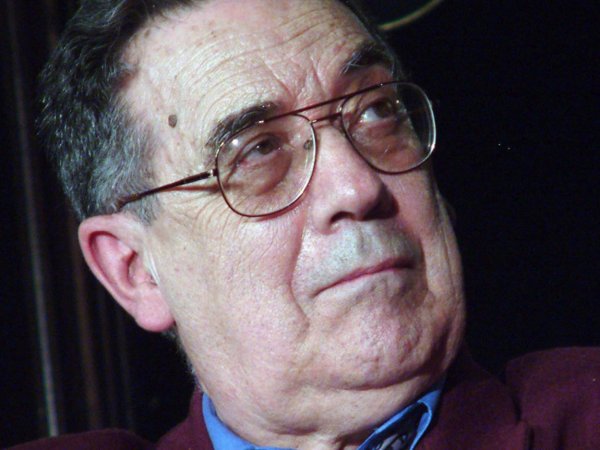
Few actors managed to win over Romanian audiences with as much natural charm, elegance, and humor as Mișu Fotino. For nearly six decades, his name became synonymous with high-quality theater, refined comedy, and the New Year's Eve television shows that brought millions of viewers in front of their television sets. Charismatic, discreet, and deeply in love with the stage, he lived through several eras of Romanian theater without ever losing his charm or his respect for the profession. Behind his success, however, lies an impressive life story. Mișu Fotino lost his mother while he was still a child, never attended university, and learned the craft directly on stage, surrounded by scenery, actors, and rehearsals. Raised behind the scenes of the theater, he built his career through talent, discipline, and hard work, eventually becoming one of Romania's most respected actors.
A Childhood Spent Behind the Scenes of the Theater
Mihai Fotino, known to the public as Mișu Fotino, was born on September 14, 1930, in Bucharest. Although he was born in the Romanian capital, he spent most of his childhood in Brașov, a city that would play a crucial role in his artistic development. His father, Mișu Fotino Sr., was a renowned actor and the founder of the Brașov State Theatre, which meant that his son practically grew up backstage.
Fate tested him from a very early age when he lost his mother. Her absence left a profound mark on him, but the theater became his refuge. Instead of enjoying an ordinary childhood, Mișu Fotino spent his days among actors, stage sets, and rehearsals, fascinated by the magical world of live performance.
His constant exposure to the stage fueled his dream of becoming an actor. For him, the theater was not merely his father's workplace but an extraordinary world where every performance represented emotion, discipline, and magic.
He Made His Stage Debut at the Age of Seven
His artistic journey began remarkably early. In 1937, when he was only seven years old, Mișu Fotino stepped onto the stage for the first time in the play Coloniale, performing alongside some of the greatest names in Romanian theater, including Maria Filotti, Talianu, Maximilian, Nora Piacentini, and the young actress Silvia Chicoș.
Years later, the actor recalled that having two actors named Fotino in the same cast—father and son—sparked plenty of curiosity. The experience was so significant that he even had to interrupt his first-grade studies for a period of time.
During those same years, he also appeared in the film Doamna de la etajul II (The Lady from the Second Floor), starring Mihai Popescu. Although he was only a child, these early experiences in both theater and cinema would ultimately shape his future.
He Graduated from High School, but Theater Made Him Give Up College
After spending his childhood in Brașov, the family moved back to Bucharest, settling in the Popa Nan neighborhood. Mișu Fotino attended Matei Basarab High School, graduating in 1948.
His dream was already clear—he wanted to become an actor. That same year, he landed a small role as a young labor brigade member in Răsună valea (The Valley Echoes), considered the first Romanian feature film produced after the establishment of the communist regime. Around the same time, his successful performance in the play Clasa a VIII-a B (Class 8-B) confirmed that the stage was where he truly belonged.
As more acting opportunities came his way, his schedule became increasingly dominated by rehearsals and performances. University studies gradually took a back seat, and eventually, he decided not to pursue higher education.
Years later, he jokingly recalled the decision by saying, "And that's how little Mișulică ended up without higher education." In reality, the lack of a university degree never prevented him from becoming one of Romania's most respected actors. The knowledge and experience he gained on stage proved to be far more valuable than any academic qualification.
His Spectacular Rise on the Romanian Stage
Even as a young man, Mișu Fotino was already employed full-time at the Brașov Theatre, which was managed by his father. At just 23 years old, he was entrusted with one of the most demanding roles in Romanian dramatic literature: Agamiță Dandanache in Ion Luca Caragiale's famous play A Lost Letter (O scrisoare pierdută).
His outstanding performance caught the attention of the renowned theater director Sică Alexandrescu, one of the most influential figures in Romanian theater at the time. Convinced that the young actor possessed exceptional talent, Alexandrescu invited him to Bucharest.
In 1956, Mișu Fotino joined the "I. L. Caragiale" National Theatre of Bucharest, where he would perform for the next fifty years. Throughout this remarkable career, he portrayed dozens of unforgettable characters and collaborated with Romania's most prominent directors and actors, eventually becoming one of the defining figures of Romanian theater.
The Man Who Made History on Romanian Television's New Year's Eve Shows
For millions of Romanians, Mișu Fotino will forever be associated with the legendary New Year's Eve television specials broadcast by Romanian Television (TVR).
He appeared in the very first TVR New Year's Eve show, which aired in 1957. From that moment until nearly the end of his career, he became one of the program's most beloved and recognizable performers.
Alongside Dem Rădulescu, Stela Popescu, Alexandru Arșinel, and many other giants of Romanian entertainment, Mișu Fotino delighted audiences with unforgettable comedy sketches and performances.
His style was unique - natural, elegant, and built on intelligent humor rather than cheap laughs. It was precisely this refinement that made him beloved by generations of television viewers and theatergoers alike.
The Actor Who Hated Vulgarity and Loved Romance
In an interview published in the magazine Teatrul in June 1971, Mișu Fotino confessed that he detested boorishness, rudeness, and vulgarity with all his heart.
He believed that an actor had the responsibility to convey good taste and respect to the audience and that performances should never rely on crude jokes or offensive language to make people laugh.
If he had been asked to describe himself in a single word, that word would have been "romantic." For Mișu Fotino, the theater was the greatest love of his life—a passion that had accompanied him since childhood and one that he never abandoned willingly.
With his unmistakable sense of humor, he used to say that if he had not become an actor, he would have dreamed of becoming an "Artist," just like Radu Beligan or the legendary French actor Jean Gabin.
Films, Awards, and Recognition for an Extraordinary Career
Although theater remained his greatest passion, Mișu Fotino also enjoyed a successful career in Romanian cinema.
Audiences saw him in productions such as Telegrame (Telegrams), Porto-Franco, Codin, Politică și Delicatese (Politics and Delicacies), Titanic Vals, Elixirul Tinereții (The Elixir of Youth), Chirița în Iași, Sexy Harem Ada Kaleh, Barul de Sâmbătă Seara (Saturday Night Bar), and Amprenta (The Fingerprint).
He also lent his voice to animated productions, providing Romanian dubbing for the Tarzan series as well as Disney's Piglet's Big Movie.
His outstanding contribution to Romanian performing arts was recognized through numerous prestigious distinctions. In 1959, he was awarded the honorary title of Meritorious Artist, and in 2004 he received the Order of Cultural Merit, Commander rank, in recognition of his lifelong dedication and exceptional contribution to Romanian theater.
In 2006, during the 14th edition of the UNITER Awards Gala, Mișu Fotino received the Lifetime Achievement Award, a fitting tribute to his extraordinary artistic career.
The Tragedy That Forced Him to Leave the Stage
After spending decades under the spotlight, fate confronted him with one of life's most painful challenges.
In 2005, Mișu Fotino suffered a stroke that changed his life forever. The health problems that followed forced him to retire from the stage—a separation that caused him immense emotional pain.
For a man who had been performing since the age of seven, no longer being able to act was the greatest hardship he had ever faced. Although he tried to fill his days by taking walks in the park with his grandson, affectionately nicknamed "Arșinel," his longing for the stage never disappeared.
When asked later in life about his greatest regrets, his answer was deeply moving. He said that his biggest regret was no longer being able to practice the profession he loved. He admitted that the stroke had completely changed his life, but that he had learned to accept his new reality with dignity, silence, and strength.
The Legacy of One of Romania's Most Elegant Actors
Mișu Fotino passed away on January 13, 2014, at the age of 83, leaving behind an irreplaceable void in Romanian theater. His death marked the loss of one of the last great representatives of the golden generation of Romanian actors.
The artistic legacy he left behind is remarkable. Dozens of unforgettable stage performances, numerous films, television productions, and the beloved New Year's Eve shows continue to be rediscovered and appreciated by audiences today.
Beyond his undeniable talent, Mișu Fotino remains a symbol of elegance, modesty, and unwavering respect for his profession. He never earned a university degree, yet he built an exceptional career through hard work, perseverance, and passion.
Raised without a mother and shaped by life behind the scenes of the theater, he proved that true greatness is not measured by academic diplomas but by dedication to one's craft and the ability to move generations of spectators.
Today, Mișu Fotino's name continues to hold a place of honor in the history of Romanian theater and cinema, while his performances remain a source of admiration and inspiration for audiences and young actors alike.
We also recommend: The Story of the Great Actor Jean Lorin Florescu, the Romanians' Favorite Villain, Loved by Draga Olteanu Matei