Great Romanian dynasties: Sturdza, a lineage of princes, politicians, actors and the first ruler who freed the gypsies
- Articles
- 06 FEB 26
The Sturdza family holds a special place in Romania’s history, not only because of its longevity, but also due to the impressive diversity of roles played by its members over more than five centuries. From high officials and rulers of Moldavia, to great politicians, reformers, military leaders or artists, the Sturdzas decisively influenced the course of Romanian society. Their history is one of power, internal rivalries, responsibility toward the country, but also of remarkable personal destinies.
The origins of the Sturdza family and its rise in medieval Moldavia
Originating in Moldavia, the Sturdza family is documented as early as the 15th century, being one of the great boyar families that consistently contributed to the political and administrative life of the country. Historical tradition, recorded by chroniclers such as Ion Neculce and Constantin Sion, places the rise of the Sturdzas among the major princely officials beginning in the mid-16th century. The first known ancestor is Ioan Sturdza, known as “the hatman”, who held key positions in the defensive and military system of Moldavia.
Between 1545 and 1548, Ioan Sturdza served as pârcălab of the Hotin fortress, one of the most important fortifications of medieval Moldavia. Later, he became hatman and porter of Suceava, a position equivalent to that of commander of the army. This role granted him major influence in the political life of the time and opened the path for the family toward a constant role in governing the country.
Gavril Sturdza and the consolidation of a boyar lineage
The strictly documented chronicle of the family begins, however, with Gavril Sturdza, mentioned in sources from the 17th century. In 1613, Gavril appears in documents as postelnic, and later rises to the rank of hatman, confirming the family’s continuity among Moldavia’s elites. During this period, the Sturdzas were ennobled in Transylvania by Prince Mihai Apafi, a fact that strengthened their regional prestige.
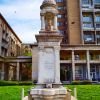
From Gavril dates the first known seal of the Sturdza family, a complex heraldic symbol featuring an eagle, a cross and a serpent coiled around it. Later, the coat of arms was adapted, with the serpent replaced by a heraldic lion, a symbol of power and royalty. This coat of arms can still be seen today on the Sturdza family monument in Cișmigiu Park, a discreet but telling testimony to their presence in the history of the capital.
Gavril’s son, Matei Sturdza, great treasurer, is the one through whom the family line continues to the present day. His two sons, Ilie and Chiriac, became central figures in Moldavian political life starting in the second half of the 17th century, establishing a tradition of political involvement that would mark subsequent generations.
Branches, rivalries and great boyar estates
In the 18th century, the Sturdza family divided into two major branches, following disagreements between Ioan and Sandu, the sons of Chiriac Sturdza. Thus emerged a “major” branch and a “minor” one, between which there would be, over time, both fierce political rivalries and surprising marital alliances. This fragmentation did not weaken the family’s influence, but rather diversified it.
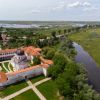
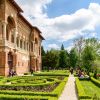
From these branches descended the Sturdzas of Miclăușeni, Scheia or Popești, each leaving behind manors, castles and estates that still endure today. The castle at Miclăușeni, built by Gheorghe Sturdza, is one of the most spectacular examples of noble architecture in Moldavia. Beyond estates and palaces, the family founded churches, schools and gave their name to streets, boulevards and cultural institutions, a sign of their lasting impact on Romanian public space.
Ioniță Sandu Sturdza, the first native ruler of Moldavia
One of the most important figures of the family is Ioniță Sandu Sturdza, the first native ruler of Moldavia after the Phanariot era. Ascending the throne in 1822, he ruled until 1828, during a difficult period marked by external pressures and internal conflicts. Historian Constantin Gane described him as a just, gentle man deeply attached to Romanian values.
Ioniță Sturdza led a modest life even as ruler, rejecting luxury and preserving traditional habits. He supported the camp of the lesser boyars, known as the “cărvunari”, who demanded reforms inspired by the French Revolution. Although he accepted the Cărvunari Constitution, his reign was constantly undermined by the great powers and by the high boyar class, dissatisfied with his fiscal policies.
Despite the obstacles, Ioniță Sandu Sturdza succeeded in opening a higher school at the Three Hierarchs Monastery in Iași and in introducing the principle of merit in the appointment of officials. He was married to Ecaterina Rosetti-Roznovanu and is buried at the Bărboi Church in Iași, a foundation of the family.
Mihail Sturdza, the reforming ruler and the emancipation of the Roma
His cousin, Mihail Sturdza, is the second ruler from this family and one of the most complex political figures of the 19th century. His reign, from 1834 to 1849, was controversial but extremely productive from an administrative and cultural point of view. Educated in a Western spirit, multilingual and with vast knowledge, Mihail Sturdza was considered by historians to be one of the most capable statesmen of Moldavia.
Under his leadership, Moldavia experienced accelerated modernization: the first roads were built, hundreds of stone bridges, and the administration was reorganized. He decisively supported education, inaugurating the Mihăilean Academy in 1835, the precursor of the University of Iași, and contributed substantially to the construction of the Metropolitan Cathedral.
The most important act of his reign remains, however, the decree emancipating the Roma owned by the state and by monasteries, signed on January 31, 1844. This act of great moral and political courage opened the path toward the abolition of Roma slavery throughout the Romanian lands and was celebrated by contemporaries as an act of justice and humanity.
Exile, eccentrics and family conflicts
After the Revolution of 1848, Mihail Sturdza left the throne and the country, settling in Paris, while summers were spent in Baden-Baden. His family life was marked by dramas and conflicts, especially in his relationship with his son Grigore Sturdza, known by the nickname “Beizadea Vițel”. An eccentric character, passionate about astrology and sport, Grigore had an unusual career, becoming a general in the Ottoman Army and participating in the Crimean War.
The father-son rivalry reached its peak in 1859, when Grigore ran against his own father for the throne of Moldavia. Although neither was elected, the rupture between them became irreparable, and Mihail Sturdza almost completely disinherited him. Grigore later recovered part of the estates through lawsuits, retaining the domains of Cozmești and Cristești.
Dimitrie A. Sturdza and the liberal era
Another essential name is Dimitrie Alexandru Sturdza, one of the dominant figures of Romanian politics at the end of the 19th century. Four times prime minister between 1895 and 1909, leader of the National Liberal Party and president of the Romanian Academy, D.A. Sturdza had an impressive but extremely demanding career.
His solid education, begun at the Mihăilean Academy and continued in Germany, prepared him for a life dedicated to the state. However, political tensions, internal rivalries and the pressure of holding multiple offices severely affected his mental health. In the last years of his life, illness removed him definitively from public life, and his death in 1914 closed an important chapter of Romanian liberalism.
Lucia Sturdza Bulandra, the glory of the Romanian stage
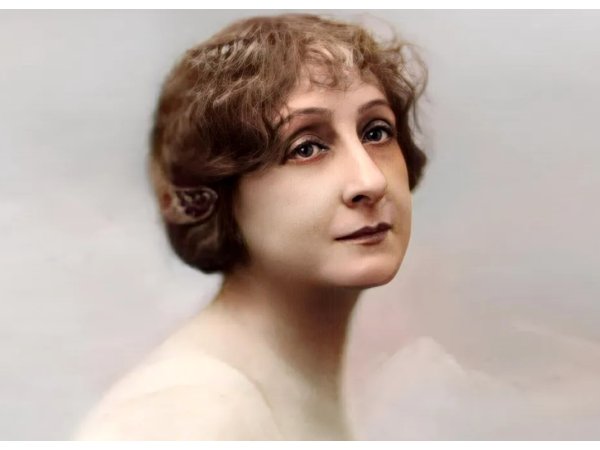
Beyond politics, the Sturdza family also produced great cultural personalities, and Lucia Sturdza Bulandra is undoubtedly the most famous. A descendant of Mihail Sturdza, Lucia defied the social conventions of the time and her family’s opposition to follow her artistic calling. Although she initially wanted an academic career, the theatre changed her destiny.
Her debut on the stage of the National Theatre was marked by emotion and open opposition from her family, but her talent and perseverance quickly imposed her. She studied dramatic art, played numerous important roles and, together with her husband, Tony Bulandra, founded one of the most important theatrical companies in Romania. As an acting teacher, she trained entire generations of artists, and her legacy endures today through the Bulandra Theatre, which bears her name.
The legacy of the Sturdzas in Romanian history
Seen as a whole, the history of the Sturdza family is a synthesis of modern Romanian history: power and reform, conflict and ideals, tradition and openness toward Europe. From rulers who modernized Moldavia and freed the Roma, to politicians who built the modern Romanian state and artists who defined national culture, the Sturdzas demonstrated that nobility means not only title, but also responsibility toward society.
More than 500 years after the first documentary attestations, the name Sturdza continues to be a landmark of civic involvement, culture and historical memory, confirming the place of this dynasty among the great families of Romania.
We also recommend: “The uncrowned kings” of Romania. Cantacuzino, a dynasty of rulers, princes, actors, and illustrious doctors