Great Romanian dynasties: Kretzulescu, a line of boyars and princes in the high ranks of Europe
- Articles
- 19 FEB 26
The Kretzulescu family represents one of the oldest and most prestigious boyar lineages in Wallachia, alongside the Brâncoveanu princes – specifically the Bassaraba branch of Brâncovan. Uniquely, the Kretzulescus are the only Romanian boyar family recorded with princely rank in the Gotha almanacs. This recognition stemmed from a proposed – though ultimately unsuccessful – marriage between Radu (Rodolphe) Kretzulescu and the daughter of King Umberto I of Italy. Beyond personal ambition, this proposal carried political undertones, reflecting the growing European acknowledgment of the Latinity of the Romanian people at the time.
The marriage alliances and historical impact
The note in the Gotha Almanac records the Kretzulescu family as a boyar family originating from Wallachia, descending from the Basarab lineage, with the Kretzulești fief acquired at the end of the 16th century. Important members of the family include Radu Kretzulescu, caimacam of Wallachia in 1672, and Constantin Kretzulescu, grand ban of Craiova in 1755. In 1900, the family received the Italian title of Principe and letters of nobility. Rodolphe (Radu) I Kretzulescu (1865–1902), a Romanian deputy naturalized as Italian, married Irina Cantacuzino, and they had a daughter, Georgette-Catherine-Jeanne (b. 1893).
Princess Georgette-Catherine-Jeanne later married Constantin – known as Costea – Caradja, eldest son of the cultural figure Aristide Caradja (1861–1955), an entomologist, musicologist, and philosopher whose vast butterfly collection remains a highlight of the Antipa Museum. Recently, a book explored Catherine Kretzulescu’s life and her efforts to protect American soldiers during World War II.
During the Communist regime in Romania, she lived in Paris with her daughter and eventually died at the “Saint Catherine” asylum in Bucharest, named after the family’s earlier patron, Ecaterina Cantacuzino born Băleanu.
Origins of the Kretzulescu family
The origins of the Kretzulescu family have been studied in detail by historians Ioan C. Filitti and Nicolae Stoicescu, who dismissed fantastical claims made by family members, such as Emanuel Kretzulescu, the brother of the Italian prince.
According to the most reliable sources, including the Dictionary of High Officials of Wallachia and Moldavia, the family descends from the great boyar Radu Crețulescu (early spelling retained with “C” and “ț”), son of Stan logofăt of Crețulești and Stanca, daughter of Fierea logofăt of Greci. Stoicescu writes: “Stan was the son of another Stan, who was the son of Vintilă paharnic from Balotești and Caplea, daughter of Caplea from Periș and Stan m.spăt. from Corbi. Thus, the Crețulești descend from major boyars of the 16th century and are related to the Corbeanu and Greceanu families.”
On the maternal line, the Kretzulescus carried Basarab blood, having multiple marital alliances with this historic line. Contrary to previous beliefs, Lady Stanca, wife of Michael the Brave, was not from this family, although she was later depicted in the votive painting of the Kretzulescu Church in Bucharest.
Radu Crețulescu rose in prominence through multiple high offices: great logofăt (September 1662–May 1663; February 1665–January 1672), great vornic (June 1674–August 1675), and again great logofăt (January 1679–March 1680).
Political struggles and religious patronage
Radu Crețulescu, allied through his wife Maria to the Cantacuzino family, followed the political fortunes of his in-laws. During Grigore I Ghica’s first reign, he was imprisoned, and under Antonie Vodă from Popești, he held the position of caimacam of Wallachia. The Băleni Chronicles describe the political turbulence of the era, including the flight of Radu and his family to Transylvania and subsequent interventions by loyal figures like Costandin Brâncoveanul.
Alongside his political activity, Radu Crețulescu continued the tradition of religious patronage. He founded churches in Rebegești (Crețulești, Ilfov County), Bărbulețu (Dâmbovița County), and Crețulescu in Târgoviște. The Rebegești church, studied by architect Nicolae Ghika-Budești and preserved today, remains central to the family’s history, linked to their ancestral estate and the origins of their name.
Branches and alliances
Radu’s brother, known as “Pădure,” was a great pitar in 1674 and participated in a mission to Emperor Charles VI in 1717 due to his pro-Austrian stance. The two branches of the Crețulescus—Radu and Pădure—developed from this point. The Pădure branch ended in the 19th century with the marriage of Luxandra Crețulescu to Grigore Cantacuzino, parents of the conservative politician Gheorghe Grigore Cantacuzino.
The family continued through numerous alliances with prominent boyars and intellectuals. Marriages included connections with the Leurdeanu, Ștefănescu, Câmpineanu, and Brâncoveanu families, securing political, cultural, and religious influence. Iordache Crețulescu, son of Radu and Safta Leurdeanu, married into the Brâncoveanu lineage, founding the post-Brâncovenesc church in central Bucharest in 1722, a hallmark of the period’s architecture.
19th- and 20th-century figures
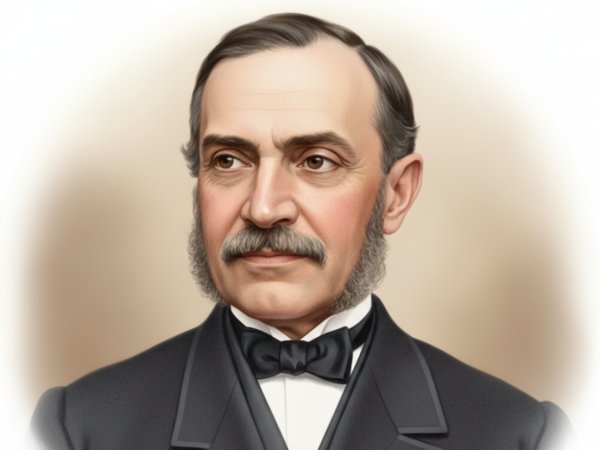
The 19th-century generation included Constantin and Nicolae Kretzulescu, sons of Alexandru Kretzulescu and Ana Câmpineanu. Nicolae Kretzulescu was a pioneer in Romanian medicine, founder of the “School of Minor Surgery” at Colțea Hospital, and several times prime minister. He also served as plenipotentiary minister in Berlin, Saint Petersburg, Rome, and Paris.
Other Kretzulescu siblings left their marks: Dimitrie as a high-ranking officer, whose residence hosted plans for Cuza’s abdication, and Scarlat, whose neoclassical house now hosts the Romanian Literature Museum. The family’s network intertwined with other elite lines, including the Cantacuzino and Ghica families, reinforcing their socio-political presence.
Decline and legacy
The Kretzulescu lineage ended with Nicolae (II) Kretzulescu, son of diplomat Emanoil Kretzulescu. Though less known than the physician Nicolae, he served as efor of the Kretzulescu foundations and collected icons and historical documents. He married an Italian noblewoman, niece of Martha Bibescu, while his sister Alexandrina married into French nobility.
Nicolae survived the Communist regime, dying in Paris, whereas the family’s earlier members, through political, marital, and religious initiatives, left an enduring imprint on Romania’s cultural, medical, and political landscape.
The Kretzulescu dynasty, through centuries of alliances, public service, and cultural patronage, exemplifies the intertwining of Romanian boyar families with the highest ranks of European society, maintaining both local influence and continental recognition.
We also recommend: Great Romanian Dynasties: Four Centuries of Ghica, a Line of Rulers, Princes, and Accomplished Diplomats