Famous houses in Bucharest: Ion Dacian House, the home of the man nicknamed the “Bridegroom of Romanian Operetta”
- Articles
- 17 AUG 26
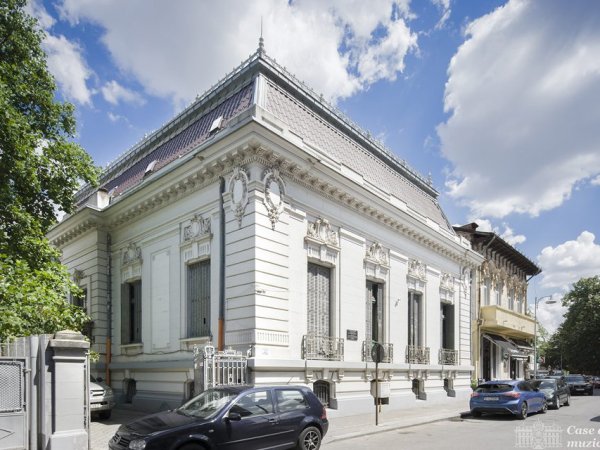
Bucharest is a city where history can be discovered not only in the great palaces, well-known monuments or public institution buildings, but also in the discreet houses hidden on quiet streets in the center of the capital. Some of these properties preserve the memory of personalities who decisively influenced Romanian culture, and their value goes far beyond architectural beauty. This is also the case of the house at 30 Henri Coandă Street, associated with the name of the great tenor and man of the theater Ion Dacian. Located in an area with a remarkable architectural heritage, the building belongs to an urban ensemble in which numerous constructions from the end of the 19th century and the beginning of the 20th century have survived to this day. Henri Coandă Street is included in the List of Historical Monuments through the architectural ensemble “Henri Coandă Street”, code B-II-a-B-18439, an ensemble dating mainly from the end of the 19th century. The street’s built heritage includes buildings such as Casa Macca, the Alexandru G. Florescu House, the Maria and George Severeanu House and the Argetoianu House. Ion Dacian House stands out both through its French academic architectural influences and through the memorial value it acquires through its connection with one of the most important artists of Romanian operetta. The story of the building must therefore be viewed from a double perspective: as part of Bucharest’s built heritage and as a place associated with the memory of an artist who dominated the operetta stage for decades.
A street that preserves the atmosphere of old Bucharest
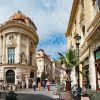
Henri Coandă Street is one of those Bucharest streets where the built heritage can be read almost like a story. The buildings along the street were constructed largely at the end of the 19th century and during the first decades of the following century, a period when the capital of Romania was undergoing a profound urban transformation. The List of Historical Monuments confirms the importance of the ensemble, which includes buildings such as Casa Macca, the Alexandru G. Florescu House, the Maria and George Severeanu House and the Argetoianu House.
Viewed as a whole, the street offers an image of an era when owners wanted homes that expressed not only comfort, but also social status, education and artistic taste. The architecture of the houses was often a form of public representation. Facades, frames, cornices, pilasters and ornaments were carefully designed to create an impression of elegance and prestige.
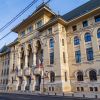
It is in this context that the house at number 30 must be viewed. Although it is not one of the buildings that immediately attracts attention through monumental dimensions, the property has a clearly defined architectural personality. Ion Dacian House is described as a building with clear influences of French academicism, a style appreciated in Bucharest at the end of the 19th century and the beginning of the 20th century.
The elegance of French academicism in the architecture of the house
One of the main characteristics of the building is its compositional balance. The facade is built on the basis of a rigorous organization, in which the vertical and horizontal elements complement one another. On the sides, the impression of stability is emphasized by flattened pilasters, which contribute to the visual delimitation of the facade.
The windows, frames and vertical elements are arranged in a carefully calculated succession, creating a clear architectural rhythm. The repetition does not, however, lead to monotony, because the decorative details introduce variation and refinement. The vertical lines are balanced by the horizontal registers of the plaster and by the strongly emphasized cornice, which gives the facade an impression of stability and proportion.
The decoration is one of the elements that gives the building its personality. If the general structure may appear sober and disciplined, the ornamental repertoire brings an additional expressive quality. The architectural details soften the severity of the composition and create that elegance characteristic of urban residences inspired by French models.
This is, in fact, one of the particularities of Bucharest architecture at the turn of the centuries. Western influences were adapted to the realities of the capital, resulting in buildings that were not simple copies of foreign models, but constructions with their own identity. The house at 30 Henri Coandă Street should be understood precisely through this relationship between rigor, ornament and social representation.
Who was Ion Dacian, the “Bridegroom of Operetta”
The connection between the house and the personality of Ion Dacian amplifies its symbolic value. Born on October 11, 1911, in Saschiz, Mureș County, the artist’s real name was Ion Pulca. He attended both the Faculty of Law and the Music Conservatory in Cluj, demonstrating from an early age an unusually complex intellectual and artistic education.
His important musical debut took place in 1934, on the stage of the Romanian Opera in Cluj. There he performed roles from famous operas such as “La Traviata”, “The Barber of Seville”, “Madama Butterfly”, “The Magic Flute”, “Faust”, “Eugene Onegin” and “Tannhäuser”. The experience accumulated during this period would provide him with the foundation for a career that was ultimately to become permanently connected with operetta.
In 1939, Nicolae Vlădoianu hired him at the “Alhambra” Operetta and Revue Theater in Bucharest. It was also then that his stage name became Ion Dacian, after Vlădoianu changed his name from Pulca to Dacian. In the following years, the artist became one of the central figures of Bucharest’s operetta scene.
In an interwar chronicle, Ion Dacian was nicknamed the “Bridegroom of Operetta”. The nickname was connected with his stage image and the popularity he enjoyed among audiences. He was described as an elegant, smiling, optimistic, communicative artist with a special presence.
A career built between the stage, directing and theater management
Ion Dacian was not only a tenor. His artistic personality manifested itself in several directions: he was a pianist and violinist, principal soloist, director, librettist and teacher. Between 1942 and 1947, he served as co-director of the Alhambra Theater, while continuing to perform leading roles.
A crucial moment for the development of Romanian operetta came in 1950, when the State Operetta Theater was established. Ion Dacian became the principal soloist of the new institution and remained one of its defining personalities. In 1954, he was the first performer of the role of Ciprian Porumbescu in the operetta “Let Me Sing”, by Gherase Dendrino.
Another memorable role was Henry Higgins in “My Fair Lady”, in 1968. The production was particularly important for the Romanian stage, being the first musical produced in Romania under his own direction. Dacian directed, among others, “The Merry Widow”, “Paganini”, “The Land of Smiles”, “The Count of Luxembourg”, “Viennese Blood” and “The Circus Princess”.
Between 1961 and September 1971, Ion Dacian was director of the Operetta Theater. His period of leadership remained connected with important productions and with the consolidation of the institution’s prestige. The theater’s official website mentions, among the reference works from the period when Dacian was in charge, “The Land of Smiles”, “The Secret of Marco Polo”, “Viennese Blood” and “Countess Maritza”.
The house that preserves the memory of a great artist
Ion Dacian died on December 8, 1981, in Bucharest, but his name continued to be associated with the institution he had served. In 1990, the Operetta Theater was given his name, and subsequently the institution’s name evolved into its current form, the “Ion Dacian” National Operetta and Musical Theater.
In this context, the house on Henri Coandă Street acquires a special significance. Its value lies not only in its architecture, but also in the memory it carries. A building becomes truly important to a city’s history when it can be associated with people who contributed to the identity of that city.
Ion Dacian House is therefore more than an elegant property in a historic neighborhood. It is part of a protected urban landscape and, at the same time, preserves the symbolic connection with an artist who contributed decisively to the development and popularization of Romanian operetta.
Why the house on Henri Coandă Street is important
Viewed from a distance, the house may appear to be simply one of the many historic buildings of Bucharest. A closer look, however, reveals a construction in which every element has a role: the pilasters emphasize the verticality, the windows organize the facade, the horizontal lines balance the composition, while the ornaments add elegance.
It is precisely this combination of architecture and memory that gives the building its special character. The architectural ensemble of Henri Coandă Street is officially recognized in the List of Historical Monuments, while the property at number 30 forms part of a landscape where built heritage and cultural history meet.
Ion Dacian House can therefore be regarded as a small monument to Bucharest’s cultural memory. Behind the academic facade lies the story of an artist who moved from the Cluj opera scene to the great stages of the capital, from the status of principal soloist to that of director and theater manager, becoming one of the defining figures of Romanian operetta.
The “Bridegroom of Operetta” disappeared from our midst decades ago, but his name continues to be present in Bucharest’s cultural life. And the house at 30 Henri Coandă Street remains one of those addresses where architecture and personal history complement one another, offering the city a discreet testimony about the era in which Bucharest was building not only its buildings, but also its great cultural traditions.
We also recommend: The story of the great Ion Dacian, “the groom of operetta,” symbol of the National Operetta and Musical Theater in Bucharest