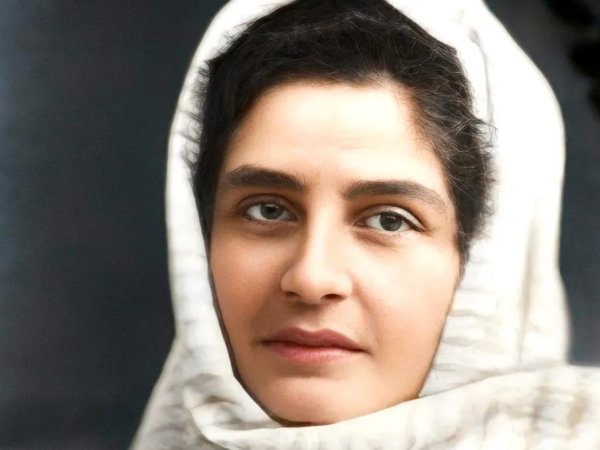
Elena Farago, the brilliant poet of children and protégé of I.L. Caragiale, has a street bearing her name in Bucharest
- Articles
- 15 APR 26
The life of Elena Farago began under the sign of fragility and hardship, in an era when destiny could be dramatically altered by unforeseen events. Born on March 29, 1878, in Bârlad, into a large family, Elena Paximade – her maiden name – experienced early on the pain of loss and the responsibilities of adult life.
Childhood marked by trials and suffering
She attended primary school and the first two years of secondary school in her hometown, at the Varlaam and Drouhet boarding schools, but her childhood was deeply troubled by family tragedies. Between 1884 and 1890, the Paximade family was struck by a series of misfortunes: three of the seven children died, and in 1890, when Elena was only 12 years old, she lost her mother. This moment represented a profound rupture in her existence, forcing her to take on the responsibility of caring for her younger sisters.
The tragedy did not stop there. In 1895, just five years after her mother’s death, her father also passed away. Left orphaned and suffering from severe anemia, the young Elena was forced to move to Bucharest, where she lived with an older brother. She was hospitalized at Colțea Hospital, where she managed to recover her health, but the experiences of those years would deeply shape her sensitivity and inner world.
All these early trials contributed to the formation of a strong personality, but also an extremely sensitive one, capable of capturing in verse the world of childhood with rare delicacy. Paradoxically, from a childhood marked by deprivation and suffering was born one of the most tender and luminous voices of children’s literature in Romania.
The providential meeting with I.L. Caragiale
Elena Farago’s destiny took a decisive turn when she came to work in the house of journalist Gh. Panu. There she met the great playwright Ion Luca Caragiale, a central figure of Romanian literature, who would play an essential role in her development.
Impressed by the young woman’s life story and intelligence, Caragiale decided to support her. For two years, Elena worked as a governess in his household, a period during which she benefited from a stimulating cultural environment and the support of a true mentor. This experience not only provided her with stability, but also opened new intellectual horizons.
In Caragiale’s house, Elena also met the economist Francisc Farago, who would later become her husband. Thus, both her personal and professional life began to take shape, and the future poet took her first steps toward literary affirmation.
Caragiale’s influence on Elena Farago was not only material, but also spiritual. His support encouraged her to develop her talent and to believe in her own voice. In an era when women had limited access to cultural affirmation, this support was essential for her later path.
Literary debut and recognition
Elena Farago’s literary career officially began in 1906, when she published her first volume of poetry, “Versuri” (Verses), at the urging of the historian and critic Nicolae Iorga. The relationship between the two was a close one, Iorga being not only a supporter, but also a confidant of the poet.
In 1907, Elena Farago settled in Craiova, the city that would become the center of her cultural and professional life. Here she witnessed the dramatic events of the 1907 peasant uprising, actively supporting the movement. This involvement led to her arrest, but she was released due to the interventions of Nicolae Iorga.
Her personal life continued to evolve: during this period she adopted her son, Mihnea, and in 1913 her daughter, Cocuța, was born. These maternal experiences deeply influenced the themes of her work, directing her toward the world of childhood.
Elena Farago became especially known for her poems dedicated to children, managing to create a world full of sensitivity, morality, and imagination. Among her best-known creations are “The Lame Puppy,” “The Little Beetle,” “The Hen,” “The Advice of the Fingers,” and “The Punished Cat.” These poems have become an integral part of children’s education in Romania and are still studied in schools today.
Awards, recognition, and cultural activity
The value of her work was recognized both nationally and internationally. Elena Farago received numerous distinctions, including two awards from the Romanian Academy and the Neuschotz Prize for the work “Diary of a Cat.” She was also awarded the International Femina Prize in 1924 and received the National Prize for Literature in 1938.
Official recognition also came from the monarchy. King Carol II awarded her the Bene Merenti Medal – First Class for outstanding literary merits, as well as the Order of Cultural Merit – Knight, Second Class. These distinctions confirm the major impact she had on Romanian culture.
Beyond her literary activity, Elena Farago had a remarkable contribution in the cultural and educational field. In 1921, she was appointed director of the “Alexandru and Aristia Aman” Foundation in Craiova, an institution she led for 30 years. She modernized the library services, introduced efficient organizational systems, and contributed to enriching the collections through important donations, including that offered by Nicolae Romanescu.
She also organized literature and art history courses, taught by renowned professors and cultural figures, transforming the library into a true cultural center. Her activity had a lasting impact on the development of cultural institutions in Romania.
Involvement in literary and editorial life
Elena Farago did not limit herself only to writing poetry, but was also actively involved in the literary life of her time. In 1922, she founded in Craiova the literary magazine “Năzuința,” together with personalities such as Ion B. Georgescu, C. Gerota, Ion Dongorozi, and C.D. Fortunescu.
Important names of Romanian culture collaborated with this publication, such as Ion Barbu, Camil Petrescu, Victor Eftimiu, and Perpessicius. The magazine became a space for the expression of valuable literary ideas and creations.
Between 1943 and 1946, she also patronized the magazine “The Children’s Friend,” a publication dedicated to the education and formation of young generations. Through these initiatives, Elena Farago actively contributed to the development of Romanian literature and culture, supporting both established authors and those at the beginning of their careers.
In addition to her original works, the poet also produced important translations from authors such as Henrik Ibsen, Friedrich Nietzsche, and Maurice Maeterlinck, contributing to the introduction into Romanian culture of fundamental works of world literature.
Cultural legacy and the memory of Elena Farago
Elena Farago passed away on January 4, 1954, in Craiova, at the age of 75. However, her work continues to live on through the generations of children who discover her verses in school textbooks.
In Craiova, the house in which she lived has been transformed into a memorial house, located in the courtyard of the “Alexandru and Aristia Aman” County Library. This place preserves the memory of a life dedicated to culture and education.
Recognition of her value is also reflected in the fact that Elena Farago’s name has been given to streets in several cities, including Bucharest. This form of tribute symbolizes the respect for her contribution to the Romanian cultural heritage.
Elena Farago remains one of the most important voices of children’s literature in Romania. Her poems, full of sensitivity and moral teachings, continue to be relevant and to inspire entire generations. Through her work and activity, she demonstrated that literature can be an essential tool in shaping character and cultivating human sensitivity.
Thus, beyond the trials of a difficult life, Elena Farago managed to transform suffering into art and to leave behind a priceless cultural legacy, confirming her place in the history of Romanian literature.
We also recommend: How Ion Luca Caragiale “drove away” Aristizza Romanescu and Constantin Nottara from the National Theatre of Bucharest