Doctorul Gheorghe Polizu, autorul primelor manuale medicale din România, are o stradă cu numele său în București
- Articles
- 08 MAY 26
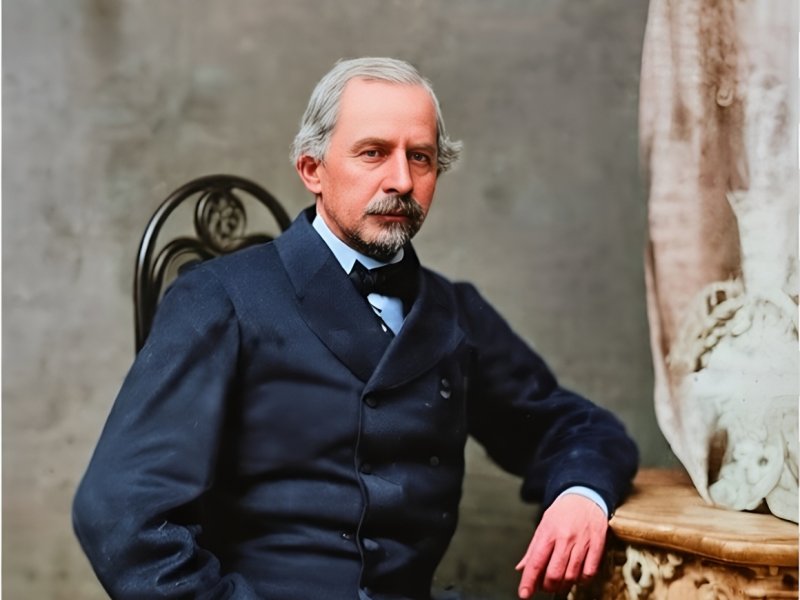
The history of Romanian medicine preserves the names of personalities who decisively contributed to the modernization of the medical system and to the development of university education. Among these remarkable figures is also Doctor Gheorghe Polizu, one of the most important physicians of the 19th century, university professor, author of medical textbooks, and member of the Romanian Academy. His activity profoundly influenced the training of generations of Romanian doctors, during a period when local medicine was beginning to organize itself according to Western models. His name is still preserved today in the memory of the Capital through Gheorghe Polizu Street, located near Gara de Nord, in an area with a strong medical and university tradition. The physician who laid the foundations for essential works for Romanian medical education thus remained present in the geography of Bucharest and in the history of Romanian medicine.
One of the pioneers of modern Romanian medicine
Gheorghe A. Polizu was born in 1819, in Bucharest, during a period when medicine in the Romanian Principalities was still at an early stage. Modern medical studies were rare, and access to specialized knowledge was limited. In this context, young Gheorghe Polizu chose to follow the path of medicine and to study abroad, at one of the most important European universities of the time.
He obtained his doctorate in medicine in Berlin, in 1845, an outstanding achievement for that era. His studies in Germany gave him access to modern teaching methods and to the newest medical discoveries of the time. Returning to Romania, Polizu tried to apply the experience accumulated in the West and to contribute to the development of an organized and efficient medical system.
In the second half of the 19th century, Romania was going through a period of important transformations in all fields, and medicine needed well-trained specialists. Gheorghe Polizu became actively involved in this process and became one of the most influential medical personalities of the time.
His activity in the hospitals of Bucharest
Gheorghe Polizu’s medical career took place in two of the most important Bucharest hospitals of the era: Filantropia and Colțea. Between 1852 and 1857, he worked as chief physician at Filantropia Hospital, and during 1852-1854 he also worked at Colțea Hospital.
These medical institutions represented important centers for the development of modern medicine in Bucharest. In the hospitals of the capital, Polizu contributed to the introduction of new methods of organization and medical practice, inspired by the Western experience accumulated during his studies in Berlin.
Alongside his medical activity, Gheorghe Polizu also had an important university career. He taught descriptive anatomy and physiology, fundamental disciplines for the training of future doctors. During a period when medical literature in the Romanian language was almost nonexistent, professors were forced to adapt and translate information from foreign works for students.
Polizu quickly understood that the development of modern medical education could not take place without textbooks and courses written in Romanian. For this reason, he became directly involved in the elaboration of works that could be used by students and by the medical staff in the country.
The author of the first Romanian medical textbooks
One of Gheorghe Polizu’s most important contributions to the development of Romanian medicine was the writing of the first local medical textbooks. He is considered the author of the first Romanian anatomy textbook, entitled “Summary of descriptive anatomy… for doctors and feldshers,” published in 1859.
The work had enormous importance for medical education in Romania. Until then, those studying medicine relied almost exclusively on foreign textbooks, difficult to access and hard to use for many students. Through the publication of this book, fundamental medical information became easier to understand and use in Romanian.
Gheorghe Polizu’s textbook represented an important moment in the process of modernizing medical education. He did not limit himself only to translating concepts from Western literature, but also tried to adapt the information to the realities of the Romanian medical system.
In addition, the physician also created a physiology atlas, thus contributing to the development of a true Romanian school of anatomy. Through his teaching and editorial activity, Polizu trained numerous doctors and specialists who would continue the modernization of Romanian medicine in the following decades.
Founder of medical publications
Gheorghe Polizu’s contribution was not limited to activity in hospitals and universities. He was also one of the pioneers of the medical press in Romania. In an era when the circulation of medical information was limited, the appearance of specialized journals was essential for the development of the medical community.
Polizu founded the publications “Romania Medicală” in 1857 and “Gazeta Medicală” in 1865. These journals became important sources of information for Romanian doctors and contributed to the popularization of new medical discoveries and methods.
Through these publications, Romanian doctors could learn about developments in European medicine and participate in the exchange of ideas in the scientific world. At the same time, the medical journals contributed to the formation of a Romanian medical language and to the consolidation of the professional community.
Gheorghe Polizu’s editorial activity demonstrates his constant concern for education and for the development of Romanian medicine. He understood that progress cannot exist without access to information and without permanent communication between specialists.
Dean of the Faculty of Medicine in Bucharest
Gheorghe Polizu’s professional prestige constantly increased, and his medical and university experience recommended him for one of the most important academic positions of the time. Between 1869 and 1880, he held the position of dean of the Faculty of Medicine in Bucharest.
During his mandate, the faculty went through a period of consolidation and modernization. Polizu supported the development of study programs and the increase of students’ level of training. His Western experience and permanent contact with European medicine strongly influenced the direction in which the institution developed.
At the same time, Gheorghe Polizu was one of the founding members of the Scientific Medical Society of Bucharest, an organization that played an important role in the development of research and collaboration among doctors.
Recognition of his activity also came from the Romanian Academy, which elected him honorary member in 1871. This distinction confirmed his status as a remarkable personality of Romanian medicine and culture.
Involvement in political life
Alongside his medical and university activity, Gheorghe Polizu also had a political career. He was elected deputy and senator of Olt on the lists of the National Liberal Party, in several legislatures.
His participation in political life reflected the model of the 19th-century intellectual, actively involved in the modernization of Romanian society. For the personalities of that period, medicine, education, and politics were fields closely connected to one another.
Through his parliamentary activity, Polizu supported important projects for the development of the medical system and for the modernization of the institutions of the Romanian state. His professional experience offered him a practical perspective on the needs of the healthcare system and of medical education.
The last years of his life and the legacy left to Romanian medicine
Gheorghe Polizu passed away in Bucharest on October 16, 1886. His death represented an important loss for Romanian medicine, but his professional legacy continued to influence the following generations.
Through the textbooks he wrote, through his university activity, and through the medical publications he founded, Polizu decisively contributed to the development of modern medicine in Romania. He was part of the generation of intellectuals who built the modern institutions of the Romanian state and introduced Western standards into education and healthcare.
His contribution is all the more important because he worked during a period when medical and educational resources were limited. Even so, Gheorghe Polizu managed to create essential learning tools and to train specialists who further carried the development of Romanian medicine.
Where Gheorghe Polizu Street is located in Bucharest
The physician’s name is still preserved today in Bucharest through Gheorghe Polizu Street, located in Sector 1 of the Capital, in the Gara de Nord area. The street is situated in a central neighborhood with important medical and university institutions, being known especially because of Polizu Clinical Hospital, one of the most famous maternity hospitals in Romania.
Gheorghe Polizu Street is located near Gheorghe Duca Boulevard and Calea Griviței, in a heavily trafficked area well connected to the Capital’s public transport network. Nearby are Gara de Nord, metro stations, tram and trolleybus lines, as well as university and administrative buildings. On this street there are also the Faculty of Aerospace Engineering and several medical institutions.
The presence of Gheorghe Polizu’s name in this part of Bucharest also has a symbolic significance. The area is associated with medical and university activity, and the connection with one of the pioneers of Romanian medicine is a natural one. Thus, the memory of professor and physician Gheorghe Polizu continues to be present in the life of the city, more than a century after his passing.
We also recommend: Polizu Maternity Hospital, baby-friendly hospital. The history of one of the oldest obstetrics-gynecology units in Bucharest