Casa Universitarilor Is Getting Its Garden Back. Meet the Winning Architect, and What the Building's History Hides
- Articles
- 29 JUL 26
On July 28, the University of Bucharest announced, at a press conference held jointly with the Romanian Order of Architects, the winner of the international competition to redesign the garden of Casa Universitarilor. The one-person architecture practice of Vlad Sebastian Rusu was picked by the jury as the best solution among the 36 entries, working with a team made up of Andra Vlădoiu, Eliza Furjes, Robert-Vasile Țonea, Georgiana Condurachi, Dan-Nicolae Șut, Păunița Boancă and Ovidiu Rusu. The design contract is estimated at more than 2.6 million lei before VAT.
The competition launched on April 30 and asked entrants to treat the whole site as one problem: the historic garden, the former orchard, the outbuildings, and the relationship with the surrounding streets, including the small square by the Anglican Church. The jury, chaired by architect Kazmer Kovacs, praised the winning project for treating the garden as an "active archive" of the site, with one section conceived as a miniature grove that echoes the historic mix of pleasure garden and working orchard. Rector Marian Preda described plans to turn the space into something open to the community, with an innovation hub and events for students and Bucharest residents alike.
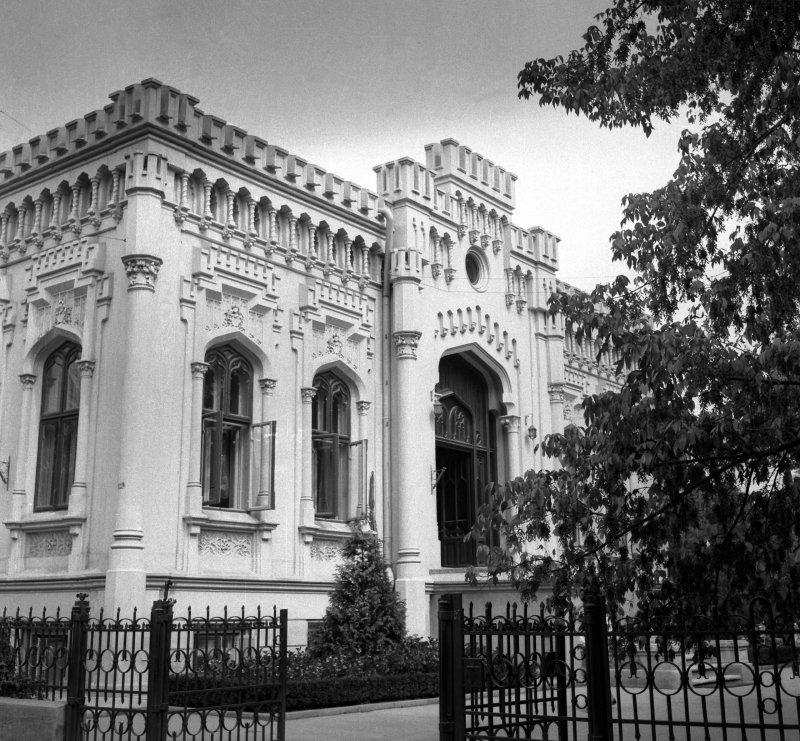
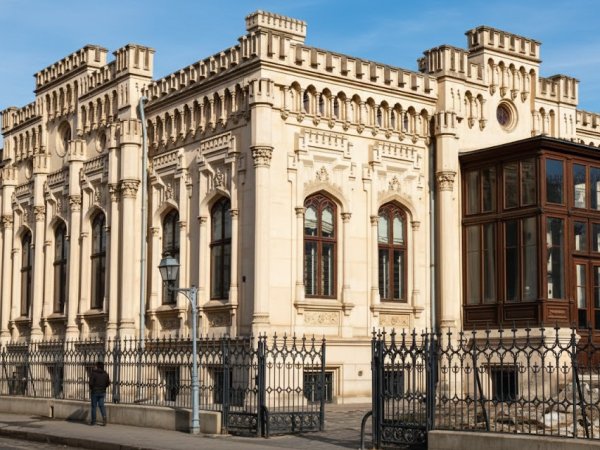
What doesn't change is the building the whole project is built around, and its story is messier than the neo-Gothic façade on Dionisie Lupu street lets on.
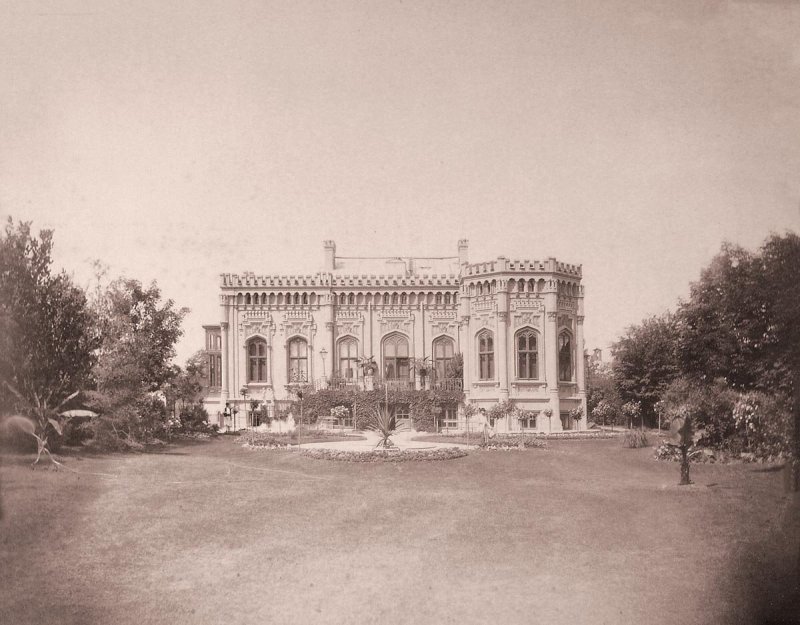
Librecht's House
The building went up starting in 1859-1860 for Cezar Librecht, director of posts and telegraph under Prince Alexandru Ioan Cuza and, according to historians, head of the first secret service of the modern Romanian state. The plans belonged to Dalmatian architect Luigi (Ludovic) Lipizer, who worked in a romantic, neo-Gothic register: stylized battlements along the roofline, niches in the upper part of the façades, a generous garden behind the house. The house is said to have occasionally hosted secret meetings between Cuza and his mistress, Maria Obrenovici — Librecht acted as her confidant and, according to some chroniclers of the period, covered her expenses.
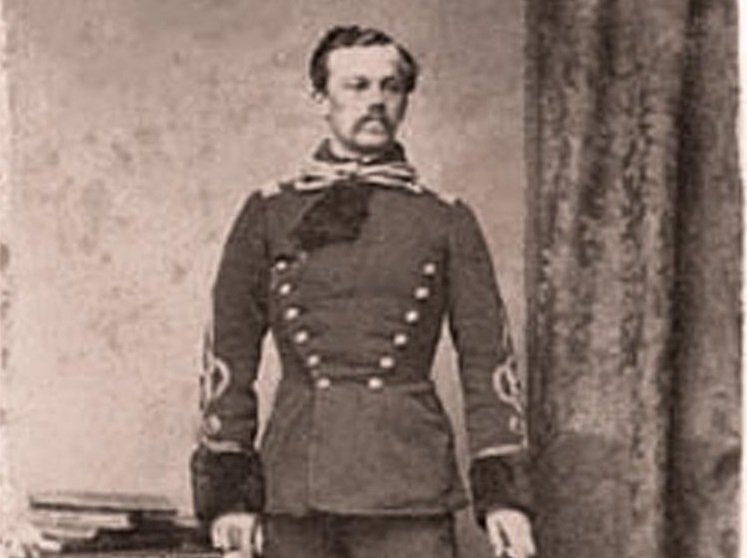
Librecht didn't get to enjoy the house for long. Arrested on the night of February 10-11, 1866, right around Cuza's forced abdication, he was convicted by the Bucharest court and sentenced to ten years in prison plus enormous damages for embezzling public funds. His appeal was granted by the Court of Cassation, and at the retrial in Craiova he was acquitted — not until May 3, 1867, by an 11-1 jury vote. He didn't flee right away: he stayed in the country for a few more years — he even had a lawsuit against the state over damages, in 1870 — before finally leaving for good, first to Spain, then to Paris, where he died poor around 1890. His fortune, including the house, had already been confiscated back in 1866.
Filipescu's House
(Not to be confused with Casa Filipescu-Cesianu on Calea Victoriei, now home to the Museum of the City's Ages — a different building, put up for another branch of the family, Iancu Filipescu and Maria Ghica Filipescu, and later extended by lawyer Constantin Cesianu. The shared surname simply reflects how widespread the Filipescu family was among Bucharest's boyar class.)
The house first passed to the state. At some point before 1874, it became the property of Gheorghe C. Filipescu, who had been Cuza's aide-de-camp and who, in 1866, became Marshal of the Royal Court under King Carol I — a post he held until around 1874, then resumed, under the title of Grand Marshal, from 1898 until his death in September 1902.
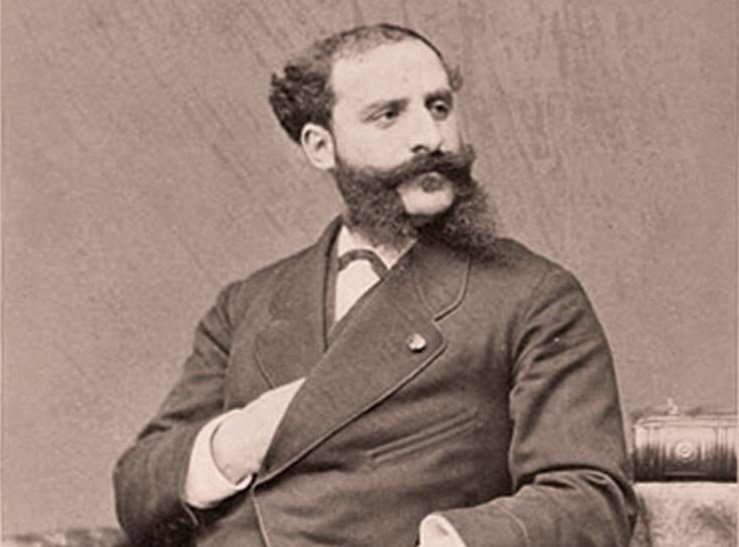
Filipescu married Lydia Hangerli, daughter of a prince of Phanariot descent, in Berlin in 1884. The house's garden quickly became a sought-after social venue, hosting garden parties that King Carol I himself sometimes attended; Lydia had a well-documented love of flowers — she's credited with introducing snowdrop and tulip cultivation to Romania. After her husband's death in 1902, she went on living there and tending the garden until her own death in 1943.
In her will, Lydia left the house and her other properties to the administration of the Eforia Spitalelor Civile (the civil hospitals' board), with one specific condition: the funds were to support an orphanage for children of the Evangelical faith, named the "Lydia Philippescu Donation," tied to Bucharest's German Evangelical community, of which she had been a devoted member.
From Orphanage to University Building
In 1947, the building and its grounds were handed over for the use of university faculty, which is where the current name comes from. The ground floor was refitted with a reading room, a conference hall, a cinema and a restaurant, each space given its own name — the Reading Room, the Chess Room, the Marble Room. Some sources suggest that during the communist period, access was restricted to university faculty only.
Since 2007, the building has belonged to the University of Bucharest, which uses it for press conferences, academic gatherings and cultural events. The garden behind it, though, stayed off-limits to the public for a long time.
The project just won by Vlad Sebastian Rusu's practice sets out to change exactly that: reopen the city's garden while preserving the traces of this layered history — from Librecht's scandal, to the Filipescus' garden parties, to the faculty reading rooms of 1947 — and building a new cultural and educational function on top of them.