Bucharest's Festivals as a Social Phenomenon: Why People Come Back Every Summer
- Articles
- 26 JUN 26
Every summer, Bucharest sends tens of thousands of people into fields, forests and old aristocratic estates on the outskirts of the city. They pay a few hundred lei, spend three or four days in the heat, sleep very little and return to work on Monday morning with their voices gone. Then they do it all again the following year.
The phenomenon deserves a closer look, because it isn't simple. The summer festival has long outgrown its status as an outdoor concert and become something harder to define — a social ritual with its own codes, its own sentimental geography and an economy that's anything but negligible.
Nostalgia, running this very weekend in Băneasa Forest, understood the essential thing early on: people don't come for the lineup. The organisers say so plainly, almost proudly. The festival isn't about who's performing — it's about what you feel when you're there. That would sound like an excuse if it weren't, in fact, a accurate observation about how nostalgia works as a psychological mechanism. The choruses of the '90s and 2000s need no introduction. You simply know the words, your body knows the words, and that's enough to make twenty years disappear at once.
What Nostalgia has built over eight editions is a community that recognises itself through shared taste. People who grew up with the same music, the same TV shows, the same aesthetic of apartment blocks and provincial shopping malls — brought together in a space that makes them feel, for four days, that they belong to the same generation with an equal right to be happy.
Summer Well does something different, but equally social. The Știrbey Estate in Buftea has become, over the years the festival has established itself, a kind of identity statement for a certain type of urban Bucharest dweller — someone whose tastes were shaped somewhere between Spotify and Wizz Air flights. You know from the moment you arrive that you're in the right place, because everyone else there seems to know it too.
SAGA played on an entirely different stage — electronic music, a younger crowd, nights that ended in the morning. It went through difficult years, with legal disputes and uncertainty, but confirmed its 2026 edition for 21–23 August. Its survival says something about how deeply the festival has embedded itself as a format in the life of the city.
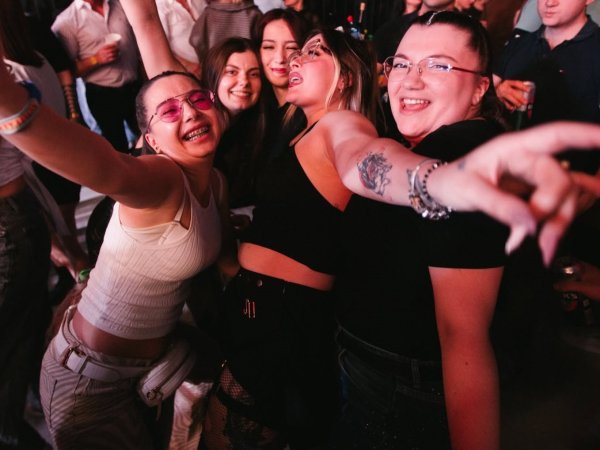
All of these events solve a problem Bucharest doesn't solve particularly well on its own: the need for shared space. The city has parks, terraces, a pedestrianised Calea Victoriei a few weekends a year — but rarely offers places where you can be anonymous and belong at the same time. The festival does this naturally. You're one of thirty thousand people and still have the feeling you've found your people.
There's also an economic dimension nobody ignores. The ticket, the transport, accommodation for those coming from out of town, food, drinks, a t-shirt bought on impulse. The festival has become a serious industry, and Bucharest is its primary market. The capital's summer is no longer measured in degrees Celsius, but in how many weekends you managed to get tickets for.