Bitdefender, a success story: how the brand born in Bucharest became one of the largest cybersecurity companies in the world
- Articles
- 20 OCT 26
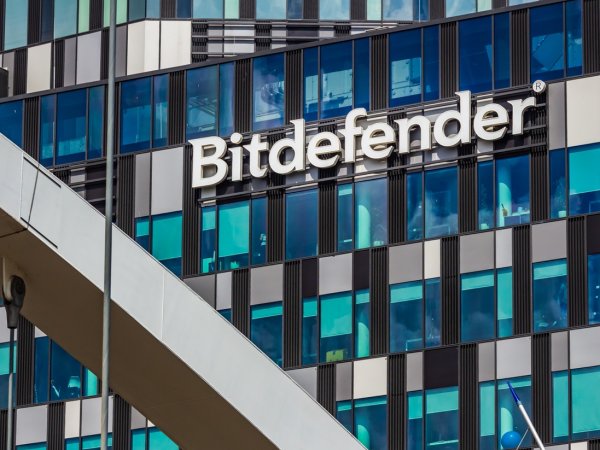
Few Romanian companies have managed to turn a product created in Bucharest into a brand recognized on almost every continent. Bitdefender is one of the most remarkable examples. The company’s story began in the 1990s, at a time when Romania was only beginning to build its private software industry and the internet was still far from reaching the scale it has today. From an antivirus program initially developed for the needs of its own company, the Talpeș family’s project grew into a global cybersecurity business. Today, Bitdefender has its global headquarters and one of its main research and development centers in Bucharest, products used worldwide, and a commercial presence in more than 150 countries. The company protects more than 500 million systems and licenses its technologies to numerous international partners. At group level, revenue reached approximately $480.3 million in 2025, according to company data cited by Ziarul Financiar.
From Softwin and AVX to Bitdefender
The company’s beginnings can be traced back to 1990, when Florin and Măriuca Talpeș founded Softwin, one of the first private Romanian software companies to emerge after the fall of the communist regime. Both trained in mathematics and computer science, they entered a market that was still in its infancy, initially focusing on developing software and services for Western clients.
In the following years, the Softwin team began developing its own antivirus product. In 1996, AVX appeared, short for AntiVirus eXpert, a program initially designed for DOS systems and later for Windows platforms. The product was first used within the company itself, and around 2000 it began to be distributed on international markets. Historical sources about the company confirm that AVX was the technology that laid the foundation for what would later become Bitdefender.
The name change, however, was not simply a marketing decision. As the company sought international expansion, the AVX name became problematic in the American market, where there was already a trademark conflict. Florin Talpeș later explained that the experience taught the company how important it was to protect a brand when entering the global market. In addition, the product had already evolved beyond the limits of a traditional antivirus, and the new identity needed to reflect a broader security offering.
On November 6, 2001, the Bitdefender brand was officially launched. In practice, this was not the sudden emergence of an entirely new company, but rather the transformation and internationalization of technology that had been developed in Romania throughout the 1990s.
How Bitdefender left Romania and entered the global market
One of the company’s greatest advantages was that it did not build its strategy exclusively around the Romanian market. From the early years of the new brand, Bitdefender began expanding into Europe and North America. In 2003, subsidiaries were opened in Spain and Germany, while in 2004 the company entered the United States.
The expansion was not without mistakes. The first encounters with the American market gave the company costly lessons about distribution, trademark protection and the need for its own commercial infrastructure. These experiences gradually encouraged Bitdefender to strengthen its local teams and reduce its excessive dependence on intermediaries.
At the same time, the company invested heavily in research and development. This strategy proved essential in an industry where a security product cannot remain effective if it only focuses on threats that are already known. Malware changes constantly, and cybersecurity companies must anticipate attacks rather than merely respond to them.
The results began to emerge in independent testing as well. In 2004, Bitdefender ranked first in an evaluation conducted by AV-TEST, and Florin Talpeș later described the moment as one that changed the company’s mindset: the goal was no longer simply to be competitive, but to aspire to leadership in the market.
The bet on artificial intelligence began long before the AI boom
One of the reasons Bitdefender has managed to remain relevant for more than two decades is its early investment in automated analysis technologies. The company says it began using machine learning for malware detection as early as 2008, while in 2014 it introduced deep-learning algorithms to improve detection.
An important milestone came in 2017, when Bitdefender introduced HyperDetect, a technology based on machine-learning models and heuristic analysis designed to identify advanced attacks before they could be executed. During the same period, the company developed mechanisms to combat fileless attacks, which use legitimate operating-system tools such as PowerShell to bypass traditional detection methods.
The evolution continued with anomaly detection in EDR, XDR technologies and, later, the use of large language models. GravityZone AI Assistant was introduced as a tool designed to help security analysts investigate incidents by providing answers based on the documentation and data available within the platform.
Thus, the Bitdefender story is not simply about a Romanian antivirus becoming famous. It is also the story of a company that has constantly sought to redefine its product, moving from antivirus software to a complex platform for attack prevention, detection, analysis and response.
Bitdefender BOX and expansion beyond antivirus software
In 2015, the company made another important move and launched Bitdefender BOX, a hardware device designed to protect internet-connected equipment within a home. The idea was linked to the rapid emergence of the Internet of Things, at a time when more and more smart televisions, cameras, game consoles, household appliances and other connected devices were entering people’s homes.
BOX was developed in Romania and demonstrated the company’s ability to combine software and hardware. The second generation of the product was developed entirely by Romanian research and development teams, while production began in Satu Mare. In 2018, the company stated that the product included 21 invention patents and that investments in research and development had reached €89 million between 2014 and 2017.
The first generation of BOX was subsequently discontinued in 2021, as the company focused its strategy on new generations of security solutions. Although the hardware product did not become the core of the business, the experiment demonstrated that Bitdefender was capable of adapting to rapid changes within the industry.
Investment and expansion accelerated growth
A decisive moment for the company came in 2017, when investment fund Vitruvian Partners acquired approximately 30% of Bitdefender from Axxess Capital. The transaction valued the company at more than $600 million, while Florin and Măriuca Talpeș retained their majority stake. At the time, more than 40% of Bitdefender’s sales were already generated in the United States.
During the same period, the company accelerated its expansion through acquisitions. In France, Bitdefender acquired Profil Technology, its local partner, in order to strengthen its position in the French-speaking market and the enterprise segment.
The strategy continued in the following years. In 2023, Bitdefender acquired Horangi Cyber Security in Singapore, a company specializing in cloud security, consulting and offensive security services. In 2025, the company acquired a division of BitShield in Malaysia, strengthening its presence in Malaysia, Brunei and the Asia-Pacific region. Also in 2025, it completed the acquisition of Ireland-based Mesh Security, adding advanced email protection capabilities to its GravityZone platform and XDR and MDR services.
Why the OEM model was so important
A less visible chapter for the general public, but an essential one for the company’s success, is its OEM business. Bitdefender has not relied solely on selling its own brand to consumers and companies. Its security technologies have also been licensed to other software manufacturers, service providers and device makers.
According to the company, Bitdefender technologies are integrated into more than 38% of the world’s security solutions, while its OEM platform includes SDKs, threat-intelligence services and malware-analysis tools. In 2025, the company stated that its technology was licensed by more than 180 major technology brands. These figures should be viewed as estimates provided by the company, but they illustrate the scale of the OEM component of its business.
The model is strategic: some users may encounter Bitdefender technology without necessarily seeing the Bitdefender name on the product they are using. Instead of competing exclusively for brand visibility, the company has managed to monetize the technological infrastructure behind security products.
Bucharest has remained the center of research and development
Although Bitdefender has operations and commercial centers in North America, Europe, the Middle East and the Asia-Pacific region, Bucharest has remained at the heart of the company. The global headquarters and the main research, development and innovation center are located in the Romanian capital, while the company also operates innovation centers in other Romanian cities.
This structure is one of the distinctive features of the Bitdefender story. International expansion did not require the company to move its technological core out of Romania. On the contrary, a significant part of its engineering and research expertise has remained here, while foreign markets have become the company’s primary sources of revenue.
Financial data for 2025 illustrate the scale of the Romanian business. Bitdefender SRL reported revenue of approximately 1.82 billion lei and a net profit of 217.6 million lei, with an average of 1,665 employees. At group level, revenue reached $480.3 million, an 11% increase compared with the previous year, according to company data cited by Ziarul Financiar.
From a Romanian brand to a Ferrari partner
One of the most spectacular signs of Bitdefender’s transformation into a global brand is its partnership with Scuderia Ferrari HP. The Romanian company is Ferrari’s exclusive global cybersecurity partner, and the Bitdefender logo appears on the team’s equipment and Formula 1 car. In 2025, the two companies announced the extension of their partnership and the expansion of their technological collaboration.
For Bitdefender, the partnership with Ferrari is not merely a branding exercise. Formula 1 gives the company access to one of the world’s most competitive technological showcases, where data, connectivity, performance and security have become essential elements. In this context, the association with Ferrari sends an important message to the global market: a company that started in Bucharest can eventually protect infrastructure and organizations operating at the heart of the global digital economy.
Ultimately, the Bitdefender story is one of transformation built in several stages. It began with Softwin and AVX, continued with the 2001 rebranding, followed by international expansion, investment in research, the development of machine-learning technologies, entry into the enterprise sector, the OEM model and a series of strategic acquisitions.
Today, the company remains controlled by the Talpeș family while operating on a global scale, with customers in more than 150 countries and more than 500 million systems protected.
Perhaps the most important aspect of this story is that Bitdefender’s success was not built by abandoning its Romanian origins, but by turning them into an advantage. Bucharest has remained the place where an essential part of the technology is developed, while the product created there has gone on to compete in an industry dominated by American and Western companies.
From an antivirus program called AVX, born inside a Romanian software company, Bitdefender has become one of the most visible examples that technology created in Romania can become a truly global product.
We also recommend: The history of the Meli Melo brand, from a charming Bucharest boutique to Romania’s largest jewelry retailer