Architects Who Shaped Bucharest: Horia Creangă, the Great Novelist's Nephew, the Aristocrat of Simple Lines
- Articles
- 13 JUL 26
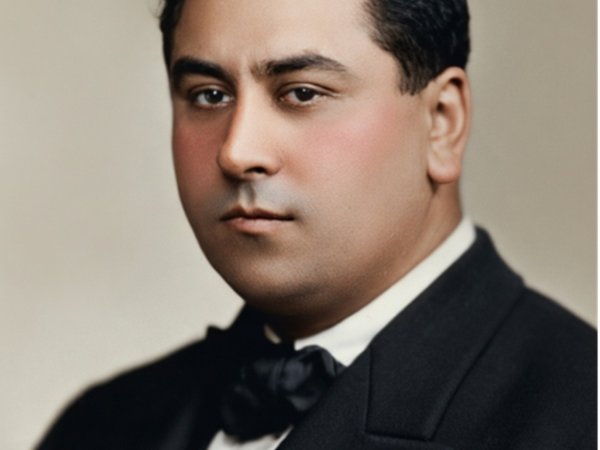
Bucharest still preserves the imprint of the architects who permanently changed the appearance of the city. Among the most important creators of modern Romanian architecture is Horia Creangă, the man who demonstrated that elegance does not lie in abundant ornamentation but in the balance of forms and the beauty of proportions. Considered by many historians to be the greatest Romanian architect of the 20th century, Horia Creangă left behind an impressive body of work created during a surprisingly short career. The nephew of the great storyteller Ion Creangă, Horia did not build his reputation on his famous family name, but rather on his talent, rigor, and innovative vision. In only 16 years of intense professional activity, he designed more than 70 buildings and architectural ensembles, many of which became symbols of Bucharest and of modern Romanian architecture. Today, many of the buildings he designed continue to impress with their timeless character. Although they were built almost a century ago, their simple lines, balanced volumes, and functionality make them appear remarkably modern. It is precisely this ability to anticipate the directions of contemporary architecture that has made Horia Creangă one of the leading figures of Romania's architectural heritage.
The nephew of Ion Creangă and the beginnings of a promising career
Horia Creangă was born in Bucharest in 1893 into a family that already bore an important name in Romanian culture. He was the nephew of the writer Ion Creangă, but from childhood he displayed his own artistic and technical abilities, choosing to pursue architecture.
He completed his early education at the "Mihai Viteazul" High School in the capital, one of the most prestigious educational institutions of the time. His excellent academic results and his passion for drawing encouraged him to continue his education in architecture.
In 1913, he was admitted to the School of Architecture, but fate interrupted his plans. The outbreak of the First World War completely changed the lives of an entire generation, and Horia Creangă was no exception.
Mobilized to the front, the young student went through dramatic experiences. During the fighting, he was captured at Șercaia and sent to a prisoner-of-war camp in Stralsund, Germany. This difficult period interrupted his studies but never diminished his determination to become an architect.
The journey to Paris and the sacrifices made for his education
After the end of the war, Horia Creangă returned to Romania determined to continue his professional education at the highest level. His dream was to study in Paris, a city regarded at the time as one of Europe's leading centers of architecture. The problem, however, was the lack of financial resources.
In 1919, together with several colleagues, he organized an exhibition at the Romanian Athenaeum featuring watercolors, drawings, and artistic works depicting monuments, landscapes, and portraits. The event had a practical purpose: raising the funds needed for their journey to France.
The initiative proved successful, and the money they collected allowed them to travel to Paris, where a decisive chapter of Horia Creangă's life was about to begin.
Once in the French capital, the young architect did not enjoy an easy life. In order to pay for his studies and daily expenses, he sold his own paintings and drawings. It was a modest existence, but every sacrifice was made with the conviction that investing in education would shape his future.
His encounter with the great ideas of modern architecture
The years spent in Paris had a decisive influence on his architectural philosophy. In the French capital, he came into contact with the revolutionary ideas promoted by Le Corbusier and the urban planner Tony Garnier, two of the personalities who had redefined architecture at the beginning of the 20th century.
Horia Creangă also closely studied the buildings designed by Auguste and Gustave Perret, who are regarded as pioneers in the use of reinforced concrete in architecture. This material offered entirely new construction possibilities and made it possible to create buildings with simple forms, large volumes, and generous interior spaces.
At the prestigious École des Beaux-Arts, he had the opportunity to study under Professor Gustav Umbdenstock, one of the most respected French architects of the era.
He also completed his professional apprenticeship in Umbdenstock's office, enabling him to obtain the diploma of architect officially recognized by the French government.
His professor quickly recognized his talent and, in 1925, hired him at the Northern Railway Company of France.
There, Horia Creangă worked on the design of the railway station in Tergnier-Aisne and on the planning of the neighboring town, gaining extremely valuable experience in designing major infrastructure projects.
Returning to Romania and achieving professional recognition
It was also during his years in France that Horia Creangă met Lucia Dumbrăveanu, who would become his wife and life partner. After returning to Romania, both became employees, while simultaneously accepting private commissions.
Gradually, Horia Creangă's architectural office built a solid reputation, and he began participating in the country's most important architectural competitions. His first major success came in 1928, when he won first prize for the design of the Palace of Culture in Constanța.
This achievement brought him recognition within the architectural community, but his true breakthrough came somewhat later. The defining moment of his career was winning the competition for the headquarters of the ARO Company in Bucharest, the building now known as the Patria Building.
The project impressed observers through the simplicity of its volumes and its architectural language, which was completely different from what had previously been built in the Romanian capital.
After this achievement, commissions increased rapidly, and his architectural office expanded, becoming one of the most highly regarded in Romania.
The aristocrat of simple lines
Horia Creangă became known as "the aristocrat of simple lines," an expression that perfectly summarizes his architectural philosophy.
At a time when many buildings were heavily decorated with elaborate façades and excessive ornamentation, he chose an entirely different direction.
He eliminated decorative elements that he considered unnecessary and focused instead on functionality, proportion, and the clarity of volumes.
For Horia Creangă, the beauty of a building did not come from ornamentation but from the harmony between form, light, and space.
Architect and critic G. M. Cantacuzino described him in the magazine Simetria in 1943 as a personality with "a clear and positive mind," constantly concerned with simplification and with the expressive power of large volumes.
According to Cantacuzino, Horia Creangă's plans were always exceptionally clear, while details were sacrificed in favor of the overall composition. Everything he created was governed by proportion and balance, qualities that continue to define modern architecture today.
The buildings that transformed the image of Bucharest
Horia Creangă's body of work is remarkable both for its diversity and for its artistic value. Among his best-known creations is the ARO Building, today's Patria Cinema, one of the most representative examples of modernist architecture in Bucharest.
He also designed the Giulești Theatre, the Pescăruș Restaurant in Herăstrău Park, the amphitheater of the Central School, later incorporated into the Bulandra Theatre, and the Obor Market Halls. His contribution, however, was not limited to the capital.
The architect also designed the ARO Hotel in Brașov, the Cultural Palace in Cernăuți, and numerous industrial buildings, including those of the Malaxa Works, later known as the "23 August" Works and subsequently FAUR.
In addition to major public buildings, Horia Creangă designed numerous modernist villas in elegant neighborhoods such as Dorobanți and Cotroceni.
He also created factories, schools, stadiums, and administrative buildings in cities throughout Romania. Altogether, his professional activity included more than 70 projects completed within a period of only 16 years.
An architect who changed the direction of Romanian architecture
Horia Creangă's importance extends far beyond the list of buildings he designed.
He is regarded as one of the founders of the modern school of architecture in Romania and as one of the figures who permanently introduced the principles of functionalism into Romanian architecture.
His works demonstrate that modernity does not mean abandoning aesthetics but rather discovering a new form of beauty based on order, simplicity, and efficiency.
Professor Nicolae Lascu emphasized that, in a professional career lasting only 16 years, Horia Creangă created fundamental works that became an essential part of Romania's architectural heritage.
According to Lascu, several of the architect's creations became landmarks of modern architecture even during his lifetime and naturally entered the European architectural heritage of the period.
Lascu also believed that Horia Creangă's entire body of work expresses the optimism and freshness of the modern world that architects of the early 20th century sought to translate into spaces, volumes, and new forms.
A legacy that continues to inspire
Unfortunately, Horia Creangă's life was a short one. In the summer of 1943, after taking a very cold swim in Lake Snagov, he developed serious health problems that rapidly worsened over the following months.
He traveled to Vienna for treatment, but his condition failed to improve. On August 1, 1943, Horia Creangă passed away at the age of only 51. His death represented a tremendous loss for Romanian architecture at a time when he had reached the full maturity of his creative powers and still had numerous projects underway.
Nevertheless, the legacy left by Horia Creangă continues to define the appearance of Bucharest and many other Romanian cities. His buildings do not impress through opulence but through balance, functionality, and understated elegance. They demonstrate that the true value of architecture does not lie in excessive ornamentation but in the ability to create harmonious, durable spaces adapted to people's needs.
Nearly a century after the completion of his most important projects, Horia Creangă's work remains remarkably relevant. His architectural philosophy, based on simplicity and proportion, continues to inspire generations of architects and represents one of the most valuable chapters in the history of Romanian architecture. It is no coincidence that he is still regarded today as "the aristocrat of simple lines," a creator who permanently changed the appearance of Bucharest and proved that modernity can be elegant without being ostentatious.
We also recommend: