Who was Bălașa Cantacuzino, the Bucharest princess who earned her living by painting portraits
- Articles
- 11 FEB 26
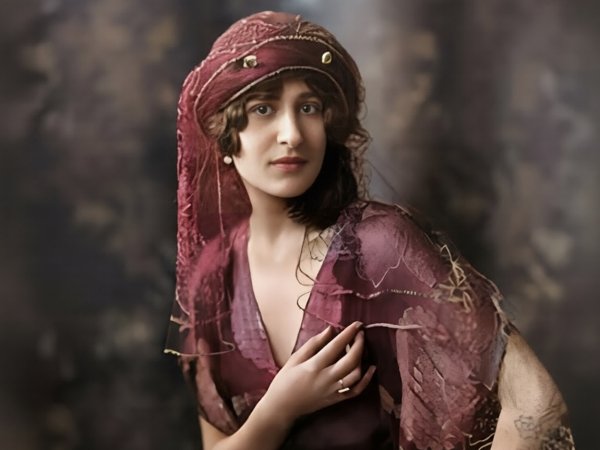
In an era when the name Cantacuzino was synonymous with power, refinement, and aristocratic tradition, Marie Blanche “Bălașa” Cantacuzino chose an unusual path for a princess. Born in the heart of Bucharest, into one of the oldest and most prestigious boyar families, Bălașa did not content herself with living exclusively from the privileges of her rank. In a society dominated by rigid conventions and clear expectations for women of high society, she earned her living by painting portraits, transforming artistic talent into a profession.
A princess from a family with historical resonance
Her life was marked by contrasts: nobility and independence, love and disappointment, discreet fame and a posterity rediscovered late. Although she lived in the shadow of the great names of the Cantacuzino family, her destiny went beyond the limits of Bucharest’s salons, reaching as far as Greece and into the pages of the books of the famous British writer Sir Patrick Leigh Fermor. The story of Bălașa Cantacuzino is that of a woman who defied patterns, choosing art and freedom in a world where a noble title seemed sufficient.
Marie Blanche Cantacuzino was born on August 9, 1899, in Bucharest, into a family with deep roots in Romanian history. Her father, Prince Leon (George) Cantacuzino, belonged to the illustrious family that claimed Byzantine descent, and her mother, Ana Văcărescu, likewise came from a prestigious aristocratic family. The environment in which she grew up was cultivated and sophisticated, imbued with tradition and social responsibility.
Her brother, Prince Grigore Lwovitch Cantacuzino, held an important position in Romanian diplomacy, serving as counselor at the Romanian Embassy in London. Thus, Bălașa was formed in a context in which international relations, etiquette, and culture represented essential landmarks of daily existence. Her education was undoubtedly refined, and contact with art and literature came naturally, as an integral part of aristocratic life.
Nevertheless, behind the appearance of a privileged princess, an independent personality was taking shape. In a period when women of high society were more often patrons of the arts than professional practitioners, Bălașa was to make a courageous choice: to turn painting into a means of livelihood.
Art as a profession, not only as a passion
Few know that Bălașa Cantacuzino did not limit herself to the status of a talented amateur. She earned her living from painting, specializing in portraiture. In interwar Bucharest, dominated by elegance and the desire for social affirmation, the portrait was more than an artistic representation: it was a statement of status, a symbol of identity and refinement.
The princess painter was appreciated for her versatility. She easily adapted to the wishes of her clients, most of whom were ladies from Bucharest’s high society. They had the possibility to choose the style of the background, the atmosphere of the painting, the color scheme, and even the symbolic accents that represented their personality. Bălașa subtly understood each client’s desire to be seen in a favorable yet authentic light.
This ability to combine artistic talent with fine social sensitivity turned her into a sought-after presence in the elegant circles of the Capital. Her portraits were not simple physical representations, but true studies of character, in which posture, expression, and décor contributed to building a memorable image. For a princess, working to earn her living might have seemed unusual, but for Bălașa it was an affirmation of her own identity.
A cosmopolitan marriage and a broken destiny
In 1925, Bălașa Cantacuzino married the Spanish diplomat Paco Amat y Torres. The marriage seemed to confirm her cosmopolitan status and the international connections of her family. Life alongside a diplomat implied mobility, adaptability, and openness to other cultures, and the princess was prepared for this type of existence.
However, the marital destiny was not a happy one in the long term. After the Second World War, Paco Amat y Torres remarried in Spain, and his bond with Bălașa dissolved. In an era marked by dramatic political and social transformations, including for Romania, the life of the aristocracy was shaken to its foundations. The communist regime brought with it the marginalization of the old noble families, and for many of their members, adaptation to the new realities was difficult.
Bălașa was to live until 1976, passing away in Pucioasa. Her existence, once brilliant, unfolded in discretion during the last decades. Yet her story did not end with her death.
The love with Sir Patrick Leigh Fermor and the literary echo
A distinct chapter in the life of Bălașa Cantacuzino is connected to the famous British writer Sir Patrick Leigh Fermor. During a journey in Greece, he met the princess and fell in love with her. Fermor, known for his travel journals and books, was to mention her in several of his works, evoking her charm and complex personality.
For the writer, Bălașa became more than a simple romantic memory. She was a muse, an enigmatic figure embodying the elegance of a vanished world. The celebrity of “Paddy” Fermor, as he was affectionately called, led the British press, in recent decades, to search for details about the woman who had marked his youth. Thus, the story of the Bucharest princess was brought back into attention, often accompanied by melancholic accents.
Their relationship, even if it did not have a conventional ending, contributed to consolidating a romantic image of Bălașa: the independent aristocrat, the sensitive artist, and the woman who inspired a great writer of the 20th century. In a way, literature ensured her a form of immortality.
Legacy and memory
After her death, in 1976, Bălașa Cantacuzino remained a discreet figure in official history. Yet one symbolic element of her existence continues to attract attention: the princess’s sarcophagus is today located at the National Museum of Romanian History in Bucharest. Its presence in a prestigious institution underlines the historical importance of the Cantacuzino family and, implicitly, of her personal destiny.
Beyond noble rank, Bălașa remains an example of a woman who built her own identity. In a world where many aristocrats limited themselves to conventional roles, she chose to work, to create, and to assert herself through talent. She was an adaptable artist, capable of responding to the demands of an exacting clientele, but also a personality who crossed cultural and emotional borders.
Her life illustrates the dramatic transformations of the 20th century: the collapse of the old elites, the world wars, radical political changes, and the redefinition of the role of women in society. Bălașa Cantacuzino lived through all these stages, preserving her dignity and her passion for art.
Today, her name is gradually being rediscovered, and the interest in her destiny demonstrates the persistent fascination for the stories of the Romanian aristocracy. Yet beyond title and genealogy, what impresses is the courage to turn talent into a profession and to live according to one’s own vocation.
Bălașa Cantacuzino was not only a princess. She was a woman who chose to paint in order to earn her living, a love evoked in pages of literature, and a presence that continues to arouse interest. Through art and through her life story, she remains part of the cultural heritage of Bucharest and of Romania.
We also recommend: Great Romanian dynasties: Cantacuzino, “The uncrowned kings” of Romania, a family of rulers, princes, actors, and illustrious doctors