Veta had “A Stormy Night” that Truly Launched Her Career. The Story of Actress Maria Maximilian
- Articles
- 09 DEC 25
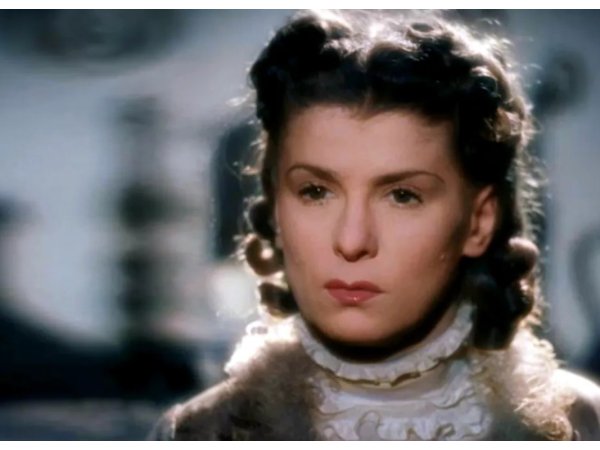
Maria Maximilian remains one of the most appreciated actresses of Romanian theater, a presence of natural elegance, deeply loved for the authenticity of her performance. Although acclaimed on stage in numerous roles, in cinema fate reserved her only one appearance – but a memorable one.
The context of a career marked by theater and a single film role
Her portrayal of Veta in the film adaptation of the celebrated text “A Stormy Night” by I.L. Caragiale, directed by Jean Georgescu, would be enough to secure her a special place in the history of Romanian film.
The path to this role was not calculated, but a combination of talent, opportunity, and pure luck. The story of her discovery seems taken from classic scripts where destiny changes in a single moment.
At that time, Maria Maximilian was performing at a theater known as “Maria” – today’s Cinema “Feroviar.” One ordinary evening, while performing a variety couplet, her professional life was about to change forever.
The evening that changed everything
Elegantly dressed, but carrying a market basket – a typical association for revue theater, where visual surprise was a defining element – Maria Maximilian managed to astonish the audience with a sudden change in rhythm, tone, and expressiveness. In the audience was director Jean Georgescu, who had returned to the country after a period in France, a man who already knew her but, at that moment, rediscovered her.
The actress’s spontaneous performance prompted Georgescu to immediately propose, right after the show, that she take part in the audition for the role of Veta in the film. Beside him was Iordănescu-Bruno, who confirmed the importance of this opportunity.
Although a large competition for the same role had already been held – with actresses such as Natalița Pavelescu, Eugenia Zaharia, or Silly Vasiliu participating – Maria Maximilian had not entered. She was focused on her regular performances at “Maria,” carrying the burden of a complicated family life.
However, the unexpected offer received that evening was too important to refuse. With nerves but also confidence that she could bring something new to this character, Maria accepted to attend the audition. Only a few days later, the news arrived: she had been chosen for the role of Veta.
Veta reinterpreted – from slum to subtle elegance
Maria Maximilian brought not only her talent but also a different vision of the character. In theater, Veta had long been portrayed in a more caricatured way, with a headscarf (tulpan), a flower at her ear, and an air of exaggerated coquetry. However, Jean Georgescu did not want a slum-style Veta but one closer to the reality of the Bucharest middle class at the end of the 19th century.
This intention was reflected both in costume and behavior. The film shows Veta in attire suitable for a “lunion,” a place where one could not enter casually. Thus, Maria Maximilian’s Veta became more refined, more believable, and more anchored in the style of the era, without losing the authentic charm of Caragiale’s text.
This approach was one of the elements that decisively distinguished the film from the theatrical productions of the time. Critics appreciated the finesse with which the actress managed to preserve the essence of the character while modernizing it in line with cinematic language.
Challenging filming conditions, but a legendary cast
Making the film “A Stormy Night” was not without obstacles. Romania at that time did not have the technology for a smooth production. They filmed with a single camera, which frequently broke down. Stories from the crew speak of pauses lasting days, sometimes even weeks.
Despite this, Jean Georgescu demonstrated extraordinary perseverance. He meticulously directed each shot, worked closely with the actors, and imposed an artistic discipline that resulted in one of the most successful Romanian film adaptations.
The cast was of high caliber: Radu Beligan – making his debut on the big screen, Alexandru Giugaru, Florica Demion (extraordinary in the role of Zița). Maria Maximilian would later confess how impressed she was by her stage partner, describing Florica Demion’s comic naturalness as “a true revelation.”
Refusing other offers and the reason for leaving film
Surprisingly, after the resounding success of the role of Veta, Maria Maximilian did not continue her film career. Many wondered why. The actress’s answer was simple and sincere: nerves.
Maria Maximilian felt that film amplified her self-criticism. In front of the camera, she always felt there was something she could do better – a nuance, a gesture, a line delivered differently. This personal rigor made cinema a space where she never fully felt at ease.
Moreover, working with Jean Georgescu had been so intense and finely calibrated that the actress was convinced achieving such an artistic level again would be difficult. She preferred to remain faithful to the stage, where the emotion was immediate and irreversible, yet comfortable for her artistic sensitivity.
An impressive legacy left through a single role
Although she had only one film appearance, Maria Maximilian remains a reference name. Her Veta was considered by critics one of the most balanced and expressive interpretations of the character. The film itself became a benchmark for Caragiale adaptations.
Unfortunately, time has not been kind to this film. Certain sequences – including some of Florica Demion’s funniest moments – have been irretrievably lost. Maria Maximilian often spoke about the importance of preserving the cinematic heritage, insisting that these films are cultural documents that must be protected.
Why Maria Maximilian remains a legendary name
Her story is a lesson in destiny, talent, and modesty. She showed that sometimes you don’t need a vast filmography to remain in history. One role is enough – when that role is executed flawlessly and when the actor manages to imprint an unmistakable mark on the character.
Maria Maximilian demonstrated that authentic art is born from sincerity and a deep connection with the character. Her Veta remains, to this day, a model of performance, and her discreet and elegant presence represents one of the brightest pages of Romanian cinema.
Through talent, dignity, and artistic sensitivity, Maria Maximilian proved that sometimes a single “stormy night” can definitively change an artist’s destiny.
We also recommend: Who was Gina Patrichi and why there is a street with her name in the center of Bucharest