Top 3 common myths about life in Bucharest that don’t hold up
- Articles
- 10 FEB 26
Bucharest is a city that gets talked about far more than it gets understood. From a distance, it seems easy to compress it into a handful of loud labels, repeated confidently by people who have only brushed past it or know it mainly through headlines and second-hand stories. Up close, those myths begin to peel away from the pavement, and what’s left is something more layered, more uncomfortable, and, paradoxically, more compelling.
There are a few fixed ideas about life in Bucharest that have circulated for years and continue to be accepted as self-evident truths. The problem isn’t that they’re entirely false, but that they’re incomplete—and therefore misleading.
1. “Everyone in Bucharest is rushed and lacks empathy”
This is probably the most common accusation aimed at the city. The Bucharest resident is often portrayed as tense, abrupt, incapable of basic politeness, and always in a hurry. The image feeds on real experiences: aggressive traffic, endless queues, overworked clerks, frowning faces in the metro.
What this narrative misses is context. Speed doesn’t cancel empathy; it compresses it. In Bucharest, help rarely comes wrapped in big smiles or casual small talk, but surprisingly often takes the form of short, effective gestures: someone pulling you back from traffic before a car hits you, someone giving quick directions without ceremony, someone stepping in quietly during a tense moment. The city doesn’t cultivate performative friendliness, but a practical, low-key solidarity that often goes unnoticed.
2. “Life in Bucharest is too expensive to be worth it”
This myth usually starts with a simplistic comparison between prices and quality of life. High rents, costly services, and constant consumption temptations create the impression of a city that demands a lot and gives little back. Reality, however, is more fragmented.
Bucharest isn’t uniformly expensive. It becomes expensive if you insist on living an idealized version of it: central, polished, instantly accessible. At the same time, it offers a wide range of affordable micro-worlds where life can be unexpectedly balanced. The key difference from other cities isn’t the price itself, but the freedom to choose. Bucharest punishes rigidity and rewards adaptability. Those who inhabit it without exploring it often end up paying far more than they need to.
3. “Bucharest has no identity—it’s just chaotic and incoherent”
This may be the most comfortable label of all. The city is often described as a jumble of contrasts with no logic, no recognizable culture. Yet that apparent lack of identity is, in fact, its real one.
Bucharest doesn’t operate on aesthetic coherence or smooth historical continuity. Its identity is built from overlaps, ruptures, and constant improvisation. It’s a city that never had the luxury of settling, because it was always forced to reinvent itself. That makes it feel unstable, but also deeply adaptable. It doesn’t offer a neatly packaged “spirit of place,” but an experience that needs to be read in layers, not slogans.
In the end, the myths about Bucharest say more about our need for simplification than about the city itself. Bucharest is neither better nor worse than its reputation. It’s just harder to reduce to a single sentence.
Also recommended Why was Bucharest called "Little Paris"? Myths and truths
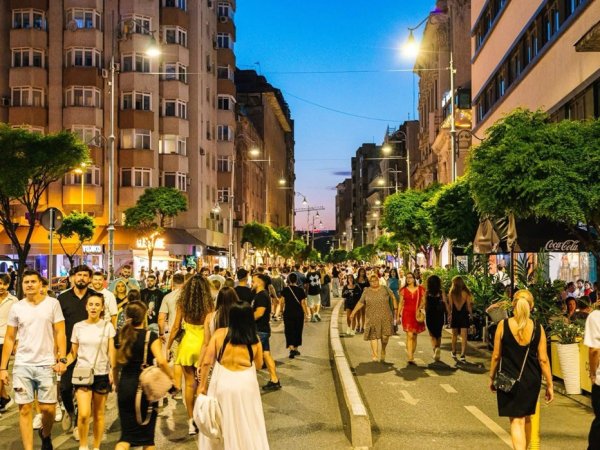
Photo: facebook.com/strazideschisebucuresti