The Story of Ionică Oprișanu, the Most Famous Barber of Interwar Bucharest, the One Who Cut King Michael I’s Hair
- Articles
- 09 MAR 26
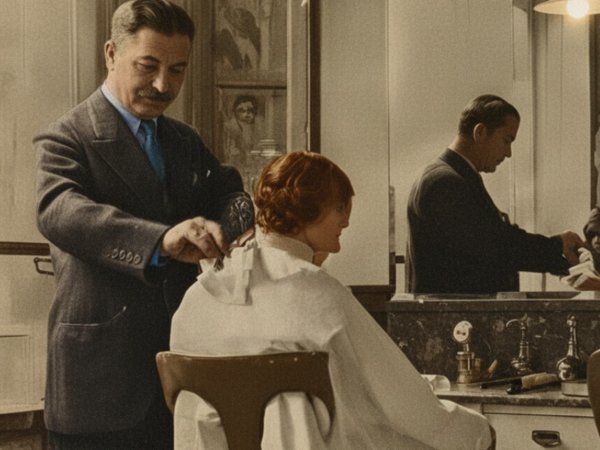
The interwar period in Romania, as in many other countries, is often remembered as one of the most elegant eras in modern human history. Bucharest at the time was a lively city, with paved streets, imposing buildings, and an active social life. The ladies of high society proudly strolled along the boulevards of the capital, wearing expensive dresses, carefully chosen accessories, and “artistic” hairstyles, in line with the fashions of the time. In this context of refinement and good taste, one name stood out: Ionică Oprișanu, the preferred barber of interwar Bucharest and, notably, the official barber of the Royal Court.
Ionică’s Salon, the Heart of Bucharest Elegance
Ionică Oprișanu owned one of the most well-known hair salons of the interwar period, strategically located near the garden of the Romanian Athenaeum. His prestige was not only due to his skill in cutting and styling hair but also to the sophisticated atmosphere he created in the salon.
The press of the time described him: “Ionică’s salon, the famous barber of the Royal Court, has long attracted, like a hidden magnet, all that the capital has most select: ladies, young women, gentlemen, and Don Juans.” This description highlights that the salon was not only a place for hairstyles but a true meeting point for the social elite.
The atmosphere was filled with exotic perfumes, steam from water, and discreet whispers, in a mix of elegance, mystery, and refinement. Contemporary publications emphasized the salon’s importance in social life: “Who could believe that Ionică and the salon he runs with such mastery play a decisive role in the lives of our elegant ladies? Who could suspect that around scissors like any other, with a few tools and devices, our ladies weave all their dreams, wishing to restore what nature forgot to grant them?”
Indeed, Ionică did not just cut hair; he restored beauty, elegance, and confidence to the women who entered his salon. Whether it was messy hair after a night at the ball, nails that had lost their elegance, or bushy eyebrows needing correction, his salon was the place where modern art worked against nature’s imperfections.
Royal Clientele and Staff Dedication
Ionică Oprișanu was not just Bucharest’s barber; he was also the one who cut King Michael I’s hair. Clients were often curious if Ionică himself was present: “He is at the Palace, cutting His Majesty King Michael’s hair,” was the usual response. This connection with the royal family only increased his prestige and attracted loyal clientele.
In his salon, clients could choose their preferred barber or stylist so that each person was served by staff who knew their tastes, habits, and quirks. This personalization was essential to maintaining client loyalty, and Ionică understood the importance of this relationship.
The working atmosphere was lively but orderly: “An endless, pleasant, and fragrant comings and goings of ladies, radiant young women, elegant women returning to fix a curl or a few stray hairs, freshly shaven Don Juans exploiting the multiple reflections of mirrors full of smiling heads and eyes heated by hair-drying machines.”
Moreover, salon employees adhered to a strict professional ethic: they did not try to steal clients from each other for higher tips, and in the rare cases when it happened, the matter was resolved discreetly and elegantly to maintain the pleasant atmosphere that Ionică Oprișanu so cherished.
The Art of Barbering: More Than a Profession
Ionică Oprișanu promoted ambitious slogans: “Goodbye white hair, goodbye old age,” promising clients eternal youth. In the public’s eyes, he was not just a barber but an artist who transformed appearance into a true work of art.
Every haircut and hairstyle was carefully planned and executed, and the tools of the trade—scissors, combs, dryers, and modern devices for that era—were used with mastery to create perfection. His salon had become a laboratory of beauty, where talent and experience combined technique with art, and elegant clients were willing to endure any effort to leave satisfied.
Popularity and Social Influence
Ionică’s barber shop was more than a place for beauty: it was a social and cultural center. Bucharest’s elite gathered there to discuss fashion, social news, and trends, while their appearance was meticulously perfected. Each client returned not only for technical expertise but also for the social experience and the feeling of belonging to an exclusive group.
Contemporary articles emphasized that the salon acted like a magnet for the select society, and people came gladly, grateful for the staff’s attention and delicacy. This combination of professionalism and social charm made Ionică Oprișanu a legend of interwar Bucharest.
The Legacy of Ionică Oprișanu
Today, the name Ionică Oprișanu evokes the image of an elegant Bucharest, with streets alive with ladies and young women with elaborate hairstyles and delicate perfumes. His salon remains a symbol of an era in which beauty was an art, and barbering was not just a job but an artistic profession recognized and appreciated at the highest level, up to the Royal Court.
Ionică demonstrated that skill, elegance, and dedication could transform a barber shop into an emblematic city landmark, influencing fashion, aesthetics, and even the social life of the capital. His popularity was not limited to the general public; it extended to the most select individuals and King Michael I himself.
The interwar period, with its charm and elegance, would not have been complete without personalities like Ionică Oprișanu, whose talents shaped not only hairstyles but also the social image of Bucharest. Today, his memory remains a symbol of refinement, attention to detail, and passion for art, even in the smallest gestures—a haircut, a hair arrangement, or a visit to a hair salon.
We also recommend: Famous boulevard names: King Michael I and the century of the sovereign exiled from his much-loved Romania