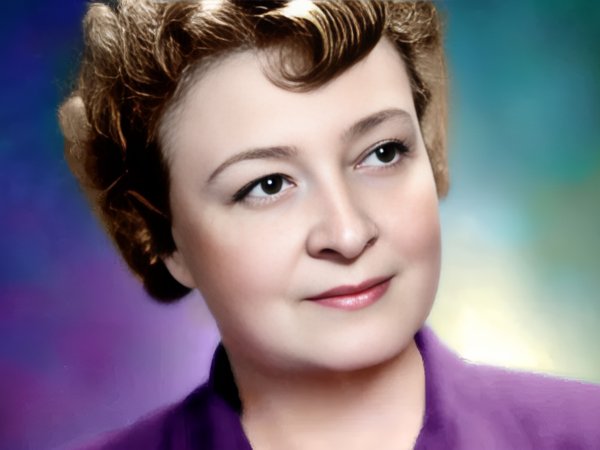
The stars of interwar Bucharest: The actress Agepsina Macri, the muse and great love of the playwright Victor Eftimiu
- Articles
- 17 FEB 26
In the history of Romanian literature and culture, there are love stories that left a deep imprint not only on their protagonists, but also on their works. One of these stories is the one between Aglae (Agepsina) Macri, a renowned actress from the interwar period, and Victor Eftimiu, an important playwright and poet, considered one of Romania’s great men of letters. Their story, full of passion, suffering, and creation, is a fascinating episode from the bohemian and artistic life of Bucharest at that time.
A love story that marked Romanian culture
Agepsina Macri was an appreciated actress during the interwar period, noted both for her dramatic talent and for her captivating beauty. Although she did not reach the international fame that other actresses of that era achieved, the brunette studied at the Faculty of Letters at the Sorbonne and took acting lessons in Paris, where she felt the calling toward the stage.
She was a constant and charismatic presence on the stages of Bucharest’s theaters, applauded for her sensitive and expressive performances. With a natural elegance and a voice that conquered any audience, she managed to attract the attention not only of spectators, but also of the great cultural figures of the time, among whom was Victor Eftimiu, who would be overwhelmed by her charm and talent. She was an enigmatic personality, with an air of mystery that made her admired and envied in equal measure.
Victor Eftimiu (1889–1972) was a prolific writer, poet, and playwright of Albanian origin, settled in Romania, who left behind an impressive cultural legacy. He is known for plays such as “String Yourself, Little Pearls” (“Înșir’te mărgărite”), “The Man Who Saw Death” (“Omul care a văzut moartea”), as well as for his volumes of poetry, essays, and letters.
Eftimiu had a significant influence on Romanian theater and literature in the first half of the 20th century, his works often being laden with symbolism, lyricism, and universal themes. Although Eftimiu was a respected public figure, appreciated for his literary talent, his personal life was not devoid of passions and challenges. His relationship with Agepsina Macri was one of the most important and tumultuous periods of his life, both personally and artistically.
The beginning of a passionate and tumultuous relationship
The love story between Agepsina Macri and Victor Eftimiu began in the bohemian context of interwar Bucharest, a culturally effervescent period. The two met within the artistic circles of the capital, where their talents shone. For Eftimiu, the actress was not only a woman of rare beauty, but also a muse who inspired him in his writings.
Although their relationship began under the auspices of mutual admiration, it soon turned into an intense and passionate love story. Agepsina fascinated Eftimiu not only through her beauty, but also through her artistic talent and her ability to express deep emotions on stage. She seemed to be the embodiment of the feminine ideal from many of his works, and their connection began to be a subject of discussion in literary and theatrical circles.
He was forced to refuse to give her the leading role in one of his plays, yet the sparks of passion ignited from the very first moment their gazes met.
“Pompiliu Eliade proposed to me, for the role of Ileana Cosânzeana in The Golden Apple, a new employee of the National Theatre, a Miss Agepsina Macri, whom I did not know.
A friend from the theatre of Eleonora Mihăilescu was insistently asking me to give the role to the blonde and beautiful Eleonora and, since I did not know her either, I gave it to the latter,” the great playwright recounted in the book “Written Portraits and Memories” (“Portrete și amintiri scris”).
The relationship between Agepsina Macri and Victor Eftimiu was not an easy one. Although their love was deep, the artistic nature of both partners often led to conflicts and tensions. Both had passionate temperaments, with strong personalities, and this created both moments of intense closeness and episodes of separation and misunderstandings.
For Eftimiu, Agepsina was more than a simple partner. She became a constant source of inspiration, a muse who challenged him to write poems and plays filled with passion and introspection. In many of his works from that period, one can observe the influence of this intense relationship, where love, desire, and suffering intertwine profoundly.
However, their relationship was marked by suffering. Agepsina was an independent woman, who could not be easily controlled, and Eftimiu, despite his artistic talent, was a jealous and possessive man. The differences in personality and the pressures of artistic life led to multiple separations and reconciliations, each event being felt with extreme emotional intensity.
Love transformed into literature and an eternal farewell
The relationship with Agepsina Macri had a significant impact on Victor Eftimiu’s literary creation. One of the best-known works influenced by this love story is “String Yourself, Little Pearls” (“Înșir’te mărgărite”), a play that explores themes of love, betrayal, and suffering.
Although the play is anchored in myths and popular symbols, one can observe a parallel between the tensions in his relationship with Agepsina and the emotional conflicts of his characters. Likewise, his poems from that period often reflect the intense experiences of a complicated love. His verses are full of longing and melancholy, an echo of his sufferings in his personal life.
Agepsina remained a constant presence in his creations, even after their relationship began to fall apart. Like many other intense love stories, the relationship between the famous actress and the talented playwright did not have a happy ending. After several separations and reconciliations, the two eventually drifted apart definitively.
Their passionate nature and constant conflicts led to the exhaustion of the relationship, and in the end, their love crumbled. Nevertheless, even after the separation, the memory of Agepsina remained alive in Victor Eftimiu’s heart. Although life took them on separate paths, her influence on his work continued to be felt.
In his later writings, Eftimiu often refers to lost love, to unfulfilled desire, and to the memory of a woman who marked him deeply. The actress Agepsina Macri passed away in 1961, and from then on the playwright could no longer recover. Victor Eftimiu engraved on her tombstone a heartbreaking declaration of love:
“Since you left, the void has overwhelmed me…
I would not have believed such emptiness could exist!
All philosophy is vain
When the dawn has extinguished its rosy hue.
You were my only thought and wealth…
Since the coffin wrapped you away from me
In vain I still try to play at being alive,
The earth is much heavier for me than for you!
Merciless fate separated us…
The terrifying scythe flashed
Cutting our intertwined destinies
And it dried the stream of our tears!
I am the ghost in the world of the living
And the true one is beside you…”
The love story between Agepsina Macri and Victor Eftimiu remains one of the most fascinating and complex stories in the history of Romanian literature. Marked by passion, suffering, and creation, their relationship profoundly influenced Eftimiu’s works and left a lasting imprint on the cultural scene of the time.
Although their love did not have a happy ending, it was a source of inspiration for one of the greatest Romanian playwrights, and the enigmatic figure of Agepsina Macri remains in the public memory not only as a talented actress, but also as a muse who inspired the literary creation of a generation.
We also recommend: The stars of interwar Bucharest: Zizi Șerban, “the most likeable actress at Tănase”