The Scandal of Interwar Bucharest: What Ion Barbu and George Călinescu Had to Settle
- Articles
- 27 FEB 26
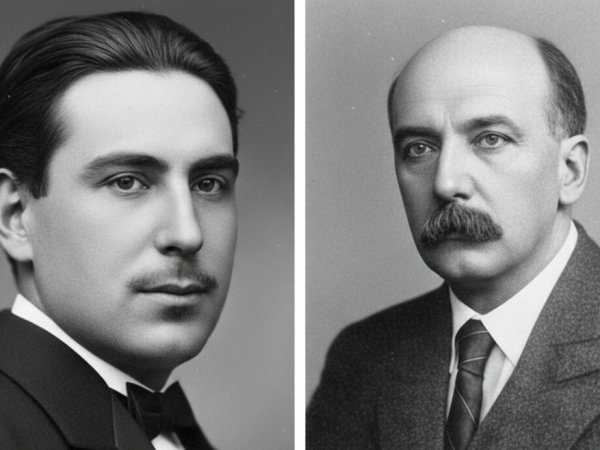
In the literary world of interwar Bucharest, disputes between writers and critics were not at all unusual. The capital of Romania had become, in the first half of the 20th century, an effervescent cultural center, where literary magazines, literary circles and meetings among intellectuals constantly fueled heated polemics. In this climate took place the conflict between the poet Ion Barbu and the literary critic George Călinescu, an episode that became famous in the cultural history of the period.
The Literary Context of a Famous Rivalry
Ion Barbu, also known by his real name Dan Barbilian, was already considered one of the most original Romanian poets of his generation. His work was characterized by a hermetic, intellectualized and innovative expression, which placed him among the modernist creators. At the same time, however, Barbu was known for his difficult temperament, proud and extremely sensitive to the way he was perceived by others.
On the other side, George Călinescu had become an unquestionable critical authority. A literary historian, essayist and university professor, he was respected for his erudition, but also feared for his firm judgments. Călinescu did not avoid categorical formulations and incisive portraits, and his opinions had a major influence on the reputation of writers.
In this context, the appearance of the monumental work „Istoria literaturii române de la origini până în present” was to trigger one of the best-known literary controversies of the period.
The publication of the volume was a major event. The critic had set out to produce a complete synthesis of Romanian literature, evaluating the authors and their works with the ambition of a definitive judge. Although the intention was an academic one, the lively and often colorful style of the literary portraits provoked intense reactions.
Ion Barbu was among those who felt that Călinescu’s evaluation went beyond the limits of an ordinary critical analysis.
The Portrait That Aroused the Poet’s Fury
In his volume, George Călinescu dedicated to Ion Barbu a memorable but controversial portrait. The critic did not limit himself to the analysis of poetry, but tried to capture the author’s personality as well through an almost pictorial description.
His formulations, although literary and suggestive, were perceived by the poet as caricatural. Călinescu spoke about an unusual “personal physiognomy” and about an exotic appearance, using metaphorical images that suggested a mysterious and difficult-to-classify character.
The descriptions of the poet’s eyes — “vegetal,” “exsanguine” or “sunk into dream” — were probably conceived as stylistic elements, but Barbu interpreted them as a diminishing of his prestige. For an author concerned with his own image, such characterizations seemed offensive.
Ion Barbu cared very much about his intellectual reputation. He considered himself an elite creator, a superior spirit, and any ironic or ambiguous suggestion could be perceived as a serious injury to his prestige.
The critic and the poet belonged to the same cultural world, but regarded each other with suspicion. Călinescu saw Barbu as a difficult author, hermetic and sometimes excessively proud. Barbu, in turn, considered that the critic’s judgments were too authoritarian. This misunderstanding was to explode in an episode that became famous.
The Moment of Direct Confrontation
Literary legend says that the incident took place when George Călinescu personally brought Ion Barbu a copy of Istoria literaturii române. The gesture was probably a cordial or protocol one, but the result was unexpected.
The poet’s wife later remembered the scene: on the alley in front of the house, Dan Barbilian is said to have thrown the volume after the literary critic, in an outburst of anger.
The episode quickly entered literary folklore. The image of the poet throwing a book considered fundamental became symbolic for the tensions between creators and their commentators.
The gesture was not only an impulsive reaction. It reflected a deep dissatisfaction with the way Barbu felt he was being evaluated. For the poet, reputation was inseparable from his work, and Călinescu’s portrait seemed to affect precisely this public image.
In the interwar period, the opinion of critics had enormous importance. An unfavorable verdict could influence an author’s career. For this reason, Barbu’s reaction can also be understood as a form of defense. The incident caused astonishment in literary circles. Some interpreted it as proof of exaggerated pride, others as a gesture of revolt against critical authority.
The Pride of the Artist and the Power of the Critic
The conflict between Ion Barbu and George Călinescu reflects the permanent tension between creator and interpreter. Writers are often sensitive to the way they are described, and critics have the power to influence their public image.
In interwar Romania, this relationship was all the more complicated because literature was regarded as an expression of national identity. Writers were judged not only by the aesthetic value of their works, but also by their capacity to represent Romanian culture.
Ion Barbu felt the need to be perceived as an original genius. Any portrait that seemed to reduce him to an eccentric figure was considered an injustice.
George Călinescu, on the other hand, assumed the role of arbiter. He believed in the objectivity of criticism and in the right of the literary historian to formulate firm judgments. From this clash of prides an inevitable conflict was born.
The episode shows how fragile the relationship between artist and critic is. The writer creates an image about himself, and the critic can confirm it or modify it. Sometimes, the difference between the two perspectives becomes unbearable.
The Echo of the Scandal in the Literary World
In time, the incident between Ion Barbu and George Călinescu became a famous anecdote. It was recounted in memoirs, recollections and literary studies, turning into a symbol of the poet’s temperament. Although the dispute did not have direct consequences for Barbu’s work, it contributed to his image as a proud and difficult artist. At the same time, the episode strengthened Călinescu’s reputation as a relentless critic.
Posterity confirmed them both. Ion Barbu is today considered one of the most important Romanian poets, and George Călinescu remains one of the most influential literary historians. Seen in retrospect, the conflict seems rather inevitable than surprising. Two strong personalities, two different conceptions about literature and two powerful prides could not coexist without tensions.
The incident shows us that beyond literary works there are people, with sensitivities and weaknesses. Even great cultural figures can react impulsively when they feel that their image is threatened. In this sense, the episode remains more than a simple literary story. It is a lesson about pride, about the fragility of reputation and about the struggle for recognition in an often unpredictable artistic world.
The scandal between Ion Barbu and George Călinescu was not only a personal dispute. It was the expression of an era in which literature mattered enormously, and every word spoken about a writer could become decisive. For this reason, their story continues to fascinate. It shows how cultural history is built not only through works, but also through conflicts, passions and prides.
We also recommend: The eternal Don Juan of Romanian literature, whose wife supposedly found him mistresses. The story of George Călinescu