The History of the Carlton Block, the Monument Forgotten by Bucharest Residents. How It Was Wiped off the Face of the Earth in the 1940 Earthquake
- Articles
- 13 FEB 26
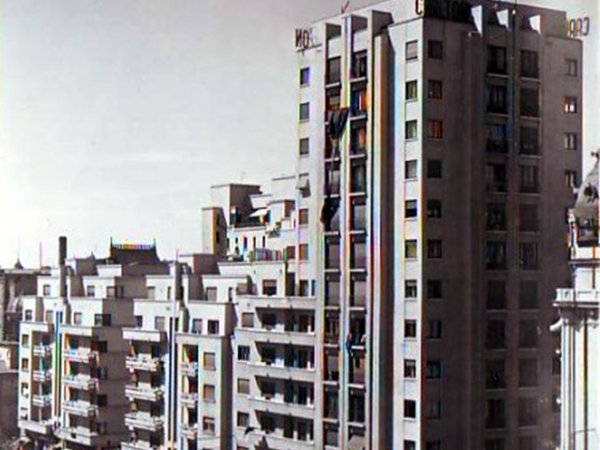
In the landscape of interwar Bucharest, dominated by the desire for modernization and architectural affirmation, the Carlton Block represented a symbol of engineering ambition and urban elegance. Built in the 1930s, during a period of economic and cultural effervescence, the building was considered a true technical marvel. With a height of 47 meters and 14 levels, it was the tallest residential block in the Capital at the time of its inauguration, in 1936. For only four years, Carlton was a landmark of Bucharest’s modernity. Then, on the morning of November 10, 1940, in just a few dozen seconds, the building collapsed under the force of a devastating earthquake, becoming one of the most dramatic symbols of the tragedy. Its story, from interwar glory to complete destruction, remains one of the most harrowing pages in the city’s history.
An engineering “marvel” in the heart of the Capital
The Carlton Block was located at a strategic point in the city, between University Square and Romană Square, at the intersection of Nicolae Bălcescu Boulevard and Ion Câmpineanu Street. The area was one of the busiest arteries of Bucharest, and the construction of such an imposing building in that location represented a gesture of architectural courage.
The project was carried out by the architects George Matei Cantacuzino and Vasile Arion, and the construction was executed by the enterprise of the brothers Karl and Leopold Schindl. The load-bearing reinforced concrete structure, a modern technology for that time, had been calculated by the engineer Franz Schüssler.
The building impressed not only through its height, but also through the complexity of its structure. The façade facing Brătianu Boulevard (today Nicolae Bălcescu Boulevard) had a ground floor and nine stories, the wing toward Regală Street consisted of a ground floor and six stories, and the corner tower – its defining element – included a ground floor, 12 stories and an attic. On the ground floor there were shops and a cinema hall, which turned the building into a small urban center, perfectly integrated into the life of the city.
Carlton housed 96 apartments, in which 226 people lived. It was a space of modern comfort, intended for the middle and upper classes, with amenities considered luxurious at that time. In just a few years, it had become a symbol of Bucharest aspiring to the status of the great European capitals.
The earthquake of November 10, 1940 and the collapse
The morning of November 10, 1940 was to change forever the fate of the building and its residents. Romania was shaken then by an earthquake of 7.4 degrees on the Richter scale. In only three minutes, the seismic event caused approximately one thousand deaths and massive destruction, especially in Bucharest.
An eyewitness located on Bălcescu Boulevard, at the corner with Batiștei Street, later described the dramatic scenes. According to his account, the Carlton Block was swaying threateningly in all directions. The oscillations were becoming increasingly wide and chaotic, amplifying the panic of those who watched helplessly.
At a certain moment, the lateral inclination exceeded the resistance limit of the structure. The upper part of the tower detached itself, crashing onto the pavement with a deafening noise. Then the entire building collapsed like an accordion, the floors compressing into one another. In a few moments, what had been the tallest residential building in Bucharest turned into a heap of rubble.
The image of the “flattened” block became one of the most powerful representations of the 1940 tragedy. Its destruction shocked public opinion, especially since it was a relatively new construction, considered safe and modern.
The first alerts and the intervention of the firefighters
The first to raise the alarm was the firefighter sergeant Dumitru Bâcu, who was at the alarm post of the building, located in the attic. Awakened by the violent shaking of the earthquake, he managed to escape in a miraculous way. Although he was injured by a wall that collapsed over him, he found the strength to notify the “Ferdinand” fire station. Shortly after transmitting the message, he lost consciousness.
Alerted, the fire crews immediately set out toward the site of the tragedy. In a short time, all the stations in the Capital were mobilized. The authorities of the time also arrived at the scene. General Ion Antonescu and Horia Sima went there to inquire about the progress of the rescue operations.
According to reports in the press of the time, including in the pages of the newspaper Universul, numerous intervention teams arrived at the site of the collapse, including ground and aviation troops. German engineer and aeronautical units also participated, collaborating with the Romanian authorities in the context of the presence of the German Mission in Romania.
Among the officials present were General Petrovicescu, Minister of the Interior; General Hansen from the command of the German Mission; the general mayor I. G. Vântu; Colonel St. Zăvoianu, prefect of the Capital’s police; as well as numerous officers and representatives of justice.
The rescue operation under rain and darkness
The intervention took place in extremely difficult conditions. A fine rain was falling over the city, and the darkness amplified the drama of the situation. The rescue teams were working among blocks of concrete and shattered masonry, using oxygen devices to cut the massive collapsed elements.
The ambulances of the Emergency Service, of the Red Cross and of the sanitary service were waiting nearby, ready to take over the victims. The shout “A stretcher!” echoed in the night, and every body taken out from under the rubble was transported either to the emergency hospital or to the Medico-Legal Institute.
In order not to hinder the intervention, traffic was stopped on Brătianu Boulevard, from Brătianu’s statue to the Simu Museum. The news of the collapse spread rapidly, and the residents of Bucharest, already terrified by the earthquake, looked with fear and disbelief at the ruins of the immense building.
By November 12, the teams had managed to recover about twenty bodies from under the rubble. Several injured persons were transported to the emergency hospital, but six of them died before they could receive help. Miraculously, in the basement of the Carlton Block and under a staircase on the ground floor, several residents survived. The telephones there had not been disturbed, and those trapped were able to communicate with the outside, giving hope to the rescuers.
A tragedy that changed the perception of safety
The collapse of the Carlton Block had a profound impact on Romanian society. The fact that a new building, constructed with modern techniques and considered safe, had completely collapsed raised serious questions regarding design and execution standards.
The tragedy led to a reassessment of construction standards and of the way seismic resistance was understood. Carlton became a painful example of vulnerability in the face of the forces of nature and of the limits of the technology of that time.
Today, the place where the building once stood preserves almost nothing of its visible memory. For many residents of Bucharest, the name Carlton is only a historical reference. And yet, its story remains essential for understanding the city’s past.
The Carlton Block was more than a building. It was the expression of an era of optimism and ambition, but also the symbol of human fragility. In only four years, it went from the status of an engineering marvel to complete ruin. And on that November morning of 1940, together with it, a part of a capital’s confidence in its own future also collapsed.
We also recommend: Dunărea Hotel, the architectural jewel turned ruin. Destroyed by earthquakes, abandoned by the Romanian state