Great Romanian dynasties: the Rosetti family, from Byzantine boyars to the revolutionary who dethroned Cuza
- Articles
- 10 MAR 26
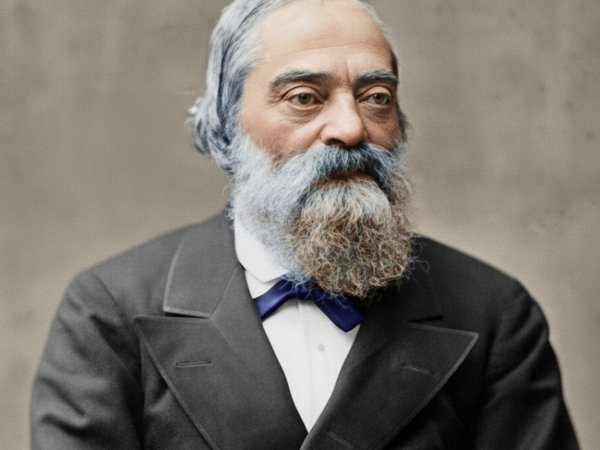
Landowners and scholars, the boyars of the Rosetti family knew how to negotiate, and some of them reached the conclusion that, in certain situations, concessions are important. C.A. Rosetti, however, was throughout his life a rebellious man. He gathered the revolutionaries of 1848 in his home, dethroned Prince Cuza, although he had supported him earlier, and distanced himself from the National Liberal Party because of a conflict of values.
The first generations of the Rosetti family
In a volume about the Rosettis, General Radu Rosetti himself wrote that his family would be originally from Genoa, Italy. In the 13th century, after arriving there in Constantinople, Ion Rosetti is said to have married and converted to Orthodoxy. His descendants, therefore, became representatives of the Byzantine aristocracy. But some heirs of this lineage returned to Italian lands – “a Mihail Rossetos died in Venice, where his sons, who were part of the Greek community there, raised him a tomb in 1544,” explained Radu Rosetti.
Although the earliest documents, from the 1600s, attest the Greek roots of the boyar family, the general does not question the Italian origins and also mentions that the weapons used by his ancestors bore the coat of arms inscribed with the following words: “Sereno aut nubilo sospes” / “Safe in sunshine and in cloud,” on a shield of silver and blue, where there was a silver cup with three roses.
Let us imagine that we have a photo album and that we are leafing through it. Whom do we find in its pages? Among the descendants of the Rosetti lineage, we first encounter Lascăr, who lived from 1580 to 1646 and held the offices of great skeuophylax and great logothete at the Patriarchate of Constantinople. There he married Bela Cantacuzino, from an influential family, and had with her two sons: Constantin Cupariul and Anton, ruler of Moldavia between 1675 and 1678.
Constantin followed an unusual professional path. At first he worked as a sailor, after which he fulfilled the responsibilities of cup-bearer in Wallachia and later in Moldavia, during the reign of Prince Vasile Lupu. Years later, during the time of Duca Vodă, he served as capuchehaia of Wallachia and took care of relations with the Ottoman Porte. He also left heirs—five sons born from his marriage with the niece of Alexandru Mavrocordat Exaporitul.
The 16th and 17th centuries brought times when economic activities between Constantinople and the Romanian lands flourished, following increasingly strong political ties. Where did Anton, Constantin’s brother, go during that time? To Venice. There he was known as “Greco din natione, negociante,” which makes us believe that he was engaged in trade in other corners of Europe as well, as many notable people from Constantinople—known in the Slavic world as Țarigrad—used to do.
Anton, however, was not always on the road. Around 1675, after the Ottomans removed Dumitrașcu Cantacuzino, he ascended the throne of Moldavia, and it was rumored at the time that he had offered the Turks sixty bags of money for his enthronement. That same year he moved to Iași, and one of the decisions he made immediately was to repair the Princely Church of Saint Nicholas, where he also built a crypt for himself.
Boyars, landowners and intrigues in the 19th century
Petrache Rosetti, another descendant of this family, lived 89 years, until 1870. He held the rank of spătar, and together with the chronicler and cup-bearer Constantin Sion he constantly provided the Russians with information about the activities of Prince Alexandru Ioan Cuza. As for his inheritances, he had received from his ancestors several houses in Iași, as well as numerous estates in the Moldavian region: at Orhei, Comănești and Bosânceni.
A special character was Neculai Rosetti, born in 1794, about whom General Radu Rosetti wrote that “he led a life that was not without blemish.” He received his education in France and Germany, from where he returned with liberal ideas, with a taste for reading—being the one who greatly expanded the library at Stânca—and with the desire to develop elementary education in Moldavia. His second wife was Maria Ghika, the daughter of the treasurer Dimitrie Ghika.
Neculai himself, also a treasurer and a deputy, wished to become prince, which is why he sent suggestions to the Russians about how Moldavia could be administered. In his time he was considered an intriguer and did not get along well with other boyars; moreover, he told the French and the Austrians that he was independent of the Russians.
Elena Cuza and the philanthropic legacy of the Rosettis
Princess Elena, who married on April 30, 1844 Alexandru Ioan Cuza, the future ruler of the United Principalities, was also one of the heirs of the Rosetti family. The daughter of Iordache Rosetti and Ecaterina Sturdza had no children, but she devoted herself to charitable activities.
One of her most important initiatives was the establishment of the orphanage for girls on Cotroceni Hill, which at that time was called “Azilul Elena Doamna.” Through this project she tried to support children without families and to contribute to the education of girls in a society where opportunities were limited.
The Rosetti family members had numerous occupations and remained in the memory of their descendants and of historians as remarkable personalities worth telling stories about.
Intellectuals and scholars of the Rosetti family
Among them was Radu Rosetti, who studied in Geneva, Toulouse and Paris. Eventually he returned home, to Moldavia, and lived for a time in Târgu Ocna. There he joined the Masonic lodge in Bacău County and, until his death in 1926, used his energy to fulfill several public offices: he was prefect of Brăila County and of Bacău County, and later became director general of prisons. Later, in 1900, he also became the delegate of the Romanian government in the commissions for revising the borders toward Bulgaria and Russia.
Another remarkable descendant was Alexandru Rosetti (1895–1990), linguist and philologist. He could almost always be found at his work desk. His first study, for example, “Colindele religioase” among Romanians, was published in 1920 in “Analele Academiei Române. Memoriile secțiunii literare.” Rosetti studied in the French capital until 1928—first at the École pratique des Hautes Études and then at the Sorbonne University.
In Paris, where he defended his doctoral thesis, he married Maria Rallet, from a small family of boyars. After returning to the country, beginning in 1933, he became the director of the Foundation for Literature and Art “King Carol II,” an important publishing house during the interwar period. Over the years he published several editions of “The History of the Romanian Language” and edited the complete works of Romanian chroniclers and writers such as Miron Costin, Ion Neculce, Grigore Ureche and I.L. Caragiale.
During the communist era, however, he became a party member, a decision he made in order to advance professionally, and thus he also became a full member of the Romanian Academy. Even so, between 1951 and 1954 the communists excluded him from the academic environment, from the Faculty of Letters in Bucharest where he taught.
Only at the beginning of the 1960s did he manage to establish the Center for Phonetic and Dialectal Research within the Romanian Academy, and twenty years later he obtained the Herder Prize, an international distinction offered annually by German and Austrian universities to researchers and artists from Central and Southeastern Europe.
Until 2011, in Bucharest, on Dionisie Lupu Street, you could still pass by the former house of the academician, built in the 19th century. The building was demolished about six years earlier on the basis of an authorization issued by the Sector 1 City Hall, although legally only the Bucharest Municipality City Hall had this right, with approvals from the Ministry of Culture and the Ministry of Development and Public Works.
C.A. Rosetti – the revolutionary spirit of the family
After completing his studies, C.A. Rosetti began his military service, and at 17 he was already a cavalry second lieutenant, more precisely the adjutant of Alexandru Ghica Vodă. He liked to amaze others, so he became known as an impulsive officer. One day, for instance, he frightened his contemporaries by riding backwards on a carriage through the streets of Bucharest, even along Podul Mogoșoaiei, in front of the boyars, while a group of rascals followed him shouting: “Hurrah! Long live Monsieur Berlicoco!”
The ruler did not overlook this incident and punished him by ordering the barber to cut off his long hair. Rosetti was very upset, but that did not stop him from staging another spectacle. Eventually the ruler appointed him police officer in Pitești, hoping this would calm him down. According to Caragiale, Rosetti retaliated by sending soldiers and barbers into the marketplace to cut the hair of passers-by, answering any complaints with the phrase: “Thus has His Highness ordered. Look at me how he cut my hair.”
The revolutionary of 1848 and the dethronement of Cuza
This playful attitude did not come from nowhere. In his youth he studied theatre with the actor and writer Constantin Aristia at Saint Sava College, where he passionately interpreted tragic roles. In 1845 he went to Paris to continue his education. There he founded the Association of Romanian Students in Paris and became friends with intellectuals such as Edgar Quinet, Jules Michelet and Jean Baudrillard.
When he returned to the country with liberal ideas, he was disappointed by those who promoted outdated theories. At his home gathered figures such as Ion Ghica, Nicolae Golescu, Radu Golescu and Ion C. Brătianu, where they planned the Revolution of 1848.
Although he initially supported Alexandru Ioan Cuza’s accession to the throne, Rosetti later opposed him when he believed that the ruler violated constitutional principles. Cuza even ordered his arrest, but after his release Rosetti participated in the conspiracy that eventually dethroned the prince.
Political activity and social ideals
C.A. Rosetti continued to be deeply involved in political life. He supported Romania during the War of Independence in 1877 and helped raise funds for a field hospital, while two of his sons went to the front.
He was also one of the leaders of the National Liberal Party, founded in 1875. Yet in 1884 he broke away from the party and from Ion Brătianu because the deputies had voted for a law he considered unconstitutional.
Despite his aristocratic origins, Rosetti was known for his modesty and his closeness to ordinary people. While working with printing workers, he became interested in their problems and founded a mutual aid society for typographers in Romania. He also promoted public education, defended the rights of the Roma population and argued that improving the living standards of the poor required the development of a strong middle class.
In an 1882 parliamentary speech about agricultural contracts, he spoke passionately about peasants and their right to land, insisting that they should become true property owners. Through such ideas, C.A. Rosetti remained one of the most radical and influential voices of the Romanian liberal movement.
We also recommend: Great Romanian dynasties: Golescu, the lineage of prime ministers who defined national politics