Four services other European capitals have had for years, that Bucharest still lacks
- Articles
- 18 SEP 26
In February 2026, the European Urban Initiative, a programme funded by the European Union, launched a €60 million funding call encouraging small and medium-sized cities to adopt solutions already tested in other member states, even when those solutions are new to the city itself. The idea is simple: a good service doesn't need reinventing, just bringing home. It applies to Bucharest too, a city that lags several years behind many of its neighbouring capitals on a handful of small but everyday-relevant urban services.
Four of them stand out when you place what already exists in Vienna, Berlin or Paris next to what's still missing in Bucharest.
The library of things
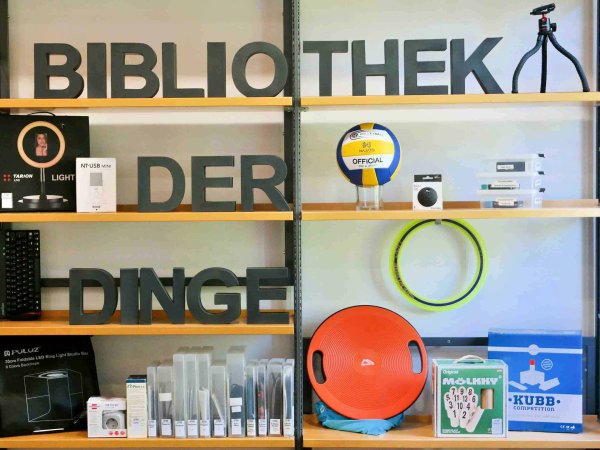
In Vienna, a small shop on Brestelgasse, in the 16th district, has been lending things instead of books since 2014. Over 200 items are available to members, from tools to camping gear and Polaroid cameras, for a daily fee of 1-7 euros. It's called Leila, or Bibliothek der Dinge, and the concept has a version in Berlin too, where the Friedrichshain-Kreuzberg neighbourhood library runs its own section for lending objects.
The Bucharest Metropolitan Library lends books, music, films and board games for free across its 30 branches, but not everyday-use objects. Anyone who needs a drill or a camping tent once a year either buys something they'll use three times, or gives up on the plan. A library of things would fill exactly that gap, especially in the apartment-block neighbourhoods where storage space is tight to begin with.
The place where things get fixed, not thrown out
The Repair Café movement started in the Netherlands seventeen years ago, in 2009, launched by journalist Martine Postma in Amsterdam, and has since grown into a global network of workshops where volunteer fixers repair appliances, bicycles, clothes and furniture for free. Budapest has one with fixed hours, open Tuesday and Thursday afternoons. Berlin runs recurring sessions directly inside its neighbourhood libraries.
Cluj saw two separate attempts, in 2015-2016: a three-week pilot at Cinema Mărăști, funded by a local grant, and a workshop opened later on Strada Traian, meeting on Saturdays every three weeks. What the capital had was something else: bike-repair cafés, a concept that showed up here around 2014-2015, combining repair workshops with coffee shop spaces — but for a fee, and bicycles only. In a city where repair shops for older appliances are expensive and hard to find, the temptation to toss something and buy new stays far more convenient than it should.
A network of cheap adult courses
In Vienna, the network of adult education centres, called Volkshochschule, is present in almost every district, with affordably priced courses, from foreign languages to digital skills, open to anyone regardless of age.
Bucharest has, run by City Hall, the Bucharest School of Art, successor to the former People's School of Art, with students aged 4 to 70. Its curriculum, though, stays focused on the arts: theatre, music, visual arts, choreography. The rest of the city's adult education offer, from languages to coding or ceramics, comes largely from the private sector, through foundations and paid academies like Fundația Calea Victoriei. A municipal network of general, cheap courses spread across neighbourhoods would cover a segment the private market largely leaves to those who can afford the fee.
The night bus exists. The night metro doesn't
STB runs 25 night bus lines, with a 30-minute interval between vehicles, so a surface-level network already exists. What's missing is night metro service on weekends, like in Vienna or Berlin, where metro lines run non-stop from Friday into Saturday and from Saturday into Sunday. In Bucharest, the metro shuts down at night under normal operation; it has only run non-stop on New Year's Eve, with trains every 10-20 minutes, as an annual exception.
The difference matters to anyone leaving University Square on a Saturday night and trying to get home to Berceni or Drumul Taberei without waiting half an hour for a night bus.
What they have in common
None of the ideas above require a metropolis-sized budget or a decade-long mandate. A library of things fits into a forty-square-metre space and can start on the budget of a neighbourhood shop. A Repair Café just needs one Saturday a month and a handful of people willing to fix things for free.