Bucharest’s sidewalks in winter — who do they belong to and who is liable when you fall
- Articles
- 17 FEB 26
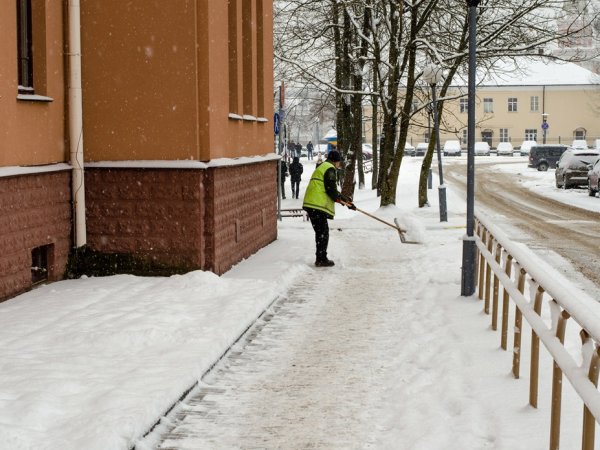
A heavier snowfall is enough for Bucharest to slip into a now-familiar pattern: snowplows clear the main boulevards, while the sidewalks behind apartment blocks are often left covered in a compact layer of ice. Pedestrians move forward in small steps across the snow-covered pavement, steadying themselves against parked cars or holding their arms out for balance. Some manage to recover just in time, with an abrupt, awkward motion. Others miss the moment — and the ice does its work in a fraction of a second.
And so, every winter, the same question resurfaces: who is responsible?
The answer exists. It is set out in the law. Yet few people know it in full.
What the law says
Snow removal regulations are set out in Government Ordinance no. 21/2002, which defines the obligations of local public authorities, public institutions, economic operators, and both natural and legal persons.
In short, responsibility is shared. Local councils and city halls are required to ensure the cleanliness of streets, squares, and other public spaces, including the removal of snow and ice from roads and sidewalks. Citizens, in turn, are obliged to remove snow and ice from the sidewalks adjacent to the buildings where they live or which they use for other purposes.
Even though sidewalks are part of the public domain, local administrations include them, through specific decisions, in the category of spaces managed by property owners or homeowners’ associations. As a result, the homeowners’ association must remove snow from the sidewalk in front of the building to ensure safe pedestrian access.
The legal deadline is 24 hours after the snowfall has stopped.
Fines
Decision no. 120/2010 of the General Council of Bucharest sets out the fines for failing to comply with these obligations. Individuals who do not clear the sidewalk in front of their property risk fines between 200 and 500 lei. For legal entities — including companies, public institutions, and homeowners’ associations — the fines are higher, ranging from 500 to 2,000 lei. The authority to establish contraventions and apply fines belongs to the Bucharest Local Police and the local police units of the six sectors.
In practice, local police carry out inspections and issue warnings to both individuals and legal entities regarding their legal obligation to clear snow from sidewalks. Shop owners, homeowners’ associations, and residents of houses are legally required to remove snow and to clear icicles formed on balconies and eaves within 24 hours after the snowfall ends.
If you slip and fall — who pays?
This is where things become more complicated. If you fail to clear snow and a passerby slips, you may be held civilly liable for the accident. On public spaces, liability rests with the city hall, but you may seek compensation if the authority neglected its duties.
If you slip on an uncleared section of sidewalk in front of a building, you may seek damages from the owner or the homeowners’ association, provided you can prove negligence. In cases of falls on public roads, liability belongs to the local authorities, as long as the legal timeframe for snow removal has not been respected. It is important to gather evidence: photographs, witnesses, and, if applicable, a medical certificate.
In other words, the law exists and provides a clear framework. The issue lies elsewhere.
The reality on the sidewalk
Despite the authorities’ efforts to clear the main arteries, conditions on secondary streets and sidewalks often remain extremely difficult. Responsibility for snow removal is divided between homeowners’ associations and city halls, and many areas of Bucharest are still left covered in snow.
Some sectors respond quickly, others more slowly. Sector 1 City Hall provides homeowners’ associations with free anti-slip material during snowy periods, with distribution points set up in several areas of the sector. It’s a concrete measure — but one that assumes someone from the association knows about it and goes to collect the bags.
Bucharest’s winter problem is not the absence of a legal framework. It lies in the gap between regulation and enforcement — between clearly defined obligations on paper and the reality on secondary sidewalks at 7 a.m., when people leave for work and the ice has been there for days.
Also recommended What Snow Brings to the Surface in Bucharest. Infrastructure, Solidarity, Nerves, and Improvisation