Four Legs, Cobblestones, and Paradoxes: A Walk Through the Bucharest That Pretends to Love Dogs, and Sometimes Actually Does
By Eddie Țone
- Articles
- 07 FEB 26
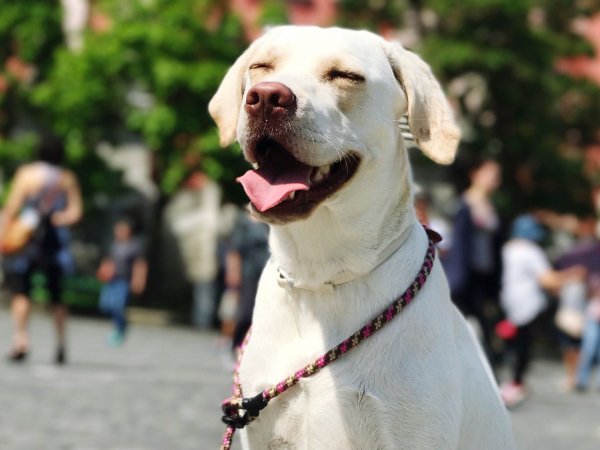
You wake up on a Saturday morning with the sun cautiously filtering through your apartment curtains, and you feel it. The familiar, insistent stare. You sense it before you see it. The fixed, hypnotic gaze of your best friend, patiently waiting for the sacred ritual of the walk. You grab the leash—the classic urban umbilical cord—and head out. Bucharest opens up in front of you with promises of smells, unexplored lampposts, and charming terraces. Everything feels perfect, until you collide with the raw reality of local hospitality.
The city lives with a fascinating identity crisis, swinging between the collective memory of the stray dog packs of the 1990s and a modern aspiration to be a Western capital, where dogs get a chair at the table and, with a bit of luck, a tasting menu.
You step onto the sidewalk with good intentions. You’ve heard the stories, seen the ads, read about “pet-friendly” places on Instagram. The term itself sounds like a campaign promise—vague, optimistic, and often hollow. Modern Bucharest loves labels. It sticks them on doors, menus, and lampposts. But what really hides behind that green sticker with the friendly paw print? Sometimes, you find a bowl of fresh water and an artisanal biscuit. Other times, you meet the raised eyebrow of a waiter who looks at you as if you’d just walked a horse into Queen Victoria’s living room. So let’s take a look at the real landscape, beyond social media filters.
The Semiotics of the Sticker: Between Genuine Hospitality and Forced Tolerance
Watching the staff’s body language when you enter a place with a dog could qualify as a sociological study. There’s a category of venues where “dog-friendly” simply means tolerating the animal’s presence, as long as it becomes invisible, odorless, and practically immaterial. You walk in, smile, gesture toward the furry companion at your side, and the response comes as an almost imperceptible hesitation. You’re seated at a cramped table in a corner, far from Persian rugs or from customers who seem to be wearing outfits more expensive than the average annual rent.
In these places, the sticker on the door works strictly as a marketing tool. Owners have spotted the trend, realized people have money and want to spend it alongside their dogs, and accepted the compromise. Water arrives only if you explicitly ask for it—sometimes in a plastic bowl cut from a mineral water bottle, other times in a hastily rinsed ashtray. You can feel the difference between “allowed” and “welcome.” You’re permitted to stay, but the atmosphere subtly suggests you should order quickly and leave, the same tolerance you extend to a distant relative who visits and forgets to go home.
Specialty Coffee Sanctuaries and the Victory of the Dog-Loving Barista
At the opposite end of the spectrum, you find true oases of civilization. Specialty coffee shops in areas like Calea Victoriei, Floreasca, or Cotroceni have rewritten the rules of interspecies interaction. Here, your dog might get more attention than you do. You walk into M60, Ototo, or Saint Roastery and immediately sense the shift. The barista—mythical creature in a leather apron with intricate tattoos—pauses a flawless espresso extraction to greet your dog by name.
This is Bucharest at its most genuinely friendly. These places understood from the beginning that a dog functions as a social catalyst. In cafés like Frudisiac or Serafim, the water bowl reaches the table before the menu. Sometimes, there are complimentary treats. Here, the dog becomes a full-fledged customer, and the sincerity with which staff interact with animals is disarmingly real. They know that a happy Golden Retriever means an owner who will order another coffee and a slice of cake.
A bit of urban trivia reveals that the dog-friendly café phenomenon exploded in direct proportion to the decline of stray dogs and the rise of adoptions, whether purebred or well-cared-for mixed breeds. There’s a clear correlation between neighborhood gentrification and the appearance of ceramic water bowls at shop entrances. As the city grew more expensive, the dog evolved from yard guard to lifestyle accessory and, finally, into a fully recognized family member.
Parks: Social Arenas with Unwritten Rules
You leave behind the smell of fresh coffee and head for green space. Bucharest’s parks add another layer to the experience. You have the classic options: Herăstrău (King Michael I), IOR (Titan), or Izvor. This is where things get anthropologically interesting. IOR Park, for instance, includes the famous “Dog Island,” a large area where freedom seems absolute. And yet, you run into the eternal problem of the dog enclosure.
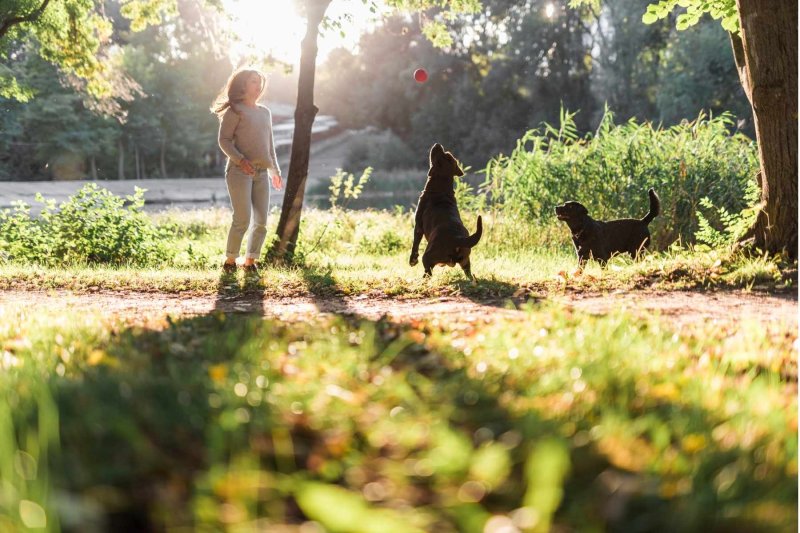
The dog enclosure in Bucharest is an institution in itself. It’s where democracy operates in a strange way. A fenced space, often reduced to hard-packed dirt where grass surrendered long ago, where all breeds and all social categories of owners mix. Notice the dynamic? Owners line the edges, phones in hand, pretending to supervise, while Shakespearean canine dramas unfold at the center.
This is where theory meets practice. District city halls have invested in these spaces—some, especially in Sectors 6 and 3, look surprisingly good, with agility obstacles and benches—but the culture of using them still lags behind. You often find bags of “gifts” strategically placed near trash cans, not inside them. Even so, parks remain the social lungs of the canine community. People who would never greet each other on the street suddenly become close friends when their dogs decide to sniff one another. In Bucharest’s parks, the dog works as a universal diplomatic passport.
The Mall: The Final Frontier of Commercial Space
If you want to test the limits of urban tolerance, go to the mall. Until a few years ago, the idea of entering a shopping center with a dog sounded like fantasy. Then ParkLake appeared, strategically located next to IOR Park, breaking the ice and creating a small revolution. Suddenly, you could combine a park walk with a shopping session without taking your dog home first.
The experience, however, feels surreal once you notice other shoppers’ reactions. A mix of admiration and confusion. Your dog, accustomed to natural textures, finds itself skating across glossy tiles, in an acoustically hostile environment filled with synthetic smells. This is where you truly see who’s genuinely friendly and who’s just playing along. Security guards, trained to tolerate, sometimes develop nervous tics when a four-legged creature approaches an expensive storefront.
Other malls followed with varied rules—small dogs only, dogs in arms only, dogs in carriers only—creating a local legislative mess. AFI Cotroceni or Promenada have specific policies, and as a dog owner, you need to do research worthy of a lawyer before heading out. Is it marketing? Absolutely. Malls need foot traffic, and pet owners represent a demographic with spending power. But it’s also a step toward normality, even if taken cautiously and on freshly polished floors.
Public Transport or the Ultimate Test of Patience
Now we reach the sensitive point: mobility. If you have a car, you’re king. Try using public transport with a medium or large dog, though, and Bucharest bares its bureaucratic teeth. STB and Metrorex regulations allow dogs, but under draconian conditions: a muzzle, regardless of temperament; a short leash; health documents on hand; and, in some cases, an extra validated ticket.
But have you ever tried putting a muzzle on a Labrador that has never bitten so much as a butterfly? It looks like Hannibal Lecter on a bad day. Fellow passengers’ reactions are a lottery. You might land in a car full of animal lovers eager to pet the “ferocious beast,” or face the eternal respectable lady clutching her purse and muttering about diseases and imminent danger.
The metro, especially, remains a fortress. Although rules have theoretically relaxed, access often depends on the mood of the security agent at the turnstiles. It’s a gamble you play in real time. Here, it’s obvious the city still has a long way to go before reaching the level of Vienna or Berlin, where dogs ride the subway as naturally as people carry briefcases.
Summer Gardens: A Bohemian, Authentic Refuge
There is, however, one segment where Bucharest shines: summer gardens. Places like J’ai Bistrot, Grădina OAR, Sera Eden, or Suento seem designed with dogs in mind. Gravel underfoot, shade from old trees, and a relaxed atmosphere create the perfect setting.
In these places, marketing disappears and gives way to a gentle normality. Your dog stretches out under the table on the cool ground while you sip a lemonade. No one glares, no one comments. You even sense a quiet solidarity between tables. One dog barks, another answers, owners exchange knowing smiles. A slice of Bucharest that restores your hope.
History plays a role here too. Many of these gardens occupy the courtyards of old aristocratic houses. Once, these spaces were populated by pedigree dogs belonging to Bucharest’s interwar elite. In a way, your dog’s presence is a return to a tradition of elegance and leisure, a reconnection with a spirit of the city we thought we’d lost.
The Conclusion of a Pedestrian with a Leash
So, is Bucharest a dog-friendly city? The answer floats somewhere in the middle, suspended between the enthusiasm of hipster cafés and the rigidity of public transport. There are places where you’re treated royally, where your dog gets water before you get the menu, and places where the sticker on the door is just bait for a trendy demographic.
You have to navigate the capital with a healthy dose of intuition. Learn to read subtle signals, avoid disapproving glances, and cherish those oases of normality where a “hello” is addressed to both you and your four-legged companion. Progress is visible. Compared to ten years ago, when the only dogs you saw were strays, Bucharest now has a vibrant canine culture.
When you head out for your evening walk, look at the city differently. Appreciate the barista who smiles sincerely, a park with neatly cut grass, or a street corner where someone left a bowl of water for passersby. Bucharest is learning to be friendly. Sometimes it pretends, sometimes it gets it right naturally, but the direction is positive. You and your dog are pioneers of this change, exploring the concrete jungle step by step, paw by paw, in a continuous search for the place where both of you truly feel at home.
You may also like: Where to find peace in Bucharest – gardens and parks to recharge