The stars of interwar Bucharest: Sergiu Malagamba, the greatest dandy of the Capital who set women ablaze
By Bucharest Team
- Articles
Interwar Bucharest was a world unto itself, a vibrant mix of elegance, cultural effervescence, and characters who went far beyond the ordinary. In cafés, luxurious restaurants, theatres, and concert halls, true urban legends were born, and among them one name shone with particular intensity: Sergiu Malagamba. A talented musician, charismatic conductor, and emblematic figure of 1940s fashion, Malagamba became a symbol of freedom of expression in an increasingly rigid era. His magnetic presence turned every appearance into a spectacle, while his clothing style ignited women’s imagination and deeply unsettled the authorities.
Cosmopolitan origins and musical beginnings
Sergiu Malagamba was born on February 6, 1913, in Chișinău, into a family with multicultural roots. His father was Italian, while his mother came from Armenia — a combination that would profoundly shape his artistic temperament and distinctive personality. From early childhood he was drawn to music, showing a rare sensitivity to rhythm and harmony.
He began his studies at the Conservatory in Chișinău, where he built his musical foundation, but his artistic destiny was to be fulfilled in Bucharest. The Romanian capital was, during the interwar period, a true magnet for artists, and Malagamba quickly understood that here he could truly become someone. He completed his studies in Bucharest in 1950, yet long before that he had already earned a solid reputation in the world of light music.
Those close to him called him Serghei, a nickname that reflected his closeness to the bohemian and international circles of the time. In 1937 he made his debut as a drummer on the stages of the Capital, and his explosive, precise, and vibrant style rapidly turned him into a sought-after name.
The rise of a musician who conquered the stage
By the late 1930s, Sergiu Malagamba was already considered one of the finest drummers of his era. He possessed a stage energy that was difficult to match, and audiences were fascinated not only by the music itself, but also by the way he performed it. Every movement seemed calculated, every appearance carried a theatrical flair without ever becoming artificial.
In 1939, he took a decisive step in his career by conducting his first light-music concert and founding the Malagamba Orchestra. The ensemble could be heard in famous venues such as Melody and Continental, true social hubs of interwar Bucharest. There gathered the city’s elite: artists, actors, writers, politicians, and elegant ladies, all eager both to see and to be seen.
His collaboration with Maria Tănase, one of Romania’s greatest voices, further strengthened his artistic prestige. Together, the two embodied the essence of Romanian musical modernity, blending tradition with Western influences.
The dandy of the Capital and the birth of a fashion phenomenon
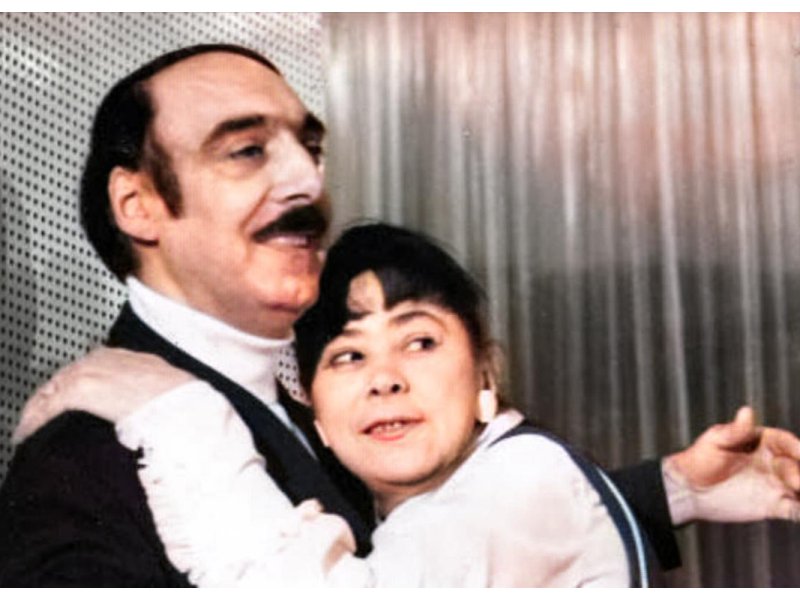
Beyond music, Sergiu Malagamba became famous for the way he dressed. Slender, wiry, with a slightly swarthy complexion and a moustache à la d’Artagnan, he had an unmistakable appearance. His extravagant yet refined style completely broke with the conventions of the time.
Composer Temistocle Popa described him as a character who deeply influenced urban fashion. Bucharest shops began promoting clothing inspired by him: Malagamba-style collars, jackets with small lapels, narrow shoes with high heels, and unusual cuts. Even dance schools advertised themselves by promising to teach the famous “Malagamba dance.”
The phenomenon had grown so large that his name surpassed the musical sphere. In a way unique to Romania at that time, Malagamba had managed to turn personal style into a recognizable brand. As Temistocle Popa noted, people on the banks of the Dâmbovița could pride themselves on an authentic celebrity, since there had never been a “Ginger Rogers dance” or even a “Fred Astaire dance,” but the “Malagamba dance” truly existed and was danced with frenzy in Bucharest.
The malagambist fashion and the reaction of the authorities
At the beginning of the 1940s, in a context dominated by war and an increasingly strict political regime, eccentricity became an act of courage. Sergiu Malagamba came up with the idea of dressing his orchestra in identical outfits: shirts of the same color, thin ties, crepe-soled shoes, and white socks. The image was shockingly modern for that era.
The young people who remained in the Capital quickly adopted the style, and thus the “malagambist” was born — a symbol of urban nonconformism. The fashion spread at an astonishing speed, reaching even the theatre stage. Actor Horia Șerbănescu recalled that even the great Constantin Tănase appeared dressed “excessively,” sending audiences into delirium.
For the authorities led by Ion Antonescu, however, this trend was considered indecent and dangerous. In a time when discipline and uniformity were imposed, Malagamba’s aesthetic freedom seemed like a direct challenge.
Internment in the camp and absurd accusations
The phenomenon grew to such proportions that the authorities decided to intervene. Sergiu Malagamba was arrested and interned for a short period in the Târgu Jiu camp. The reasons invoked today seem almost absurd: the artist was accused of being “the leader of a religious sect dangerous to the security of the State.”
In reality, everything stemmed from his influence over young people and from the authorities’ fear of any form of free expression. Music, fashion, and his charisma had become symbols of a generation that refused to fully conform to the restrictions imposed by the regime.
Although the camp experience was painful, it did not break his spirit. On the contrary, it helped solidify his urban myth, turning him into an almost legendary character of old Bucharest.
Tours, international success, and artistic maturity
After this tense period, Malagamba returned to the stage. Together with the “Tănase” Theatre and the Bucharest Jazz Orchestra, which he conducted, he embarked on an extensive tour through the major cities of the former USSR. It was a remarkable achievement for a Romanian artist of that era, proving both his musical value and adaptability.
His repertoire blended jazz, light music, and Western influences, offering audiences a modern sound. Even as times changed, Malagamba remained faithful to his style, adapting without ever losing his artistic identity.
Final years and the legacy of a unique character
Although he experienced glory, applause, and public admiration, Sergiu Malagamba’s life was not without contrasts. He lived intensely, burned brightly, and remained a free spirit in a society that was becoming increasingly uniform.
He passed away on April 15, 1978, in Bucharest — the city that had consecrated him and offered him the stage on which he shone. His death closed a fascinating chapter in the cultural history of the Capital, but it did not erase the memory of a man who had the courage to be different.
Today, Sergiu Malagamba remains one of the emblematic figures of interwar Bucharest: an exceptional musician, a trendsetter, and a symbol of elegant nonconformism. His story proves that true stars are defined not only by talent, but also by the power to change mentalities. In a city pulsing with life, Malagamba was more than an artist, he was a state of mind.
We also recommend: The stars of interwar Bucharest: Jean Moscopol, famous fiddler, actor, troubadour, exiled patriot