The Delea Veche Neighborhood, Cireșului Street, and the Place Where Mihai Eminescu Read Letter V
By Bucharest Team
- Articles
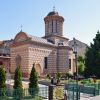
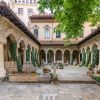
Delea Veche Street, located in Sector 2 of Bucharest, today presents a varied urban landscape, blending sumptuous historic villas, modern apartment buildings, and constructions still in progress. Its name, as well as that of the neighborhood, comes from Delea Logofătul, the founder of the church at number 29A. The place of worship is situated near the intersection with Cireșului Street and serves as a witness to the area’s religious history.
History and origins of the Delea Veche neighborhood
The first documentary mention of the Delea Veche Church dates back to 1761, though local tradition suggests that initially a wooden church was built at the end of the 17th or beginning of the 18th century by the same Delea Logofătul.
During the reign of Alexandru Ghica Voievod (1766–1768), a masonry church was constructed, whose original inscription no longer exists today.
The current Delea Veche Church was built between June 24, 1894, and May 2, 1896, during the reign of King Carol I, preserving the architectural characteristics of the late 19th century and becoming a symbol of the spiritual identity of the neighborhood.
The church has played a central role in community life, witnessing events and urban changes that have shaped the Delea Veche district over the centuries.
Transformation of Delea Veche Street and its urban role
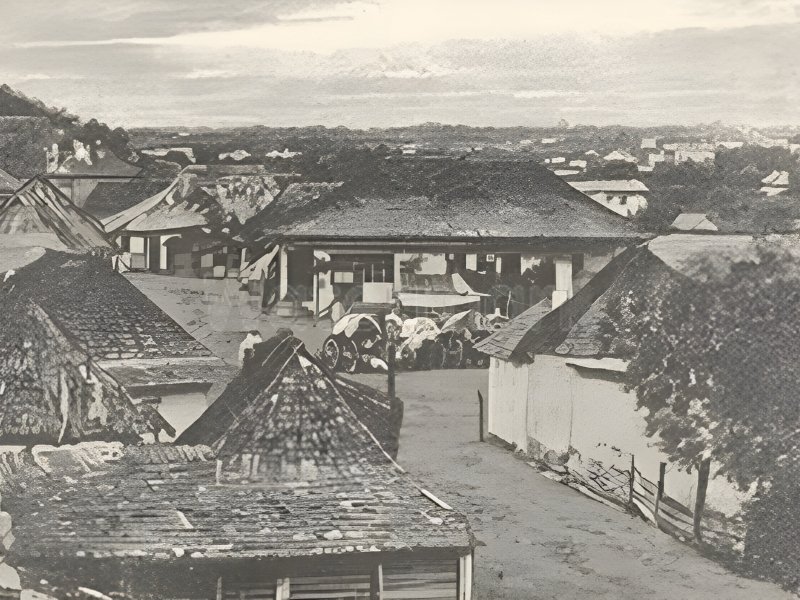
Delea Veche is not a very long street, yet its importance in local traffic is significant. Its history spans over a century, evolving from a peripheral road with rural-style houses to a genuine urban street close to the city center.
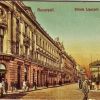
During the interwar period, the district underwent substantial transformation, and the streets began to acquire a more defined urban identity, with solid buildings and remarkable architecture.
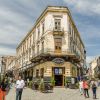
On Delea Veche, at the intersection with Cireșului Street, stands an imposing building in Neo-Romanian style, reflecting the tastes of the period and the attention given to architectural details.
Nearby, on the corner with Budilă Street, there is an Art Deco block with exceptional architecture, exemplifying international influences on Bucharest’s urban design during the interwar era.
Thus, Delea Veche Street becomes an area of interest not only for residents but also for history and architecture enthusiasts, offering a blend of past and present.
Cireșului Street and the connection to Mihai Eminescu
Cireșului Street, an integral part of the Delea Veche neighborhood, is especially known for its important connection to Romanian culture. Here, the famous poet Mihai Eminescu read for the first time “Letter V,” one of his memorable works. This event gives the street symbolic value, transforming it into a cultural pilgrimage site for admirers of the great poet.
This literary connection highlights Delea Veche’s role in Bucharest’s cultural history. Although today the street has modernized, its spirit is preserved through the memory of these significant moments. Together with Delea Veche, Cireșului Street provides a clear picture of how cultural, religious, and urban life intersected in this part of the city.
Transport and infrastructure on Delea Veche
Delea Veche Street is crossed by several trolleybus lines, connecting the area to the Titan district, Gara de Nord, and Piața Mihail Kogălniceanu. Although the routes were planned in the 1960s, trolleybuses only started operating on this street in 1982, initially serving routes toward the city center. This transport infrastructure contributes to the neighborhood’s connectivity and facilitates residents’ access to other parts of Bucharest, while maintaining its unique character.
The street begins at Calea Călărașilor and intersects with Orzari, Cireșului, and Budilă Streets, ending at Popa Nan Street. On the opposite side, across Calea Călărașilor, lies its “twin sister,” Delea Nouă Street, which extends to Bulevardul Decebal. This urban configuration demonstrates how streets were planned to serve both local traffic and residents’ needs, integrating historical and modern elements harmoniously.
Architectural and cultural impact of the neighborhood
On Delea Veche, one can observe contrasts between old and new: historic villas next to modern blocks, trolleybus lines running through the area, and historic buildings, all reflecting Bucharest’s urban dynamics.
The striking design of intersections, heritage buildings, and the presence of the Delea Veche Church give the street a unique charm, attracting pedestrians’ attention and keeping the cultural memory of the place alive.
The church, interwar buildings, and Art Deco blocks are more than mere structures—they are reference points for the community, where past and present intertwine. Thus, the Delea Veche neighborhood becomes an example of urban continuity and the preservation of cultural identity in Bucharest, demonstrating how history, architecture, and literature can coexist harmoniously in an urban setting.
Delea Veche today
Today, Delea Veche Street is an active thoroughfare, heavily traveled, maintaining the connection between past and present. On every corner, one can notice the architectural heritage, from the church built during King Carol I’s reign to Art Deco blocks and sumptuous villas reminiscent of the interwar period. At the same time, modern public transport facilitates residents’ and visitors’ access, keeping the street relevant in everyday city life.
The street and the Delea Veche neighborhood remain a space where history, culture, and urbanism intersect. The fact that Mihai Eminescu read “Letter V” here gives it a special aura, making it a point of cultural and literary reference. For those who today cross Calea Călărașilor and enter Delea Veche, the image of a neighborhood evolving from a peripheral village-like area into a historical and cultural urban center becomes tangible and fascinating.
We also recommend: Flămânda District in Bucharest, the neighborhood where the beggars from the Metropolitan Hill gathered