Opera Comică pentru Copii in Bucharest, the history of one of the Capital’s most beloved theatres
By Bucharest Team
- Articles
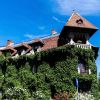
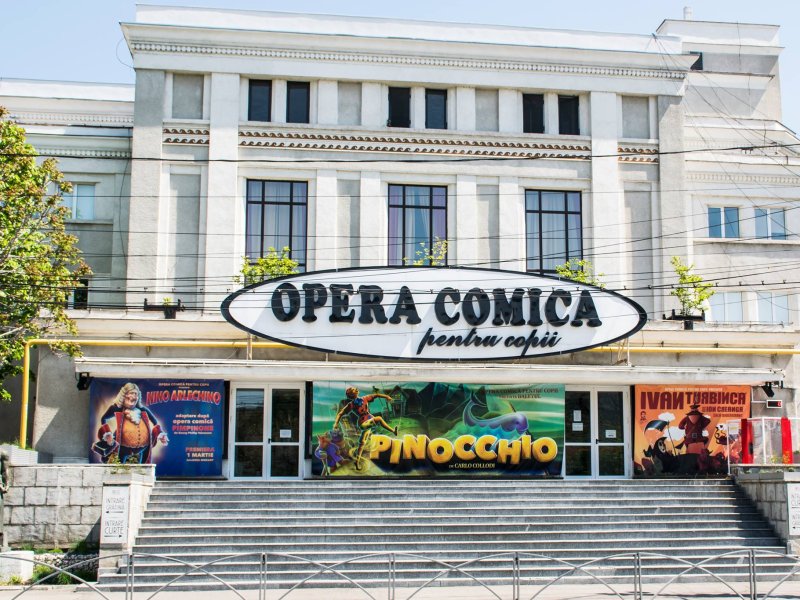
The building on Calea Giulești no. 16, which today houses the Opera Comică pentru Copii (Comic Opera for Children), was, during the last century, the headquarters of the Giulești Theatre. Looking at the evolution of the area as a whole, one can deduce that the theatre represented an essential social-cultural function to be established in this zone, most likely connected to a broader urban development plan meant to support the expansion of the railway workers’ districts, equipped with all necessary facilities.
Origins and evolution of a landmark building
The multiple parceling projects developed here, such as the Grant-Belvedere, Steaua, and Grivița Roșie districts, located near the C.F.R. workshops, were intended for railway employees, providing them with good working and living conditions. In this scenario, the theatre building would have represented an important reference point in the life of the neighbourhood, accompanying the rise in the quality of life of its residents.
The theatre became a significant gesture of modernization and cultural animation for the area, alongside the construction of the famous Giulești Stadium, inaugurated in 1938. The Giulești Theatre building, initially known as the C.F.R. Workers’ Theatre, is noteworthy not only for the history of the district but also for the history of Bucharest’s architecture, as it represents an early work in the career of architect Horia Creangă, one of the most important figures of the Romanian architectural landscape.
The architectural language used for this edifice is modernist, with Art Deco influences, elements visible both in the compositional lines of the whole and in the ornamental details.
The general appearance displays a tempered monumentality, softened by the interplay of volumes advancing or receding, rising or descending progressively, while the almost perfect symmetry is subtly broken by the tower on the side façade, which becomes the main vertical accent.
On each side of the main entrance stands the sculptural pair “Workers” by sculptor Ion Jalea, listed as a historical monument. Today, in the building of the former theatre, the Opera Comică pentru Copii operates, carrying forward the cultural mission of the place while adapting it to contemporary needs and to a young audience increasingly interested in artistic experiences.
From the Giulești Theatre to a cultural institution dedicated to young audiences
Opera Comică pentru Copii (OCC) is a public cultural institution unique within the Romanian and international artistic landscape, devoted especially to young audiences and families. Founded in 1998 as an independent company and becoming a public institution subordinated to the Bucharest City Hall in 2003, OCC successfully combines cultural-artistic value with educational purpose, its main mission being to introduce children to high-quality performing arts.
Its appearance on the Bucharest cultural scene responded to the increasingly evident need for artistic spaces dedicated specifically to children, who until then benefited only partially from theatre or musical performances adapted to their level of understanding and sensitivity.
With a diverse repertoire, including opera, operetta, ballet, musicals, and theatre-concerts, OCC contributed to redefining the relationship between young audiences and performing arts. The institution has become known for its accessible, attractive, professionally constructed productions, created to stimulate children’s curiosity and imagination.
In 2014, the institution entered a new stage of development under the leadership of soprano Felicia Filip. Her vision emphasises both artistic quality and the role of culture in children’s education, consolidating OCC’s status as an essential landmark for culture addressed to the younger generations.
Under her coordination, the institution expanded its repertoire, improved its performance and rehearsal spaces, and diversified its educational programs, thus strengthening its mission of making performing arts an integral part of childhood.
A modern vision for a new generation of spectators
A decisive factor in OCC’s growing popularity is the institution’s ability to remain relevant to today’s audience, who are accustomed to fast, visual, and interactive forms of entertainment. OCC managed to balance tradition and modernity, preserving the value of classical works while adapting them to children’s expectations through contemporary staging, dynamic choreography, and creative use of new technologies. The shows are accessible and captivating without compromising artistic quality.
Another strong point of the institution is the continuous diversification of its programs, which go beyond traditional performances. OCC organises thematic events, holiday programs, creative workshops, guided tours behind the scenes, and interactive activities designed to familiarise children with the complexity of the artistic world.
Through these educational initiatives, young spectators discover what happens backstage, how a production is built from the initial idea to its premiere, and how a team of artists, technicians, and creators work together.
The relationship between the institution and its audience is also strengthened by projects that encourage active participation, such as acting workshops, dance courses, or introductory lessons in various artistic disciplines.
In this way, children not only watch performances but can also become directly involved in the creative process, which enriches their experience and builds a deeper connection with the world of performing arts.
The significance of the institution today and its role in the future
The transformation of the former Giulești Theatre building into a space dedicated to children’s art illustrates how cultural heritage can be adapted and revitalised to meet contemporary needs. OCC not only preserved the spirit of the place but also gave it a new identity, turning it into one of the most beloved cultural centres in the Capital. The institution’s success is due to the harmonious combination of architectural heritage, artistic mission, and educational purpose, three elements that together define its uniqueness.
Today, Opera Comică pentru Copii is not just a performance venue but also a model of good practice in cultural education. By cultivating children’s interest in art from an early age, OCC contributes to forming future generations of informed, sensitive, and culturally active spectators.
The institution demonstrates that performing arts dedicated to children can reach a high level of professionalism and attractiveness, thus confirming the essential importance of culture in the development of the younger generations.
Looking to the future, OCC continues to expand its projects, explore new artistic directions, and invest in programs that encourage creativity, imagination, and cultural curiosity. In a constantly changing world, the institution remains a space where children can discover beauty, emotion, and artistic joy, values that are essential for their personal and intellectual development.
Opera Comică pentru Copii thus continues the story of the historical building on Calea Giulești, keeping alive its mission as a cultural beacon for the community and shaping, day by day, the audience of tomorrow.
We also recommend: Ion Creangă Theatre in Bucharest, six decades of history. How the most famous children’s theatre in Romania was born