Who Was Petre Țuțea and Why a Street in Bucharest Bears His Name
- Articles
- 03 DEC 25
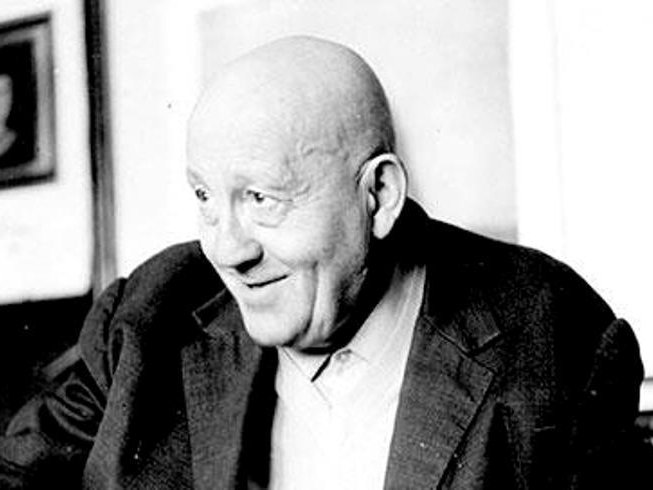
Petre Țuțea was born on October 6, 1902, in the village of Boteni, in Argeș County, into a modest family that valued education and moral discipline. His childhood in the foothills of the Carpathians shaped his worldview, giving him an early sense of belonging to the Romanian rural universe, which he would later idealize. After finishing primary school in his native village, he continued his studies at high schools in Câmpulung-Muscel and later in Cluj, cities that were important cultural centers at the time.
Early life and intellectual formation
Gifted with an exceptional intellectual capacity, Țuțea enrolled in the Faculty of Law in Cluj, where he earned a doctorate in legal sciences. These years were decisive: exposed to the ideological effervescence of the period, he became a fervent supporter of leftist ideas and wrote for the magazine Stânga (The Left), where he defended Marxist ideals with youthful fervor.
His early attraction to socialism was later recalled by Țuțea with irony and self-criticism, yet it represented a significant phase in his intellectual formation.
Professional ascent and encounters with major cultural figures
After completing his studies, Petre Țuțea worked at the Ministry of National Economy, where his exceptional intelligence and administrative abilities quickly drew attention. He represented Romania in diplomatic missions to Berlin, Budapest, and Moscow, experiences that broadened his horizons and exposed him to the ideological conflicts shaping Europe.
Upon returning to the country, he entered an elite circle of interwar intellectuals: Mircea Eliade, Emil Cioran, Eugen Ionescu, Constantin Noica, and others. Through his collaboration with the newspaper Cuvântul, led by the philosopher Nae Ionescu, Țuțea underwent a profound ideological transformation. Influenced by these brilliant thinkers, he turned away from Marxism and embraced the right-wing ideological currents of the era, eventually joining the Legionary Movement.
Government roles and the years of suffering in communist prisons
During the National-Legionary Government, Țuțea served as a director within the Ministry of National Economy. Between 1940 and 1944 he was Head of Section in the Ministry of War, and between 1944 and 1948 he became Director of Studies at the Ministry of National Economy. His political and administrative involvement during turbulent times would later lead to his persecution.
After the Second World War, when the communist regime was installed, Petre Țuțea was subjected to five years of investigations while being held under arrest, followed by a final conviction in 1956. He spent 13 years in some of the most notorious communist prisons: Malmaison, Aiud, Jilava, and Ocnele Mari.
Despite the harsh conditions, he remained intellectually active, holding improvised philosophical "lectures" for inmates. He drew parallels between Plato and Christ, between paganism and Christianity, leaving a deep impression on those who met him.
The writer Andrei Pleșu would later recount an episode illustrating how feared Țuțea was by communist interrogators. During an interrogation, an officer boasted: "Listen, I interrogated Țuțea!", as if this were a professional badge of honor.
Țuțea was released in 1964, in frail health, and settled in a small studio apartment near Cișmigiu Park in Bucharest. There, he resumed discussions with young intellectuals, walking with them through the park's alleys and commenting on everything—from the color of sunlight at sunset versus dawn, to the difference between intelligence and stupidity, or between faith and disbelief. His spiritual charisma transformed him into a kind of modern Socrates.
Life under surveillance and marginalization
Throughout the communist period, he published articles—mostly under pseudonyms—in cultural magazines, barely managing to survive on free meals at the Writers’ Union cafeteria. Meanwhile, the Securitate monitored him continuously. At one point, he was even arrested in a hotel lobby under a fabricated charge of speculation, a case that was never proven.
Despite the hardships, he continued to articulate his philosophical thoughts, which would later become famous for their aphoristic brilliance. His wit, sincerity, and bluntness made him memorable to all who interacted with him.
Unexpected late fame after 1989
After the fall of communism, Petre Țuțea became an unexpected media phenomenon. Journalists flocked to his small apartment to record his sayings, and the cultural world began to speak of a new trend: “Țuțism.” Young leaders of the time, such as Marian Munteanu of the 1990 anti-communist protests, considered themselves his disciples.
Although he published several books, Țuțea's true talent was not writing, but oratory—captivating speeches, spontaneous thoughts, and incisive observations. Andrei Pleșu described Țuțea’s late fame as a final misfortune: he became a media character only when his physical and mental strength had already faded.
Petre Țuțea died on December 3, 1991, at the age of 89. His body was driven from Bucharest to his native Boteni in a vehicle transporting carrots, and his coffin was carried to the cemetery in a cart drawn by oxen—though those present claim they were actually cows. His end was marked by simplicity and almost symbolic humility.
From left to right and eventually to liberalism
Looking back on his youth, Țuțea admitted self-critically: “I was a fool. At the age when Eminescu wrote ‘Luceafărul’, I was playing Marxist games.” Like many intellectuals of his generation, he embraced leftism in his youth, following a French maxim: “Whoever is not left-wing at 20 has no heart; whoever is still left-wing at 40 has no brain.”
His transition to the Legionary Movement occurred in Germany, where he met Nae Ionescu, who told him: “So you've come to your senses, Petreche.” This marked his passage from atheism to religious Orthodoxy—a key element of his later worldview.
One of his most controversial aphorisms compared a humble elderly woman praying before an icon to an atheist Nobel laureate: “The old woman is a human being; the atheist Nobel laureate is a polecat. And as an atheist, he dies a polecat.” Such radical statements reflected his absolute attachment to religion.
Toward the end of his life, he declared himself a liberal. He explained this amusingly: after Dan Amedeo Lăzărescu—one of the people who re-established the National Liberal Party—climbed eight flights of stairs to visit him because the elevator had broken, Țuțea signed the party membership out of compassion, saying: “If a giant animal like that came up just for me, out of politeness… I signed the membership.”
In his final reflections, he said: “I’m not afraid of death. I’m afraid of loneliness. I, who have witnessed all this country’s tragedies and victories, feel like a stake in the middle of a storm. My only hope is that, as a human being, God still loves me…”
Where is Petre Țuțea Street located in Bucharest?
Petre Țuțea Street is located in Sector 1 of Bucharest, in the Domenii–Pajura area, a quiet residential neighborhood known for its green spaces and proximity to landmarks such as the Arc of Triumph and Kiseleff Park.
The street’s placement in one of Bucharest’s most elegant districts reflects the respect and recognition granted to one of Romania’s most original and influential thinkers.
We also recommend: Who Was Ion Câmpineanu and Why a Street in Central Bucharest Bears His Name