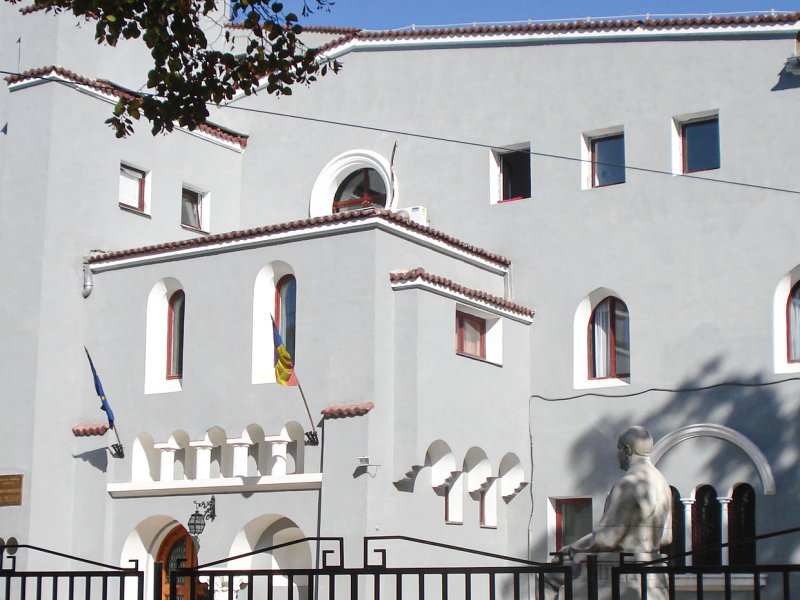
The C.I. Parhon Institute of Endocrinology in Bucharest, brief history: Dr. Parhon’s idea, Dr. Bagdasar’s report, the decree of King Michael I
By Bucharest Team
- Articles
In the first half of the twentieth century, endocrinology began to take shape worldwide as a distinct medical discipline, situated at the crossroads of biology, physiology, and clinical practice. In Romania, this process was closely linked to the activity of major scientific personalities, foremost among them C.I. Parhon, regarded as the founder of the Romanian School of Endocrinology. Alongside him, professors such as Șt. M. Milcu and Dr. Marcela Pitiș supported the idea of creating an institution dedicated exclusively to the study and treatment of endocrine diseases.
The medical and scientific context of the emergence of modern endocrinology in Romania
The need for such an institute was dictated by the medical realities of the time. Endocrine morbidity was high, and one of the most serious public health problems was endemic goiter, caused by iodine deficiency.
This condition affected between 25 and 30% of Romania’s population, with a major impact not only on the thyroid gland but also on general development, metabolism, and the functioning of other organs. At the same time, there was already a solid tradition of research and medical practice in the field, accumulated over more than fifty years.
The idea of the institute and the decisive role of Professor C.I. Parhon
Professor C.I. Parhon was the one who formulated a clear vision for a modern endocrinology institute, conceived as a center of research, education, and integrated medical practice. For Parhon, endocrinology was not a simple branch of internal medicine, but an independent, multidisciplinary science, with biological, social, and even psychological implications.
This concept formed the basis of the organization of the future institution and defined its direction of development for the decades that followed.
Together with his close collaborators, Parhon promoted the principle of the inseparable connection between research and clinical practice, between laboratory experiment and practical application in patient treatment.
In his view, the endocrinologist had to be, at the same time, a researcher and a clinician, capable of understanding the intimate mechanisms of diseases and addressing them therapeutically in a modern and effective manner.
The report of Minister Bagdasar and the decree of King Michael I
The materialization of this idea became possible within a favorable political and administrative context. On November 8, 1946, King Michael I signed Decree-Law no. 895, which approved the report of the Minister of Health, the great neurosurgeon Constantin Bagdasar, regarding the establishment and organization of the Institute of Endocrinology.
This normative act represented the official birth of the institution and consecrated, at state level, the importance of endocrinology within the Romanian medical system.
The decree-law clearly defined the mission of the institute: the organization, guidance, and promotion of theoretical and experimental studies and research in the field of applied endocrinology, in all biological and social branches.
At the same time, the document provided for the structuring of activity along multiple directions, from clinical endocrinology and morphology to social endocrinology, endocrinological psychology, and the study of endemic goiter. This broad vision clearly demonstrates the advanced thinking of Professor C.I. Parhon and his collaborators.
The first years of operation and institutional evolution
In its first years of activity, the Institute of Endocrinology functioned within Colentina Hospital, benefiting from the existing infrastructure. In 1948, the institution was moved to the premises of the Saint Vincent de Paul Sanatorium, where it was able to develop in a framework better suited to its complex needs.
Over time, the institute passed through several forms of administrative subordination, being successively under the authority of the Ministry of Health, the Romanian Academy, and the Academy of Medical Sciences.
This institutional dynamic reflects the strategic importance of the institute within the national medical and scientific system. Today, the National Institute of Endocrinology C.I. Parhon once again operates under the direct coordination of the Ministry of Health, continuing the tradition of excellence inaugurated in the middle of the last century. Its current name preserves that of its founder, as a tribute to his personality and fundamental contribution.
Endocrinology as a national public health priority
The role of the institute is closely linked to the importance of endocrine pathology at national level. Endocrine diseases represent a major public health problem, a fact demonstrated by the existence of national prevention and treatment programs, financed from the state budget.
From endemic goiter and growth disorders in children to osteoporosis and endocrine tumors, these conditions affect people of all ages and both sexes, throughout the entire geographical area of Romania.
Epidemiological data are eloquent: endemic goiter can affect up to 30% of the population, while osteoporosis is present in approximately one third of postmenopausal women. The increase in the incidence and prevalence of endocrine diseases is also reflected in the waiting lists existing both at the level of hospital departments and specialized outpatient clinics within the institute.
Elite departments and recognized medical performance
Among the structures of excellence of the National Institute of Endocrinology C.I. Parhon is the Endocrine Surgery Department, often considered “the jewel of the crown.” It stands out through an extremely high rate of patients undergoing surgical interventions, over 93%, compared to the national average of approximately 33%.
Surgery of the endocrine glands, especially in complex cases with complications and comorbidities, is currently performed only in a few university centers in the country.
Another department of major importance is Nuclear Therapy, specialized in radioactive iodine treatment for thyroid cancer. This is among the first sections of its kind in the world and is distinguished by modern equipment and therapeutic efficiency.
At the same time, the institute pays special attention to children with endocrine disorders through the Pediatric Endocrinology Department, a unit with tradition, prestige, and widely recognized results.
The current dimension and the legacy of the C.I. Parhon Institute
At present, the National Institute of Endocrinology C.I. Parhon has 9 departments, 4 specialized outpatient clinics, and 5 laboratories, with a capacity of 402 beds.
Its activity is impressive both in volume and complexity: in a single year, over 17,000 patients were treated, of whom nearly 11,000 received continuous hospitalization and more than 6,500 were treated in day hospitalization.
The number of paraclinical services and consultations reflects the central role of the institute within the national medical network.
Through its tradition, the vision of its founders, and its current performance, the National Institute of Endocrinology C.I. Parhon remains a pillar of Romanian medicine, an institution that combines research, education, and medical practice in the service of public health.
We also recommend: Ioan Cantacuzino, the hospital and the legacy. The story of the microbiologist who founded the Romanian school of immunology