How busy are Bucharest’s airports: 2025, a record year
By Bucharest Team
- Articles
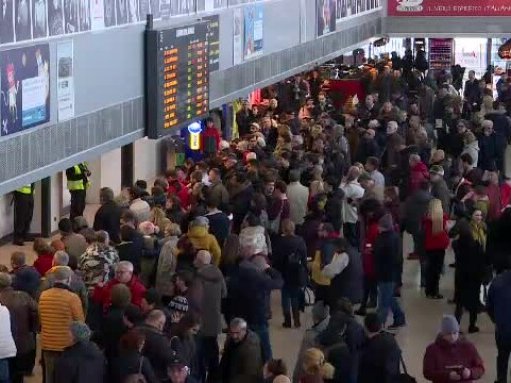
Bucharest’s airports closed 2025 with results that confirm a clear trend of growth in air mobility. According to official data, the capital’s two airports – Henri Coandă and Băneasa – handled nearly 18 million passengers, the highest volume ever recorded. The increase of more than 10% compared to the previous year shows not only a full recovery after the difficult pandemic years, but also the consolidation of Bucharest as Romania’s main air hub.
The trend is visible beyond the raw numbers. More routes, higher flight frequencies and growing interest from airlines have contributed to heavier traffic, both in business travel and tourism. For passengers, this has translated into more travel options and better connectivity with major European cities and beyond.
Henri Coandă and Băneasa, different roles in a record year
Henri Coandă International Airport remained by far the main driver of air traffic in the capital. In 2025, it surpassed the threshold of 17 million passengers, a performance that confirms its status as a national hub. Growth compared to 2024 was steady, supported by the expansion of existing routes and the entry of new airlines into the Bucharest market.
At the same time, Băneasa Airport saw a spectacular evolution, albeit at much lower volumes. Reopened for regular passenger flights after a break of more than a decade, Băneasa attracted nearly 700,000 passengers in just one year. In percentage terms, the increase is impressive and highlights the airport’s potential as an alternative for regional flights or for airlines seeking faster access to central Bucharest.
More flights, infrastructure under pressure
The increase in passenger numbers was accompanied by a rise in air operations. In 2025, Bucharest’s airports recorded more than 142,000 take-offs and landings, a clear indicator of the pressure placed on existing infrastructure. This trend has highlighted the need for significant investment to maintain safety and traffic flow.
Airport authorities focused on extensive modernization, especially at Henri Coandă. The complete rehabilitation of one of the main runways, the expansion and modernization of taxiways, as well as upgrades to lighting and navigation systems were essential to support the growing number of flights. At the same time, improving terminals and passenger processing flows became a priority in order to reduce waiting times.
Major investments for the future of air traffic
One of the most ambitious projects in preparation is the new terminal at Henri Coandă International Airport. Designed to handle up to 30 million passengers per year, it is expected to fundamentally change the travel experience at Romania’s main airport. Plans include not only expanded space and processing capacity, but also better integration with road and rail transport.
In addition to flight-related infrastructure, investments were made in auxiliary facilities such as passenger parking areas and modern baggage handling systems. The introduction of self-service bag drop facilities and increased sorting capacity are examples of measures aimed at streamlining operations in a high-traffic environment.
Development and sustainability, two key directions
The growth in air traffic also brings challenges related to environmental impact. In this context, Bucharest’s airports have started investing in renewable energy solutions, including a large-scale photovoltaic power project. The goal is to reduce dependence on traditional energy sources and lower the carbon footprint of airport operations.
European-level recognition of emission reduction efforts confirms that infrastructure development is not viewed solely in terms of capacity, but also sustainability. For a rapidly expanding city, balancing traffic growth with environmental protection will become increasingly important in the years ahead.
A clear signal about how Romanians travel
The passenger record reached in 2025 shows that Romanians are traveling more, whether for work or leisure, and Bucharest remains the main point of departure and arrival. The evolution of the capital’s airports reflects not only economic dynamics, but also changing mobility habits.
With announced investments and projects already underway, Bucharest’s airports are preparing for a future in which current traffic volumes may become the new normal. The year 2025 does not appear to have been an isolated peak, but rather an indicator of the direction in which air traffic in Romania is heading.
You might be also interested in:
The story of the Aviației neighborhood in Bucharest, the area built for the Băneasa Airport pilots
The Genius of Romanian Aeronautics: Who Henri Coandă Was and Why Otopeni Airport Bears His Name
Alternatives for those traveling to Romania
Although Bucharest’s airports handle the largest share of traffic, Romania also offers other important air gateways for visitors. Airports such as Cluj-Napoca, Timișoara, Iași, Sibiu, Brașov and Constanța have also seen passenger growth in recent years and serve both domestic flights and direct international connections to major European cities.
For tourists or members of the Romanian diaspora, these airports can represent faster or more convenient alternatives, depending on the final destination, contributing to a more balanced distribution of air traffic at the national level.