Locations close to The CFR Museum in Bucharest

  • Museums & Galleries

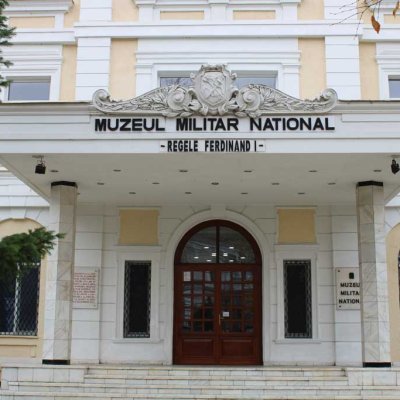
    The National Military Museum "King Ferdinand I"

    The museum was founded on 18 December 1923, by Royal Decree no. 6064, signed by King Ferdinand I himself — after whom it is named to this day. The founding purpose was clear: to preserve and pass on Romania's military memory at a time when the country had just emerged from the First World War with reunited territories, but also with deep wounds.
    Ov...
  • Museums & Galleries

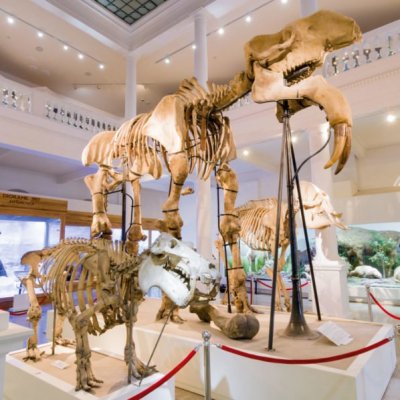
    Grigore Antipa Museum

    There isn't a Bucharest resident you ask about the capital's museums who doesn't mention the Grigore Antipa Museum. And with good reason: it is one of the most prestigious museums in Romania and Eastern Europe, currently housing over 2 million exhibits.

    Founded in 1834 and named after the famous Romanian biologist Grigore Antipa, the museum near H...

  • Museums & Galleries

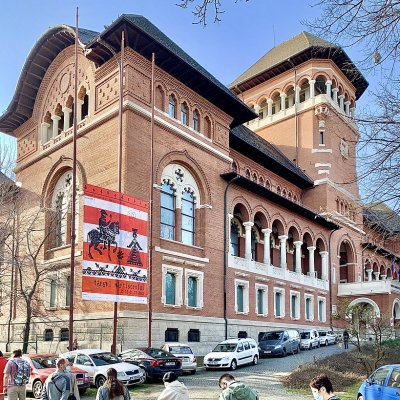
    The National Museum of the Romanian Peasant (MȚR)

    The National Museum of the Romanian Peasant (MȚR) is one of the most important cultural institutions in Romania dedicated to traditional rural life. Housed in a heritage building in Neo-Romanian architectural style, the museum features an impressive collection of authentic artifacts: from folk costumes and painted icons to tools, furniture, and eve...

  • Museums & Galleries

    The National Museum of the Romanian Peasant

    One of the most important ethnography museums in Europe, with a collection of over 155,000 objects — folk costumes, ceramics, glass icons, tools, textiles, and everyday household items from all Romanian provinces. The neo-Romanian style building is itself a historic landmark.
    The permanent exhibition was reopened in April 2025 following restoration...

  • Museums & Galleries

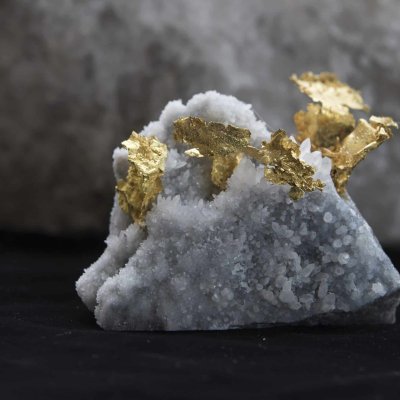
    National Geological Museum — Bucharest

    The building on Kiseleff Boulevard no. 2 is worth a stop before you even step inside: built in the early 20th century in neo-Brâncovenesc style, it is a listed architectural monument in its own right. Inside, three floors and 14 rooms house around 7,700 exhibits — fluorescent minerals, crystals, rocks over a billion years old, fossils, drill cores...

  • Museums & Galleries

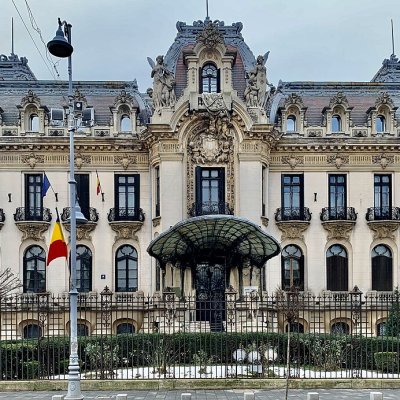
    Cantacuzino Palace

    Cantacuzino Palace is a magnificent palace located in Sector 1 of Bucharest, on Calea Victoriei, and is an example of eclectic architecture from the Belle Époque period. Built between 1901 and 1903, the palace was the residence of the Cantacuzino family, one of Romania’s oldest and most influential noble families.
    Its architecture combines elements...

  • Museums & Galleries

    “Amiral Vasile Urseanu” Astronomical Observatory

    The “Amiral Vasile Urseanu” Astronomical Observatory, located at 21 Lascăr Catargiu Boulevard, Sector 1, is the only observatory in Bucharest permanently open to the public. Built with a classical dome and equipped with the original Zeiss telescope, it offers both historical exhibitions and real stargazing experiences. The atmosphere here is not ov...

  • Museums & Galleries

    George Severeanu Museum

    Tucked away on Strada Henri Coandă nr. 26, in Sector 1, the George Severeanu Museum is one of Bucharest's most discreet and fascinating museums. Housed in an elegant eclectic building dating back to around 1860 — with oval windows, decorative garlands and neo-baroque influences — the museum was once the residence of radiologist George Severeanu, th...

  • Museums & Galleries

    The Frederic and Cecilia Cuțescu-Storck Art Museum

    On Strada Vasile Alecsandri nr. 16, in a quiet neighbourhood in the northern part of Bucharest, sits one of the most personal art collections in the city. The Frederic and Cecilia Cuțescu-Storck Art Museum was not built around institutional acquisitions or incidental donations — it is the actual house in which the two artists lived and worked, tran...

  • Museums & Galleries

    Cotroceni National Museum

    The Cotroceni National Museum, located in the Cotroceni Palace in Bucharest, is a cultural institution of great importance, reflecting Romania's rich history and art. The palace, built in the 17th century and renovated in the neoclassical style in the late 19th century, serves as the presidential residence and has been home to the museum since 1991...

FAQ in case you need it

  • Yes, it is generally safe, with occasional petty theft in busy areas. Use common sense precautions.
  • No, but it helps. Many people speak English, especially younger generations and
    professionals.
  • Metro is fastest, public transport is cheap, and ride-sharing (Uber/Bolt) is convenient.
    Walking works great in the city center.
  • Yes. EU citizens can buy freely. Non-EU citizens can buy apartments and rent easily.
  • Bucharest is affordable compared to most EU capitals. Rent, food, and transport are
    reasonably priced. Costs depend on lifestyle.
  • Non-EU citizens need a visa or residence permit. EU citizens must register after 3 months
    with Romanian Immigration.
  • Yes. Public healthcare is accessible, but private clinics offer faster and higher-quality
    services. Health insurance is recommended.
  • Yes. Bucharest has several international schools and English-taught university programs,
    especially in medicine, business, and tech.